




Antique Brass Fireplace Decor
Antique brass fireplace decor brings warmth and functional metalwork into the hearth, offering Victorian fenders, coal scuttles, and chenets that anchor a room.
Antique Brass Fireplace Decor
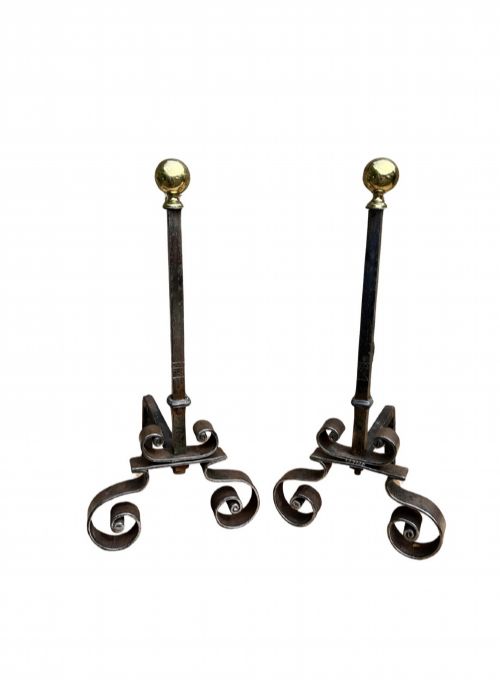
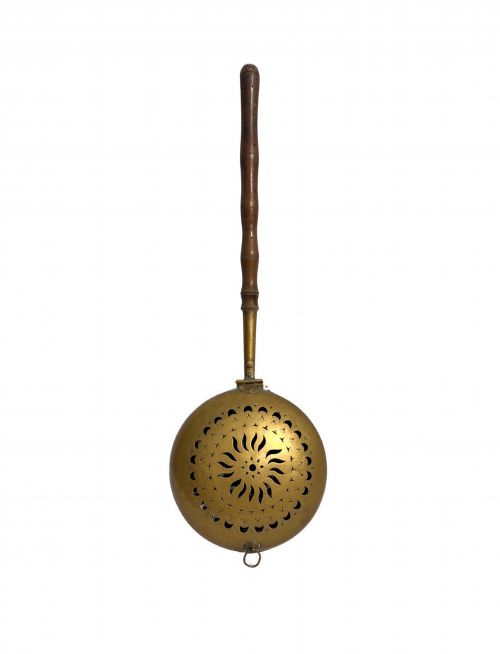
When you examine antique brass fireplace decor, you are looking at metal hearth accessories spanning the nineteenth and early twentieth centuries. These pieces encompass functional coal scuttles, warming pans, bellows, and decorative chenets designed to sit beside or within the hearth.
The most frequent examples you will encounter on this page date from the Victorian era through the Edwardian period, often reflecting English or French manufacture. They range from utilitarian coal buckets in heavy copper and brass to ornamental cast and gilt bronze fire dogs.
Forms include fireplace fenders, chimney ornaments, stick stands, and fire screens displaying styles from Regency and Neoclassical Revival to French Rococo. Each object served a domestic purpose in the country house or parlour before becoming a decorative focal point.
Materials and construction
Items in this category rely primarily on brass, copper, and cast iron, frequently combined with ormolu, gilt bronze, and wood. Makers utilised sheet brass and heavy casting techniques to produce durable vessels and sculptural fire dogs that could withstand daily hearth use.
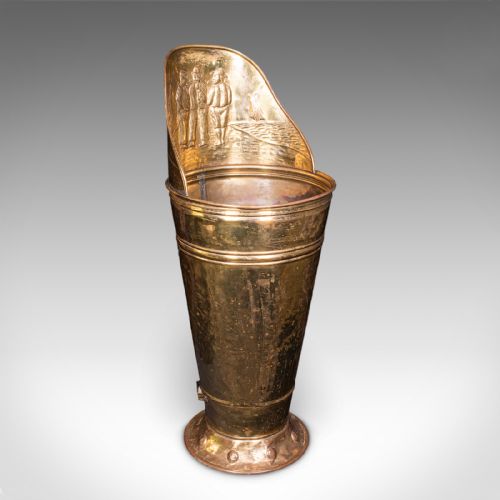
Surface decoration involved embossing, engraving, and applied ornamentation, such as the embossed motifs seen on coal scuttles and fire screens. Gilt bronze and ormolu components received fine chasing to achieve crisp detail on French and English chenets.
Antique Brass Fireplace Decor Retail Price Guide 2026
Typical asking prices for brass fireplace decor among the pieces listed under this phrase on Sellingantiques today, from the lower quarter to the upper quarter. They describe what is for sale here now, not the wider market.
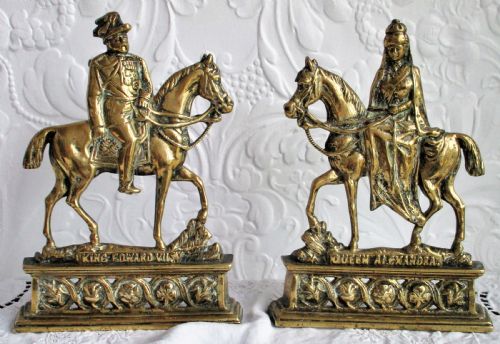
Even King Edward VII and Queen Alexandra made it onto the mantelpiece as brass chimney ornaments.
Quality variations
The distinction between standard utility items and finer examples rests on the weight of the metal, the crispness of the casting, and the depth of the hand-finishing. Heavy-gauge brass and copper maintain their structural integrity and hold sharper decorative details than thin, pressed alternatives.
Design complexity also separates pieces, with sculptural fire dogs and marked foundry pieces showing superior artistry compared to plain domestic vessels. Superior items feature careful articulation in cast elements and robust construction suited to long-term placement by the hearth.
E F Caldwell New York·Benham and Froud·Henry Loveridge
The Antique Brass Fireplace Decor Glossary
- Chenet
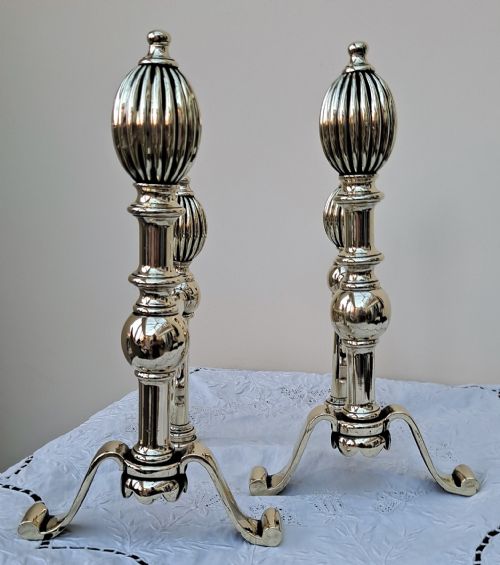
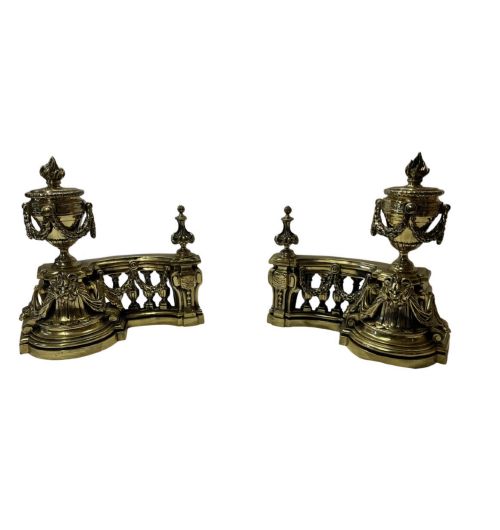
- An ornamental metal support placed on the hearth, functionally identical to a fire dog or andiron. These French-derived pieces often feature elaborate Rococo or Neoclassical styling in gilt brass and ormolu.
- Fender
- A low metal guard placed around the hearth opening to contain stray embers and ash. Victorian examples frequently incorporate pierced brass or decorative embossing.
- Andiron
- A horizontal iron bar supported by upright legs, used to raise logs off the hearth floor for better airflow. Paired sets often display decorative brass terminals.
- Coal Scuttle
- A bucket or bin designed for holding coal near the fire, frequently fitted with a shovel and a hinged lid. Helmets and heavy bins in brass and copper dominate this group.
- Ormolu
- Finely ground high-carat gold applied to a bronze base using a mercury amalgamation technique. It provides a rich, durable surface finish on decorative nineteenth-century hearth pieces.
Antique Brass Fireplace Decor: Frequently Asked Questions
What is a fire dog used for?
Fire dogs support firewood above the hearth floor to allow proper air circulation beneath the logs.
They also serve a decorative function, framing the fireplace opening with brass, bronze, or cast iron ornamentation.
How do I clean antique brass?
Antique brass generally requires minimal intervention to preserve its age and patination developed over centuries.
Light dusting and occasional gentle cleaning with a soft cloth are usually sufficient for historic metalwork.
Are coal scuttles still functional?
Coal scuttles and helmets can still hold solid fuel for a working fireplace if their structural joints remain sound.
Many buyers choose to use them as decorative log holders or umbrella stands beside the hearth.
How can I date a brass fender?
Dating relies on examining the construction methods, such as hand-riveting versus machine stamping, alongside stylistic clues.
Victorian and Georgian pieces often display distinct casting weights and period-specific decorative motifs like Neoclassical revival patterns.