


Antique Brass Coat Rail
These antique brass coat rail pieces bring solid period metalwork and practical hanging space into a hallway.
Antique Brass Coat Rail
An antique brass coat rail provides wall-mounted hanging capacity using period metal elements fixed to timber backboards or structural mounts. These pieces appear across Victorian, late nineteenth century, and early twentieth century periods, taking the form of coat racks, hall stands, and portmanteaus.
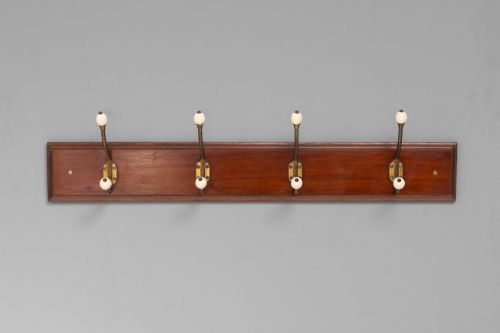
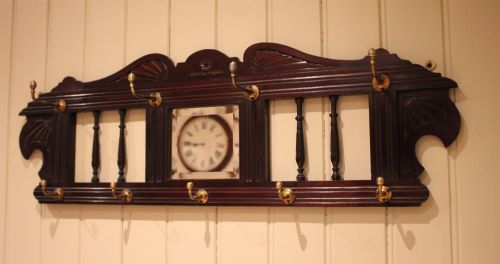
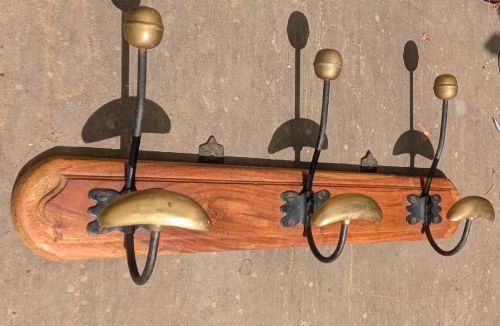
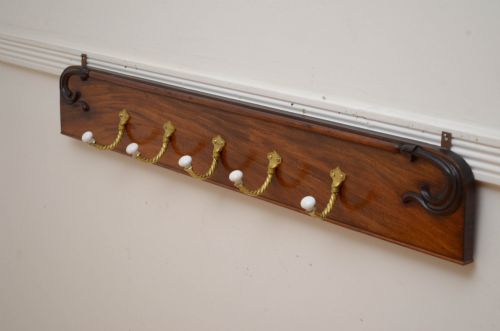
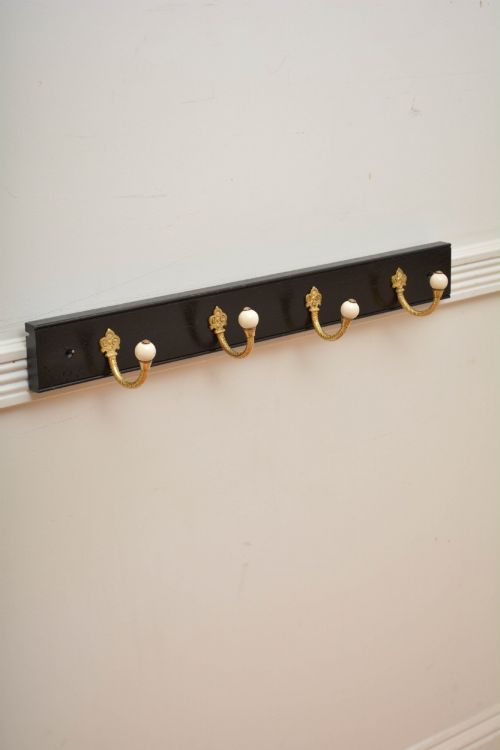
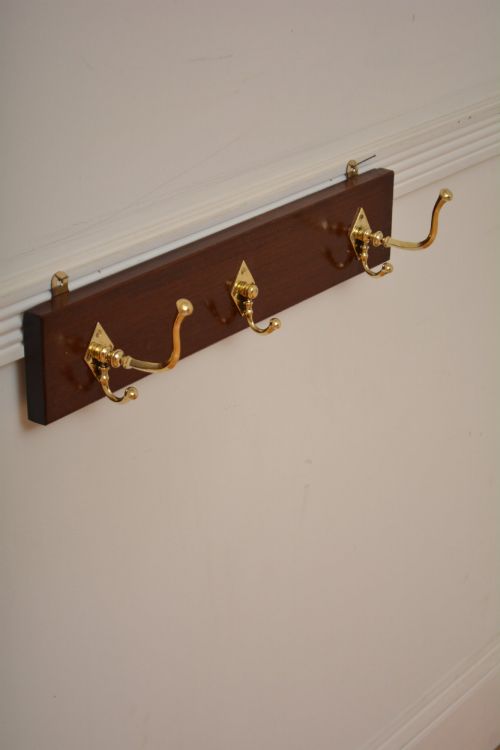
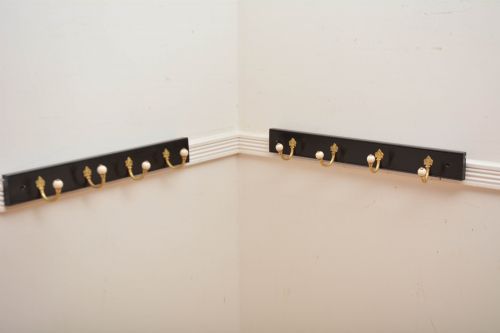
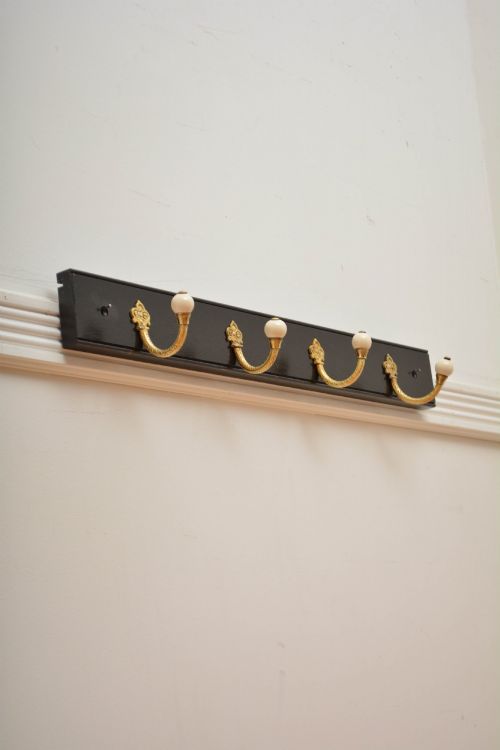
The most common configurations on this page combine brass hooks with wooden backboards made of mahogany, pine, or ebonised wood. Some examples incorporate cast brass plates, ceramic details, or glass elements alongside the primary metalwork.
French and British origins both appear, spanning styles from Victorian and William IV to Aesthetic Movement and Art Deco. Buyers encounter everything from simple double brass hooks on plain timber boards to five-foot long hat and coat racks.
How they were made
Construction relies on cast brass for the hooks, mounting plates, and structural rails, paired with turned or planed timber backboards. Metals are cast and sometimes hand-finished, while wooden backings utilise dense hardwoods like mahogany or painted and ebonised softer woods.
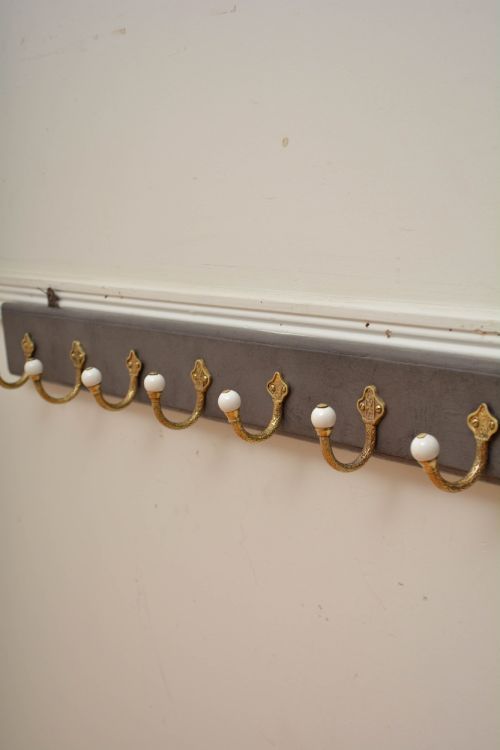
Makers integrated ceramic or glass components directly into the hook designs, secured via threaded shafts or pins through the brass casting. Timber boards feature shaped edges, moulded profiles, and pre-drilled fixing points designed to anchor securely to hallway walls.
Listings feature brass combined with mahogany, pine, ebonised wood, ceramic, and glass across Victorian and Art Deco periods.
What varies in quality
Quality rests in the weight of the metal casting and the crispness of any decorative relief work on the mounting plates. Substantial brass components and thick hardwood backboards distinguish sturdier examples from lighter alternatives.
The integration of secondary materials like glazed ceramic bosses or twisted rope wood turnings marks the level of craftsmanship. Pieces featuring matched sets of heavy double hooks demonstrate greater intentionality than mixed assemblies.
The Antique Brass Coat Rail Glossary
- Portmanteau
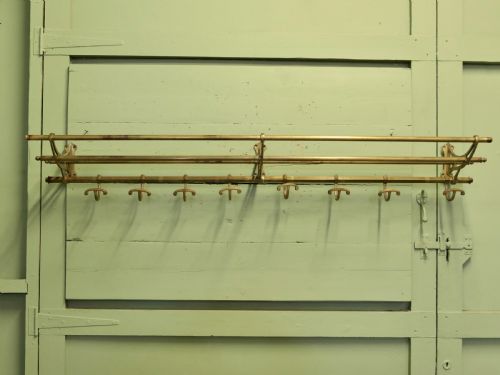
- A combined hat and coat rack, often featuring a shelf above the hanging hooks. These French examples provide dual storage functions for hallway garments.
- Ebonised Wood
- Timber treated with a dark finish to imitate expensive ebony. This dark surface creates a strong visual contrast against polished brass hooks.
- Aesthetic Movement
- A late nineteenth century design style emphasising visual beauty over narrative meaning. Pieces from this period showcase clean lines and artistic metalwork.
- William IV
- A British architectural and decorative style spanning the early nineteenth century. Furniture and fittings from this era utilise robust proportions and classical details.
Antique Brass Coat Rail: Frequently Asked Questions
How do I mount a heavy coat rail safely?
Fix the backboard directly into wall studs or employ appropriate masonry plugs for solid brick walls. The substantial weight of cast brass and dense timber requires secure anchoring.
Distribute garment weight evenly across the hooks to prevent stress on the upper fixing points during daily use.
Can I polish the brass hooks?
Brass components can be polished with standard metal cream if a bright finish is desired. Many collectors prefer to leave the accumulated patina intact.
Take care to avoid applying cleaning agents directly to surrounding timber or ceramic inserts during the process.
What is the difference between a hall tree and a coat rail?
A coat rail mounts horizontally to a wall surface to hold garments and hats in compact spaces. Hall stands and trees incorporate vertical framework and umbrella stands.
Both forms serve the same practical hallway function but require different floor or wall footprints.
How do I date a Victorian brass rail?
Examine the casting method of the brass and the type of timber used on the backboard. Heavier castings and mahogany indicate earlier nineteenth-century production.
Compare the hook style and screw threads against known period examples to narrow down the decade of manufacture.