

Antique Brass Bound
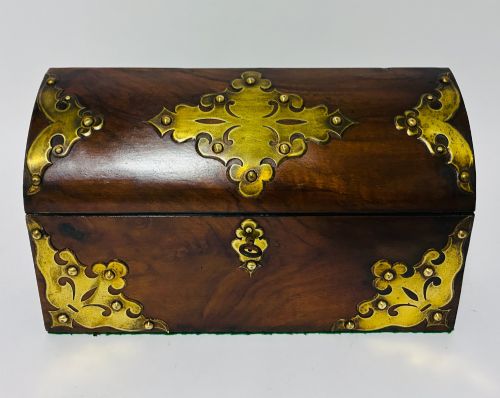
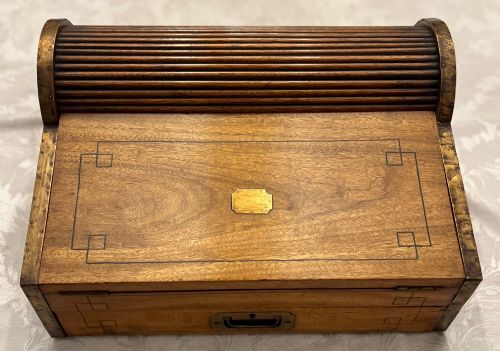
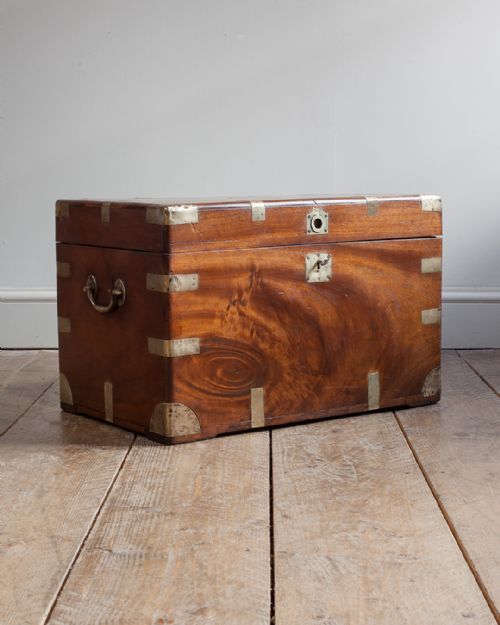
Antique brass bound pieces are timber chests, writing boxes and wine coolers reinforced for travel, offering robust construction and enduring utility.
Antique Brass Bound
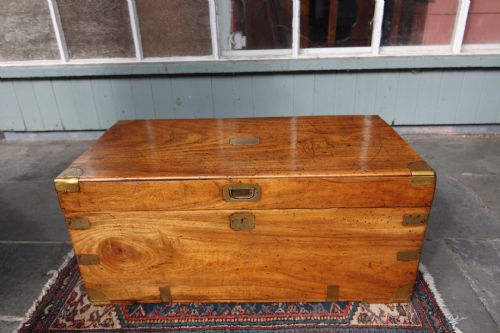
When you search for antique brass bound objects, you encounter robust wooden containers designed for travel, storage and serving. These pieces span centuries from the seventeenth to the twentieth, with nineteenth-century examples appearing most frequently.
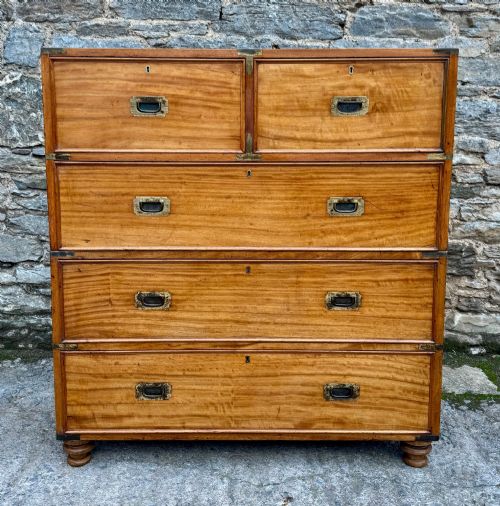
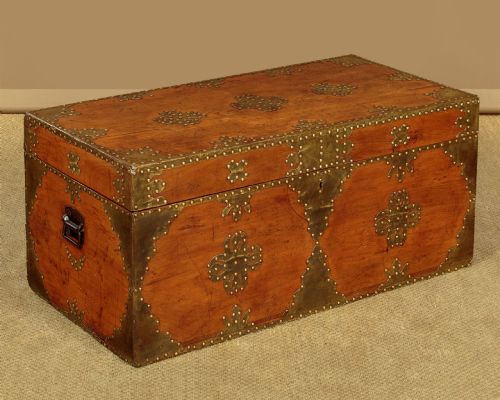
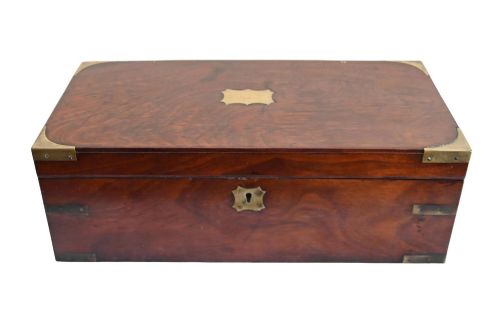
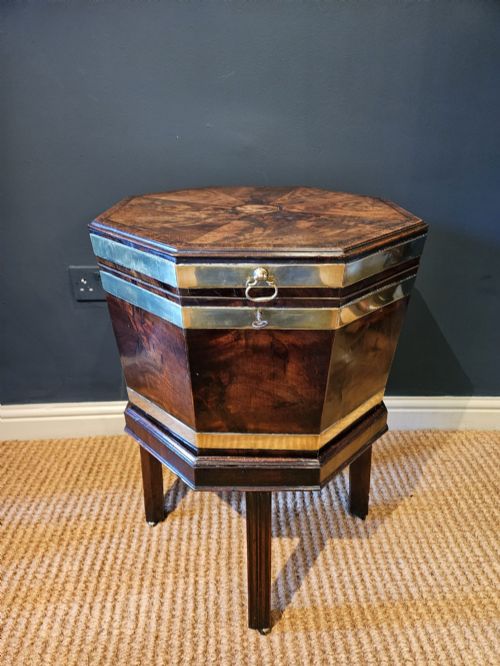
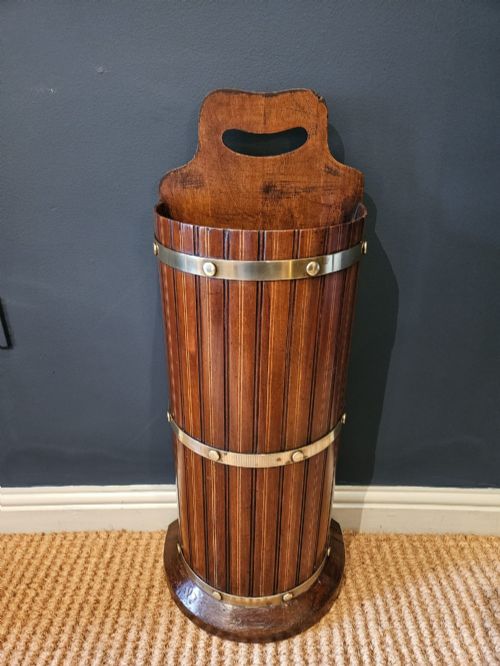
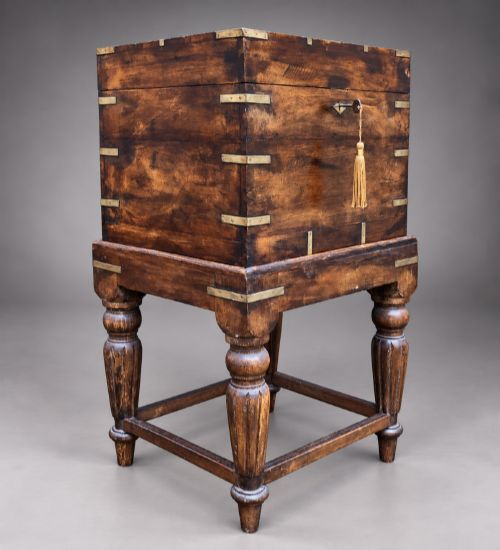
The selection centres on campaign furniture, including camphor wood and mahogany chests of drawers, writing slopes and trunks. Alongside these travel pieces, you find domestic items such as oak stick stands and mahogany wine coolers or cellarettes.
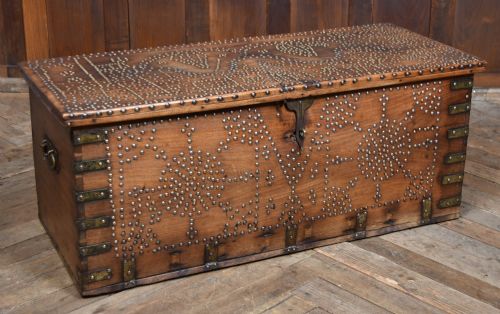
Origins vary widely, taking in British periods like George III and Victorian alongside Anglo-Indian, Dutch, Portuguese Colonial and Scandinavian workshops. Trunks and chests dominate the selection, built to withstand long journeys by land and sea.
Materials and construction methods
Cabinetmakers utilised dense timbers suited to demanding environments, predominantly mahogany, camphor wood and oak, alongside padouk, teak and kingwood veneers. These woods resisted warping and insect damage during transport across distant colonies and rough seas.
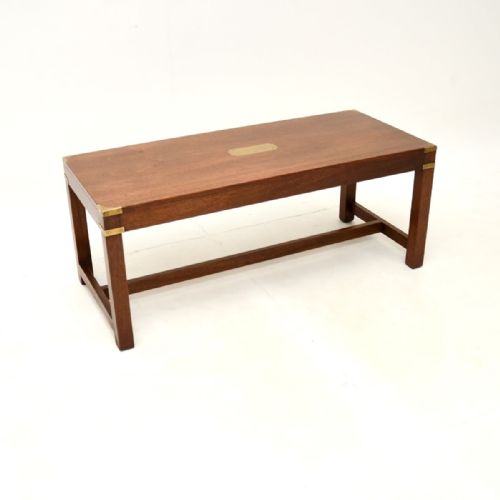
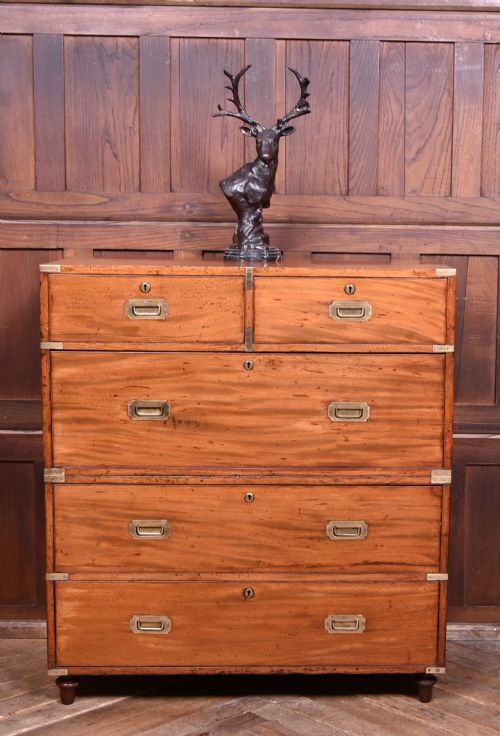
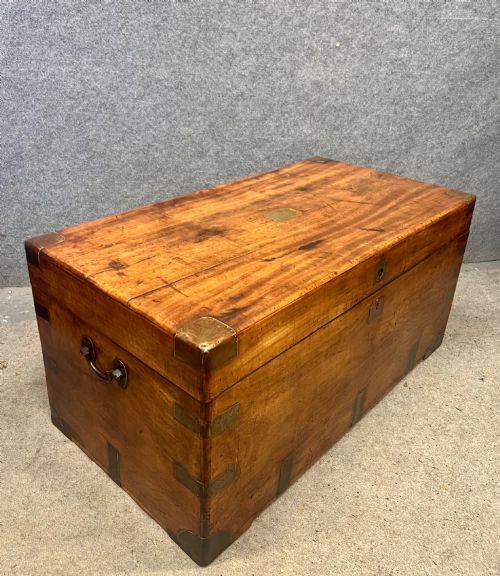
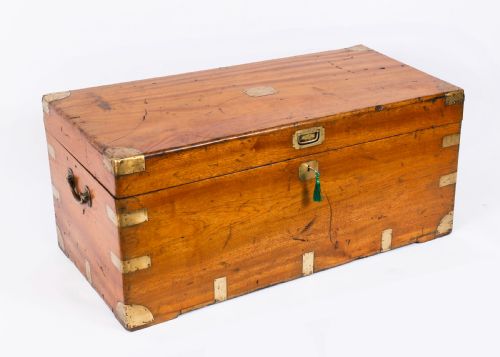
Heavy brass corners, straps and flush-fitting inset handles reinforced the structural joints of trunks and chests of drawers. Coopered construction appeared in cylindrical vessels like stick stands and wine coolers, bound tightly with metal hoops.
Keep your winter woollens inside a camphor chest and enjoy the subtle pine aroma every time you lift the lid.
Evaluating the standard of execution
Quality rests upon the integrity of the timber framing and the precision with which the brass mounts are sunk flush into the wood. Superior pieces retain their original internal fittings, such as secret drawers, writing surfaces and fitted bottle compartments.
The sophistication of the joinery and the restraint of the brasswork separate utilitarian field pieces from refined domestic adaptations. Untouched surfaces displaying patination outrank items stripped of their historical finish.
Samuel Pratt·John Eadie Scott·Henry
The Antique Brass Bound Glossary
- Campaign chest
- A modular set of drawers built in two or more sections with recessed brass carrying handles, designed to dismantle easily for military transport.
- Writing slope
- A portable slant-topped box that opens to reveal a lined writing surface, inkwell compartments and small storage recesses.
- Cellarette
- A lockable container used to store bottles of wine or spirits near the dining table, often lead-lined and coopered.
- Camphor wood
- An aromatic timber native to Asia, prized in nineteenth-century chest construction for its insect-repellent properties.
- Coopered
- Constructed from vertical wooden staves fitted together and bound by metal hoops, as seen in barrels and tubs.
Antique Brass Bound: Frequently Asked Questions
What is an antique brass bound chest used for?
These chests originally served officers and travellers on long voyages, protecting uniforms and documents from moisture and damage.
Today they function as robust storage furniture in homes, offering deep compartments for blankets, linens or modern possessions.
How do I identify a military campaign chest?
Military pieces feature split-carcase construction, brass corner brackets to absorb knocks, and recessed drawer pulls that avoid snagging.
They often sit on turned feet designed to keep the main body elevated above damp tent floors.
Why is camphor wood common in these pieces?
Camphor wood contains natural oils that emit a distinct fragrance, which historically deterred moths and wood-boring insects during tropical travel.
Its resistance to humidity made it the preferred material for trunks and writing boxes bound for India and the East.
Where should I place a wine cooler at home?
Oval mahogany wine coolers and cellarettes make striking freestanding pieces in dining rooms or living spaces.
Many owners utilise them to display plants, store magazines or hold bottles during gatherings.