





Antique Botanical Earrings
Antique botanical earrings bring the natural world to the lobe, capturing leaves, vines, and flora in precious metals across the decades.
Antique Botanical Earrings
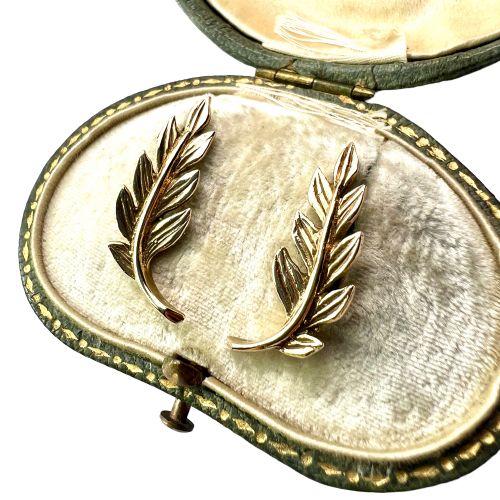
Antique botanical earrings represent a distinct tradition of nature-inspired jewellery, capturing the forms of leaves, acorns, lotus, and vines in precious metals. When searching for antique botanical earrings, collectors encounter pieces primarily drawn from the Victorian and Edwardian eras, alongside mid-century interpretations.
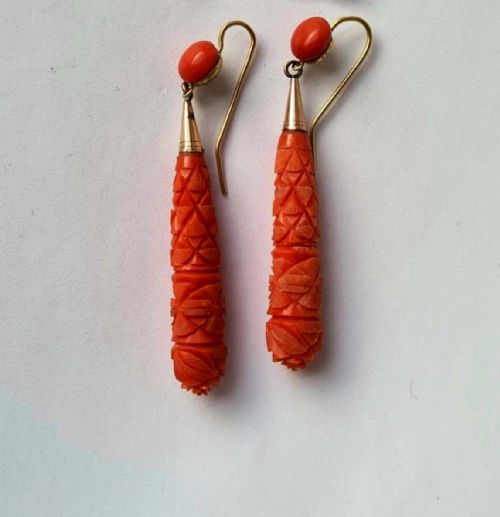
The designs range from delicate stud earrings to substantial drop earrings and dormeuse styles. Common motifs include carved coral, enamel work, and ruby-set foliage rendered in gold or silver.
Earrings from this category frequently reflect specific design movements, encompassing Victorian Aesthetic, Art Nouveau, and early Victorian sensibilities. These diverse stylistic currents ensure that each pair offers a distinct sculptural interpretation of natural plant life.
How they were made
The construction of these pieces relies on traditional goldsmithing and silversmithing techniques applied to precious materials such as sterling silver, 9ct yellow gold, and 18ct gold. Metal is shaped, cast, or carved to depict botanical elements with considerable precision.
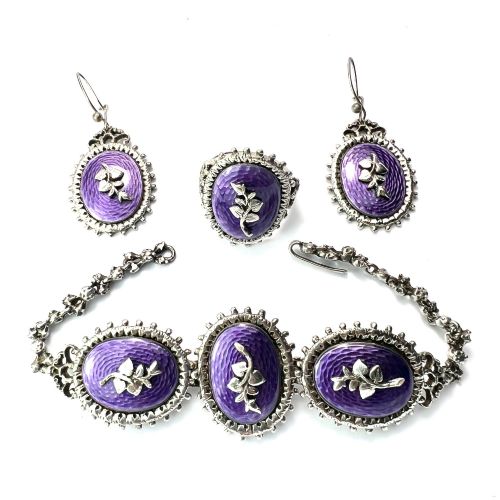
Enamelling is utilised to add vibrant colour to silver and gold surfaces, mirroring the hues of natural flora. Gemstones like rubies and diamonds are flush-set or mounted in bezels to accent the organic forms of leaves and vines.
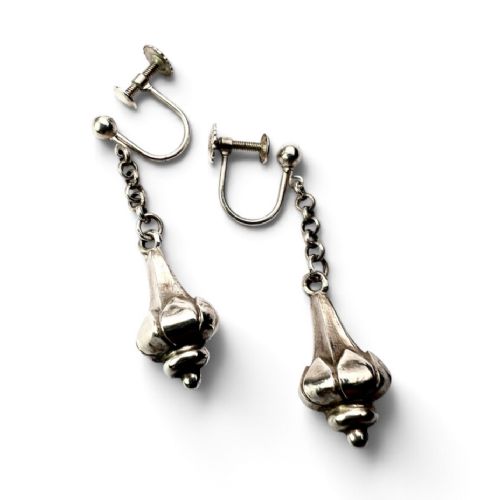
Early examples feature hand-carved organic materials, notably coral, shaped into specific botanical components. Fastening mechanisms include screwbacks and standard posts suited to the period of manufacture.
Antique Botanical Earrings Retail Price Guide 2026
Typical asking prices for botanical earrings among the pieces listed under this phrase on Sellingantiques today, from the lower quarter to the upper quarter. They describe what is for sale here now, not the wider market.
These botanical survivors let you wear autumn leaves and summer acorns on your ears without ever raking a lawn.
What varies in quality
The standard of craftsmanship depends largely on the crispness of the botanical carving and the subtlety of the metalwork. Superior examples display finely rendered veining on leaves and secure, integrated stone settings that enhance the naturalistic illusion.
Material choice dictates the baseline tier, with higher-carat gold and meticulous enamel work distinguishing finer pieces from simpler silver output. The complexity of the drop construction and the preservation of original fixings further separate exceptional specimens from standard production.
Harold Arthur Lazarus
The Antique Botanical Earrings Glossary
- Dormeuse earrings
- A type of antique sleeper earring designed with a secure closure intended to be worn comfortably during rest. They often feature front-facing decorative motifs such as leaves or floral drops.
- Drop earrings
- Earrings that hang below the earlobe, moving independently as the wearer turns. Botanical examples frequently suspend leaf or acorn pendants from a fixed top.
- Victorian Aesthetic Movement
- A nineteenth-century design style that emphasised visual beauty and natural forms over historical narrative. Pieces from this period often incorporate stylised leaf and plant motifs.
- Screwback
- A mechanical earring fastening utilising a threaded post and a small nut to adjust pressure on the lobe. This mechanism is common in unpierced antique earrings.
Antique Botanical Earrings: Frequently Asked Questions
What periods do these earrings come from?
The listings span several distinct eras, encompassing the Victorian and Edwardian periods, alongside mid-century pieces and earlier nineteenth-century designs. Each era brings specific stylistic markers to the botanical motifs.
Craftsmanship shifted from early hand-carved coral and intricate goldwork towards lighter Edwardian interpretations and later enamelled silver pieces.
Which plant motifs appear most often?
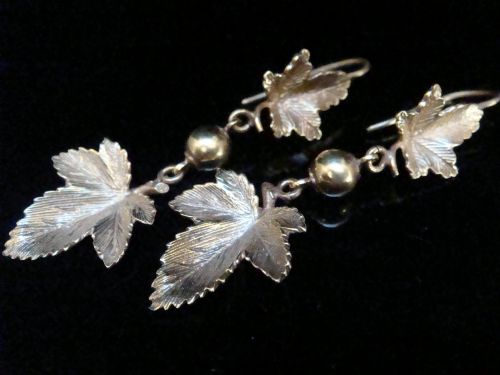
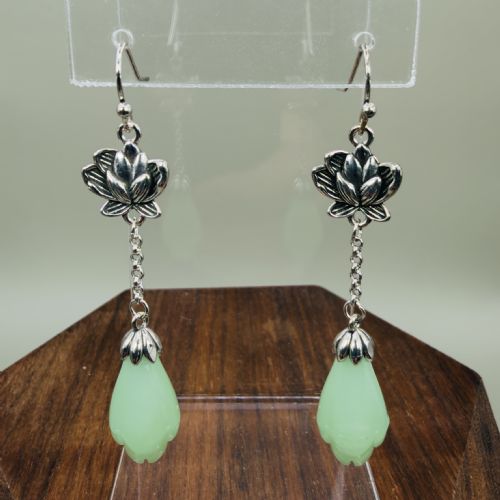
Foliage dominates the category, with specific depictions of vine leaves, oak leaves, and large leaf drops appearing frequently across the metalwork. Acorns, lotus flowers, and coral carvings also represent the natural world.
These motifs directly reflect the nineteenth-century fascination with botany and the natural sciences.
What metals were used for these earrings?
Maker choices divide primarily between sterling silver and various purities of gold, including 9ct yellow gold and 18ct gold. Silver frequently serves as the base for enamel work or specific Victorian aesthetic designs.
Gold is deployed for both cast leaf drops and secure stud configurations, sometimes accented with rubies or diamonds.
How do screwback earrings function?
Screwback fasteners feature a threaded post that passes behind the earlobe, secured by a small rotating nut that tightens against the skin. This allowed wearers without pierced ears to secure heavier drop earrings.
Adjusting the tension carefully prevents discomfort while holding the botanical drop securely in place.