




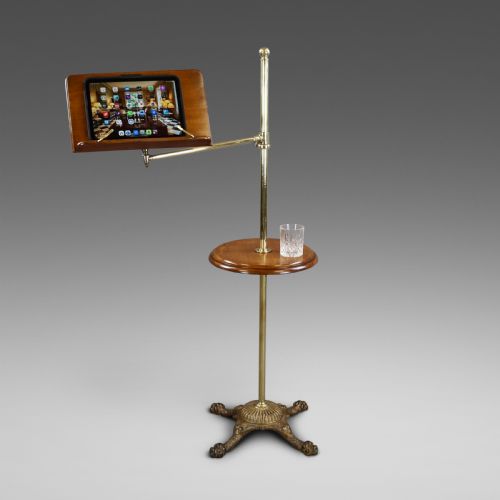
Antique Bookstand Table
An antique bookstand table brings rotating utility and period timber into a room, offering a clever place to keep volumes close at hand.
Antique Bookstand Table
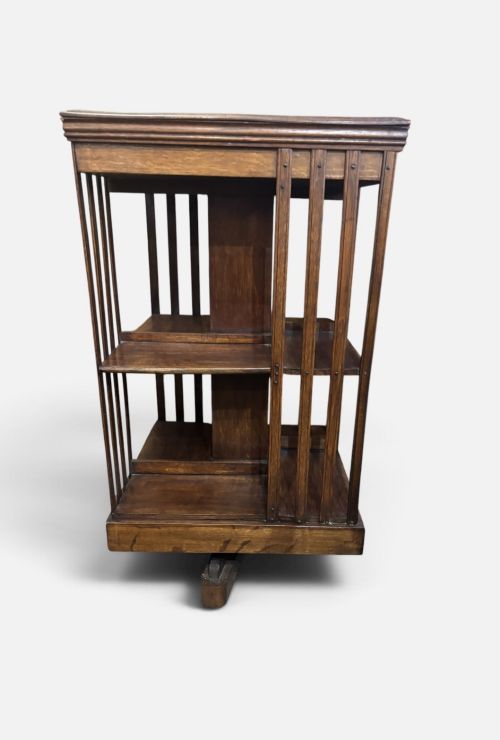
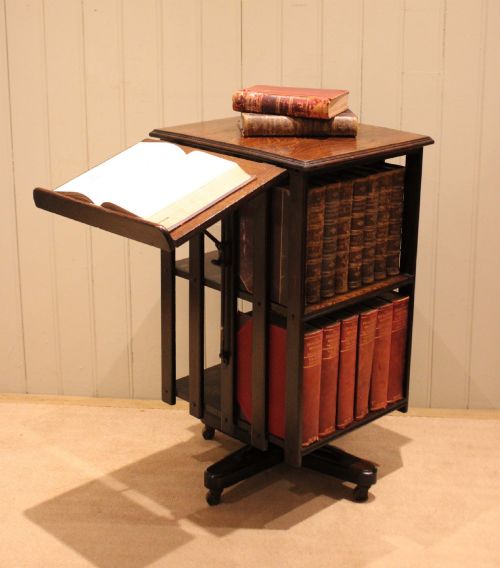
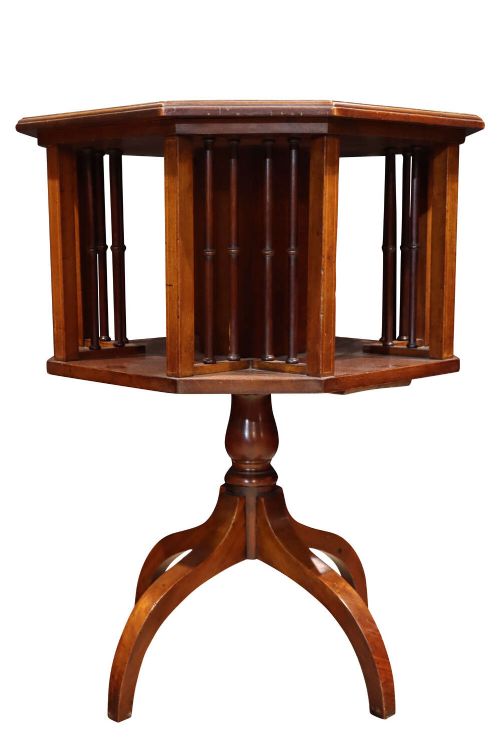
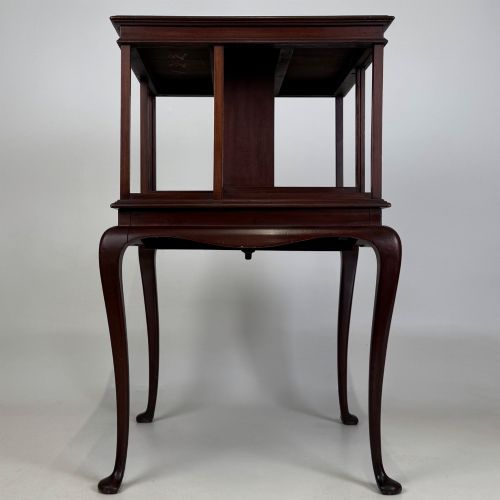
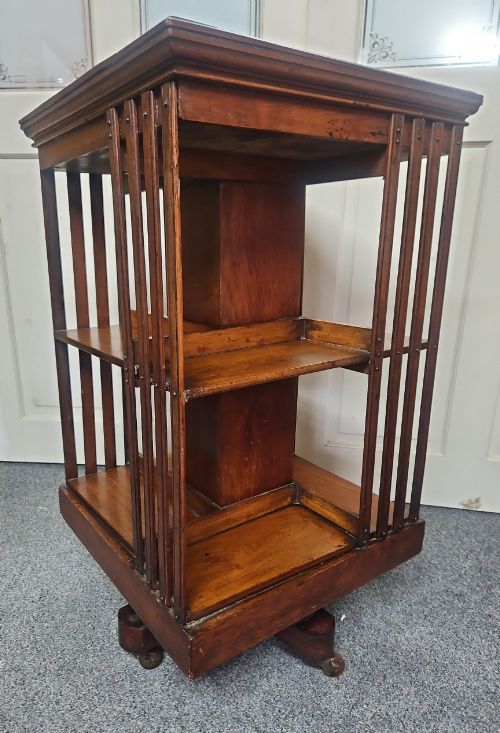
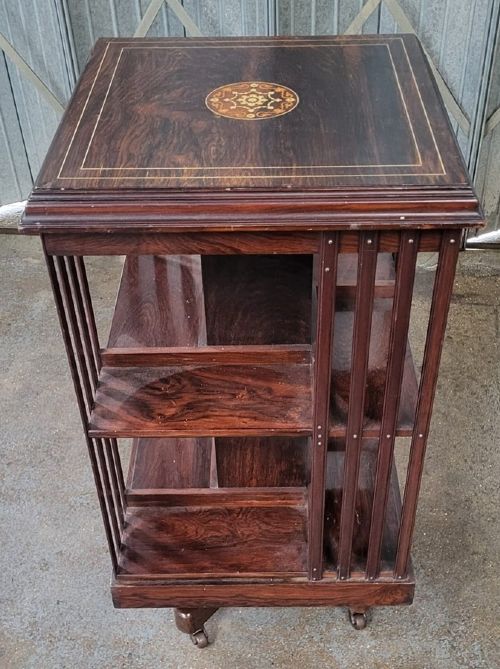
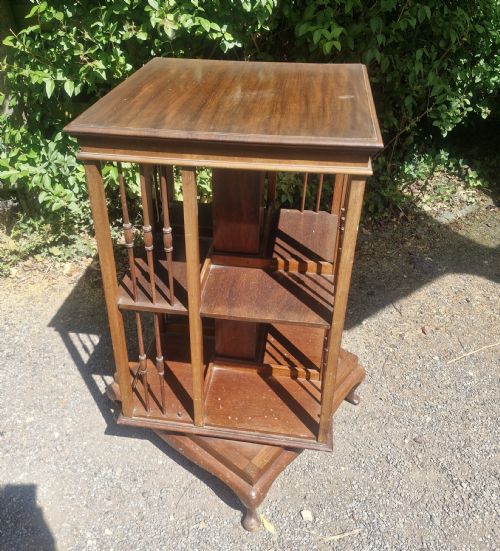
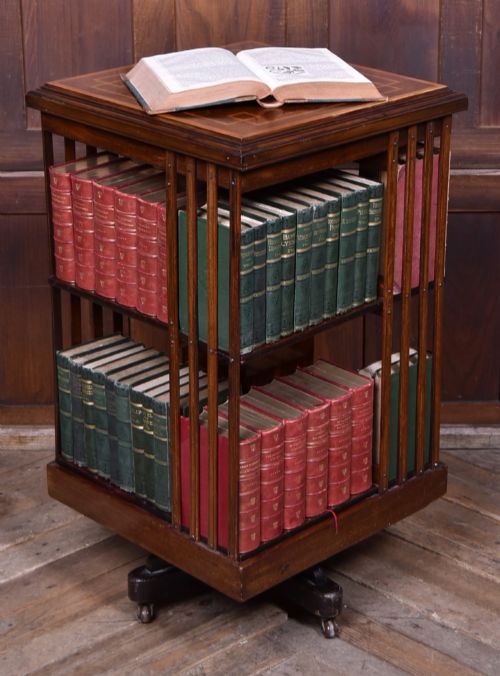
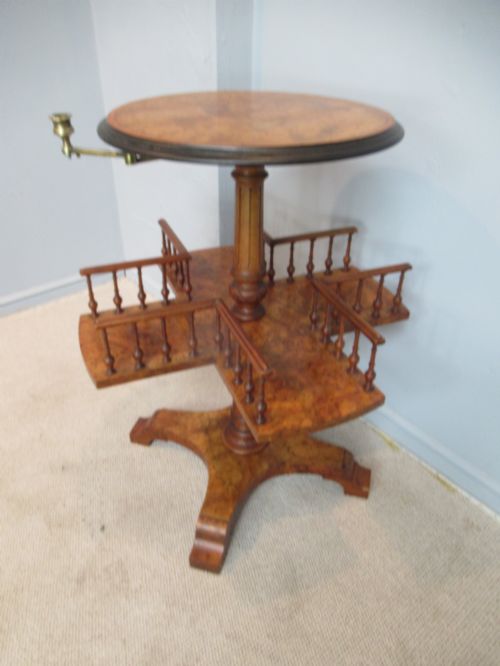
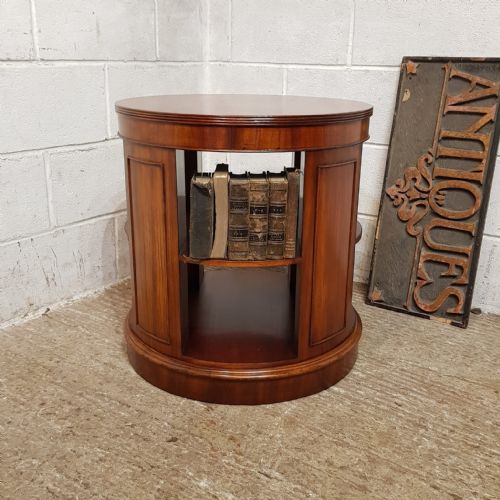
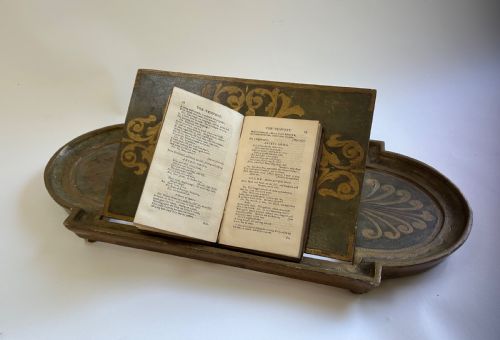
An antique bookstand table encompasses revolving bookcases, reading tables, and bookstands spanning the Victorian, Edwardian, and later nineteenth-century periods. These pieces combine flat table surfaces or reading tops with compartmentalised book storage underneath, designed for libraries, studies, and drawing rooms.
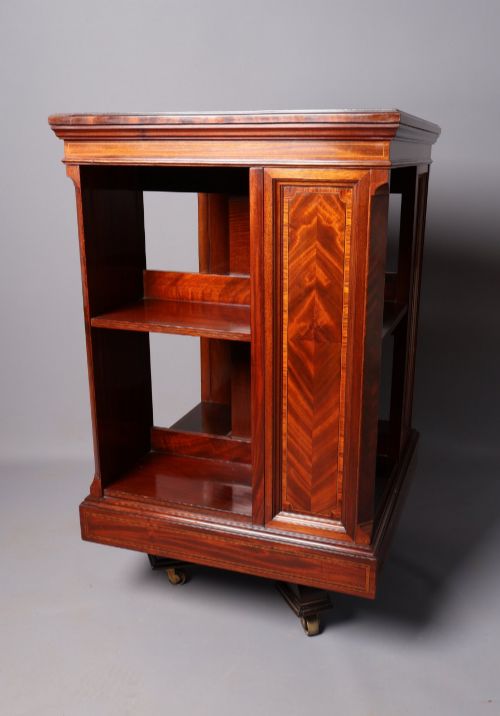
The most common version met on this page is the Edwardian mahogany revolving bookcase, alongside compact table top revolving models and nineteenth-century reading tables. Forms range from simple circular oak containers to satinwood and rosewood pieces featuring boxwood inlay or campaign styling.
Makers such as Maple & Co produced fine examples, while regional workshops contributed Scottish burr walnut pieces and Florentine book stands. Each variation serves the fundamental purpose of holding reference books or literature within arm's reach of a chair or desk.
Materials and construction methods
Timbers dictate the build of these pieces, with solid mahogany, oak, walnut, rosewood, and satinwood forming the primary structures. Workshops utilised boxwood inlay, brass fittings, cast iron mechanisms, and occasional ormolu mounts to finish the surfaces.
Revolving designs rely on internal wooden or iron spider mechanisms beneath the slatted compartments to allow smooth rotation on a stable base. Cabinetmakers constructed the tier dividers and table tops using traditional joinery, integrating crossbanding, flame veneers, and painted decoration on finer satinwood variants.
Antique Bookstand Table Retail Price Guide 2026
Typical asking prices for bookstand table among the pieces listed under this phrase on Sellingantiques today, from the lower quarter to the upper quarter. They describe what is for sale here now, not the wider market.
Listings feature pieces spanning the Victorian and Edwardian eras alongside nineteenth-century campaign items in mahogany, oak, and satinwood.
Distinctions in manufacture and finish
Quality rests upon the choice of timber figure, such as flame mahogany or burr walnut, and the precision of the boxwood inlay and satinwood banding. Finer pieces display crisp edge mouldings, well-figured grains, and balanced proportions across the tiers.
The smoothness of the revolving mechanism and the solidity of the cross-framed base distinguish better-made examples from simpler utility items. Superior hardware, such as quality brass castors and tidy internal joinery, elevates an ordinary bookstand into a notable piece of cabinet work.
Maple & Co
The Antique Bookstand Table Glossary
- Revolving bookcase
- A freestanding or table top bookcase fitted with a concealed internal pivot that allows the entire tier structure to spin.
- Campaign table top reading stand
- A portable reading slope or stand designed for easy transport, often associated with nineteenth-century military travel.
- Cheveret
- A small writing table featuring a revolving or fixed bookstand superstructure with small drawers, popular in satinwood during the eighteenth and nineteenth centuries.
- Satinwood
- A light, hard timber with a natural sheen, frequently used for veneering and inlay work on Edwardian and late nineteenth-century pieces.
- Boxwood inlay
- Contrasting pale wood inserted into dark timber grounds to create delicate geometric borders and stringing lines.
Antique Bookstand Table: Frequently Asked Questions
How do revolving bookcases work?
A concealed internal pivot mechanism beneath the tiers connects the upper book compartments to a cruciform base, allowing the entire unit to spin smoothly.
This central bearing supports the weight of heavy volumes while keeping the centre of gravity low enough to prevent tipping during rotation.
Where should I place a reading table?
These pieces suit positions beside armchairs, near reading desks, or alongside sofas where books need to be kept within reach.
Table top versions sit easily upon larger desks or sideboards, whilst freestanding revolving models anchor corners or sit between seating arrangements.
How do I identify an Edwardian piece?
Edwardian examples often feature lighter timbers like satinwood, delicate boxwood inlay, and Sheraton-inspired neoclassical motifs dating from around 1900.
They tend to feel lighter in construction than earlier Victorian items, frequently employing flame mahogany veneers and simple slatted partitions.
What is a book trough?
A book trough is an open-topped container designed to hold a small selection of books upright on a table surface or desk.
Unlike enclosed bookcases, they offer immediate visibility of titles and occupy minimal space in a study or library.