
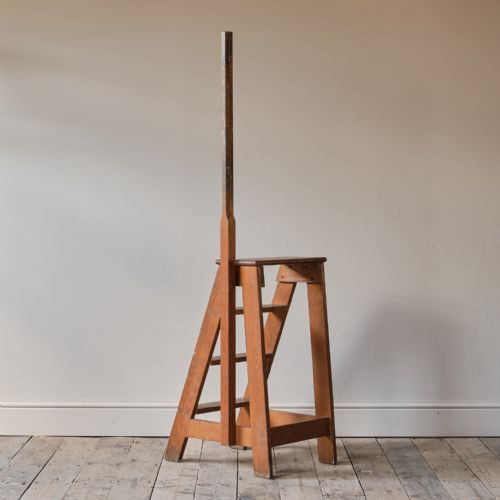
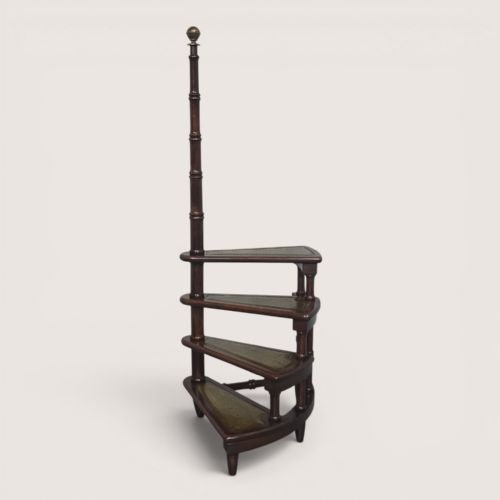
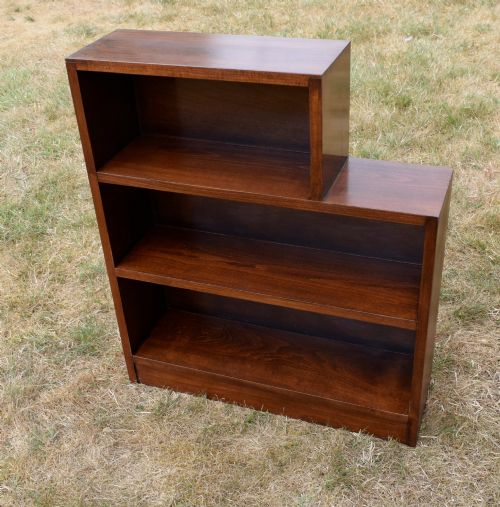
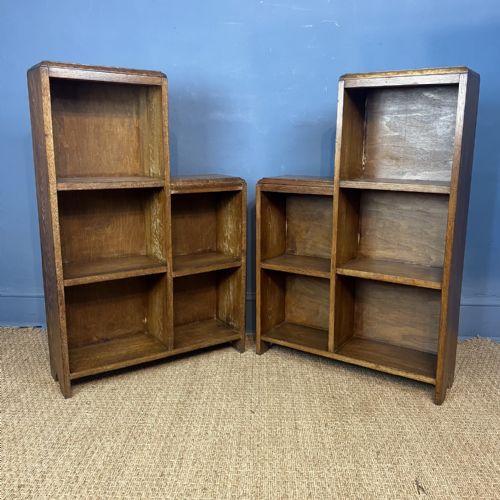


Antique Book Steps
Antique book steps provide practical reach for high shelves, combining sturdy timber construction with clever folding or stepped designs that suit traditional libraries.
Antique Book Steps
Antique book steps are practical pieces designed to reach high shelves in libraries and studies. The selection on this page spans the Georgian, Victorian, Edwardian, and Art Deco periods, alongside pieces from the nineteenth and early twentieth centuries.
Most examples found here are library steps and library ladders constructed from timber, often accompanied by related items such as bookcases, print sets, bureau cabinets, and bookends.
Makers and designers referenced in the listings include historical styles like Gothic Revival and makers in the manner of A.W.N. Pugin, reflecting traditional cabinet-making origins.
Materials and construction
These pieces are built primarily from solid hardwoods including oak, mahogany, walnut, and yew, matched with brass fittings and leather treads.
Construction techniques range from traditional A-frame joinery and stepped shelving to folding mechanisms designed for practical use in domestic and institutional libraries.
Listings feature oak, mahogany, walnut, and yew timbers across periods from the Georgian era to Art Deco.
Assessing quality
Quality in antique book steps rests on the choice of timber, such as figured mahogany or golden oak, and the integrity of the structural joints under weight.
Refined details like brass hardware, inset leather treads, and sophisticated folding mechanisms distinguish standard utility ladders from finer cabinet-maker pieces.
A.W.N. Pugin·Warwick Goble
The Antique Book Steps Glossary
- Library steps
- Freestanding sets of stairs designed to reach high bookshelves. They often feature folding treads or hand poles for stability.
- A-frame
- A triangular structural formation used in library steps to provide a self-supporting base. This design ensures safety when climbing.
- Tread
- The horizontal upper surface of a step where the foot rests. In library steps, these are sometimes lined with leather.
- Gothic Revival
- An architectural and decorative style drawing on medieval forms. Pieces in this style often incorporate pointed arches and heavy timber framing.
Antique Book Steps: Frequently Asked Questions
What are antique book steps used for?
Antique book steps are designed to provide physical access to high bookshelves in private libraries, studies, and large home collections.
They combine functional climbing utility with traditional cabinet-making, serving as decorative furniture pieces when not actively in use.
How do I identify the period of library steps?
Dating relies on examining the timber species, construction joints, and stylistic elements such as Gothic Revival motifs or Art Deco geometry.
Georgian and Victorian pieces tend to use solid oak or mahogany with traditional joinery, while later twentieth-century examples show distinct transitional styles.
Are antique library steps safe to climb?
Most antique library steps remain structurally sound if constructed from solid hardwoods like oak or mahogany with strong joints.
Buyers should inspect the stability of the frame and treads before use, especially on folding or A-frame mechanisms.
What materials are common in library steps?
Timbers such as oak, mahogany, walnut, and yew form the primary framework of these steps.
Additional materials include brass for hinges and fittings, alongside leather inserts on the treads for grip and wear protection.