





Antique Bombe Storage Cabinet
An antique bombe storage cabinet brings sweeping Rococo curves and rich marquetry into a room, offering both sculptural presence and deep interior capacity.
Antique Bombe Storage Cabinet
When you search for an antique bombe storage cabinet, you encounter pieces defined by their swelling, convex sides and serpentine fronts. These forms descend from eighteenth-century French and Dutch cabinet-making traditions, where makers prioritized voluptuous silhouettes over flat planes.
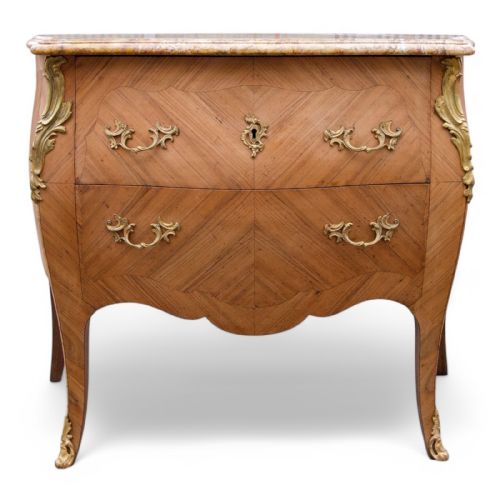
The versions you meet most frequently on this page span the eighteenth, nineteenth, and early twentieth centuries. They appear primarily as commodes, chests of drawers, and side cabinets, frequently topped with fitted marble slabs.
Stylistically, pieces fall largely into Louis XV Revival, Rococo, and Régence categories. These later interpretations echo the sweeping lines and ornate mounts of their earlier counterparts.
Materials and construction methods
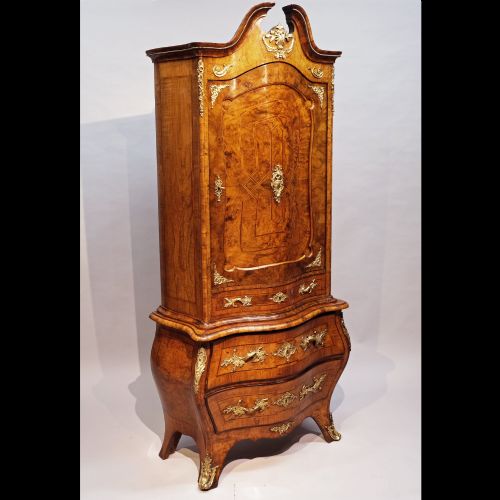
Construction relies on intricate wood veneers and solid timbers shaped over robust carcases. Craftsmen utilised kingwood, walnut, and burr walnut, often arranging grain patterns to emphasise the swelling contours of the frame.
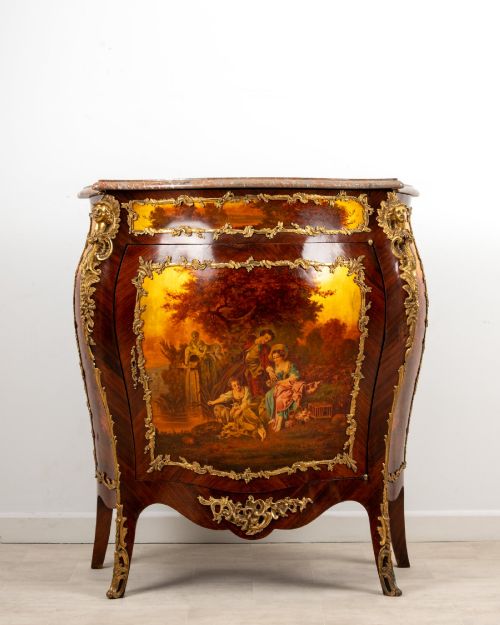
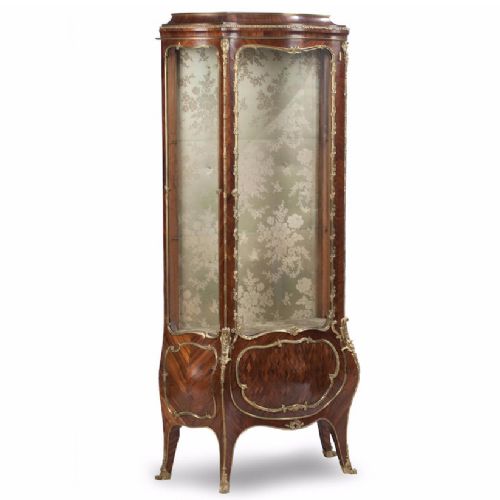
Surface ornamentation distinguishes many examples through detailed marquetry and hand-painted lacquer panels in the Vernis Martin tradition. Cast ormolu mounts accentuate the corners, feet, and handles, following the contours of the woodwork.
Antique Bombe Storage Cabinet Retail Price Guide 2026
Typical asking prices for bombe storage cabinet among the pieces listed under this phrase on Sellingantiques today, from the lower quarter to the upper quarter. They describe what is for sale here now, not the wider market.
Every swelling curve invites a hand to run across it, proving that eighteenth-century cabinet-makers understood the irresistible pull of a well-rounded waist.
Judging quality in construction and surface
Quality rests heavily on the execution of the cabinetry and the integration of decorative mounts. Superior pieces display seamless veneer work that follows complex curves without buckling, alongside finely chased ormolu hardware that fits the wood precisely.
The integrity of the structural carcass and the crispness of the carving dictate the standing of a piece. Hand-chased bronze mounts and deeply figured timber separate standard production from exceptional examples.
The Antique Bombe Storage Cabinet Glossary
- Bombé
- A swelling, outward-curving profile characteristic of Rococo furniture. This convex shaping requires advanced woodworking skill to apply veneers smoothly over compound curves.
- Ormolu
- Gilded bronze used for decorative mounts and hardware. It provides metallic contrast against dark woods like kingwood and walnut.
- Vernis Martin
- A simulated Japanese lacquer technique developed in eighteenth-century France. It creates lustrous, painted finishes often depicting pastoral scenes.
- Marquetry
- The art of applying small pieces of veneer to a structure to form decorative patterns and pictures. Makers select contrasting timbers to create depth and shade.
- Commode
- A low chest of drawers originating in France. These pieces typically feature multiple drawer tiers and serve prominent functions in formal rooms.
Antique Bombe Storage Cabinet: Frequently Asked Questions
What rooms suit a bombe cabinet?
These cabinets work well in reception rooms, hallways, or bedrooms where their curved profiles can stand clear of flat walls. Their decorative surfaces make them natural focal points in traditional or eclectic interiors.
Because they combine display surfaces with enclosed storage, they function practically as sideboards or commodes while adding strong architectural character to a space.
How do I care for wood and ormolu?
Maintenance involves dusting with a soft, dry cloth and avoiding modern silicone polishes that can degrade historic finishes. Natural waxes applied sparingly help preserve the lustre of kingwood and walnut.
Ormolu mounts require gentle cleaning with a soft brush to remove dust from crevices. Harsh metal cleaners should be avoided to prevent stripping the original gilding.
Are marble tops original to these cabinets?
Many period pieces incorporate fitted marble slabs designed to handle heavy use and provide a cool, durable surface. These tops are typically shaped to follow the exact serpentine contours of the wooden carcase below.
When examining a piece, check that the marble sits flush and matches the proportions of the cabinet base. Original stones show appropriate signs of age and wear consistent with the wooden structure.
How do I distinguish revival periods?
Nineteenth-century revival pieces often display heavier proportions and machine-assisted casting in their mounts compared to eighteenth-century originals. Makers in the later periods frequently drew inspiration from specific historical makers like Zweiner.
Examining the secondary timbers inside the drawers and the construction of the dovetails helps clarify the manufacturing era. Variations in veneer thickness and tool marks offer further clues to the date of production.