

Antique Blue Necklace
An antique blue necklace brings together historic goldsmithing and cool-toned gems from periods spanning the Victorian era to Art Deco.
Antique Blue Necklace
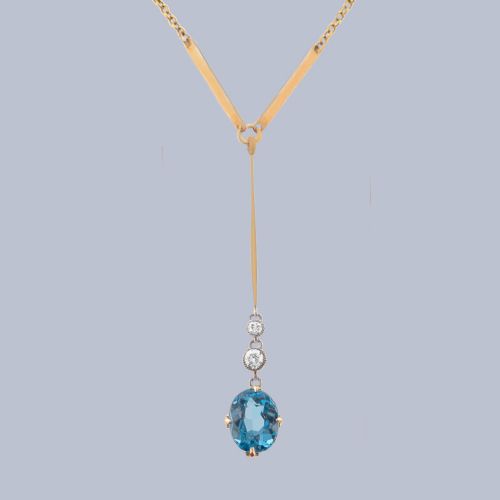
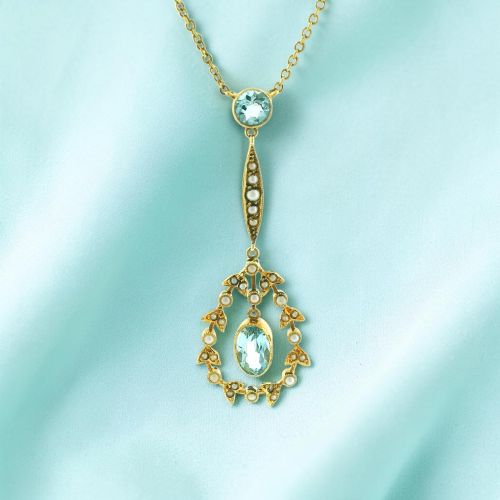
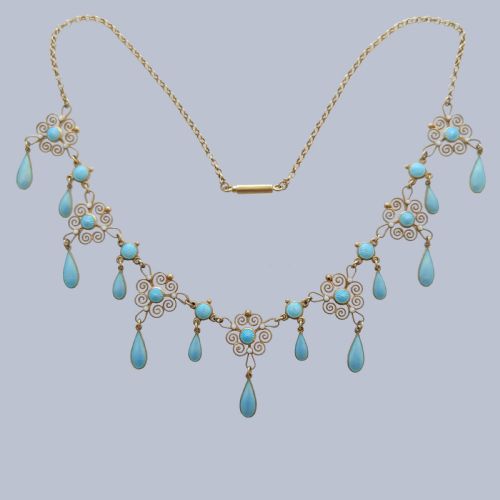
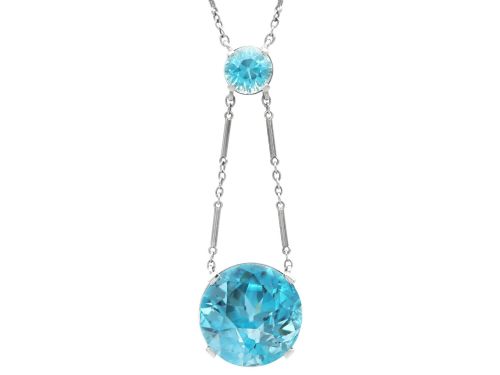
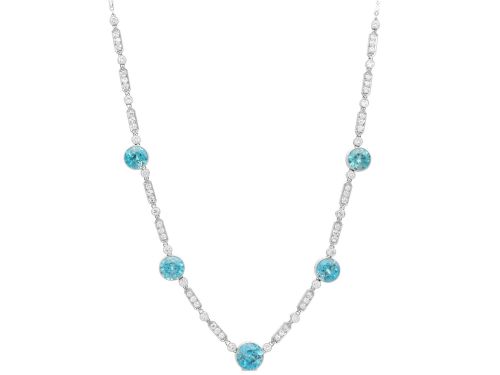
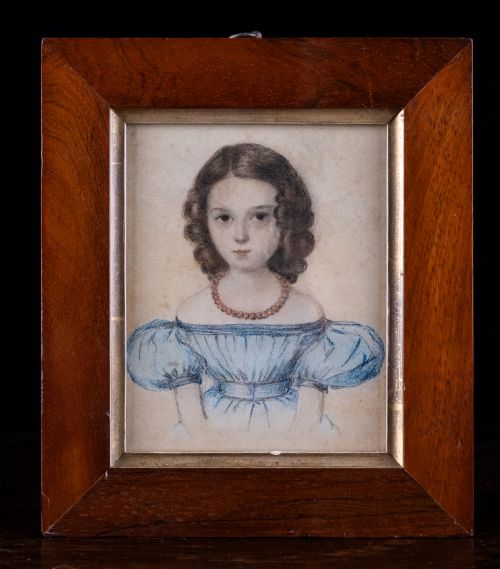
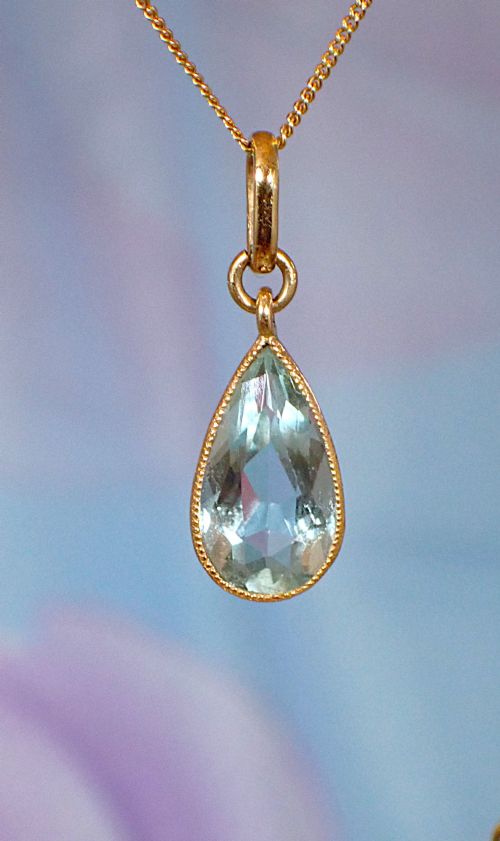
When you search for an antique blue necklace, you encounter varied forms including pendants, drop necklaces, negligee styles, and festoons. The pieces range across the Victorian, Edwardian, Art Nouveau, Art Deco, and Arts and Crafts periods.
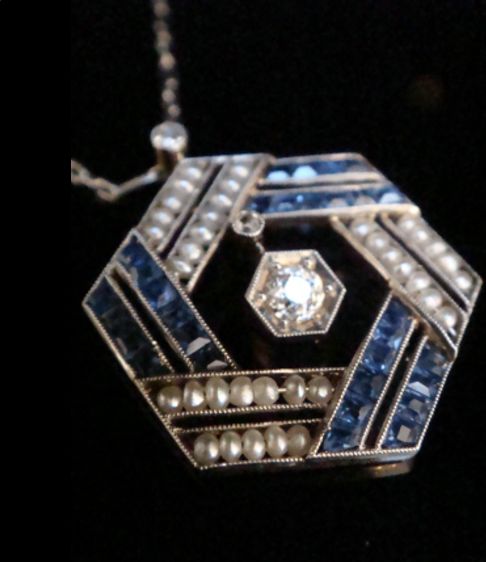
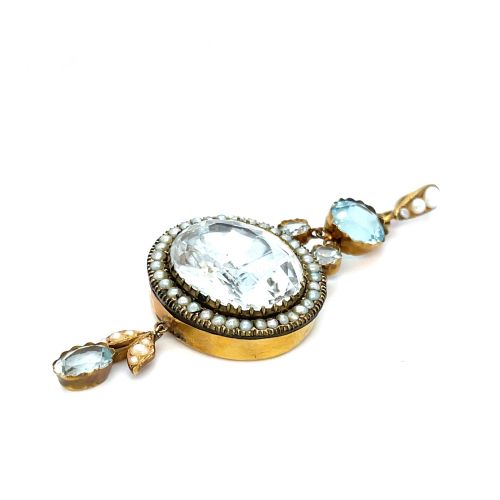
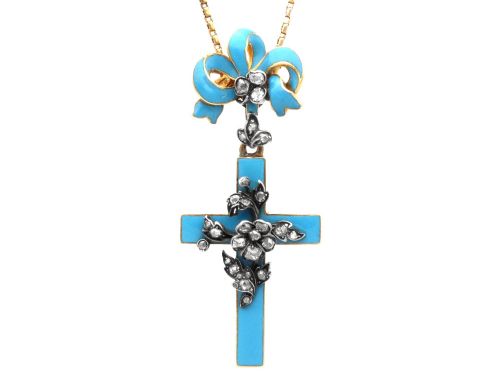
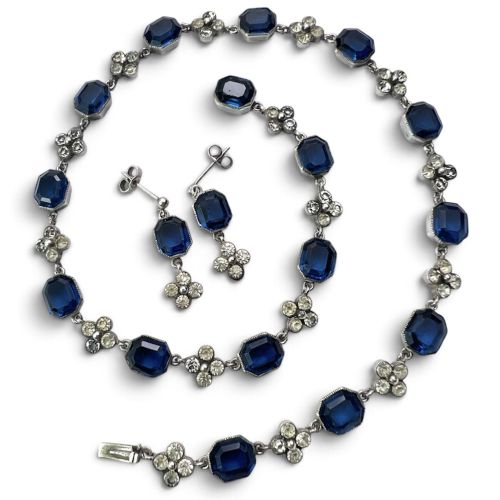
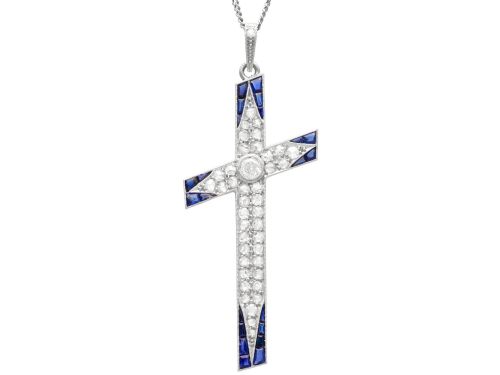
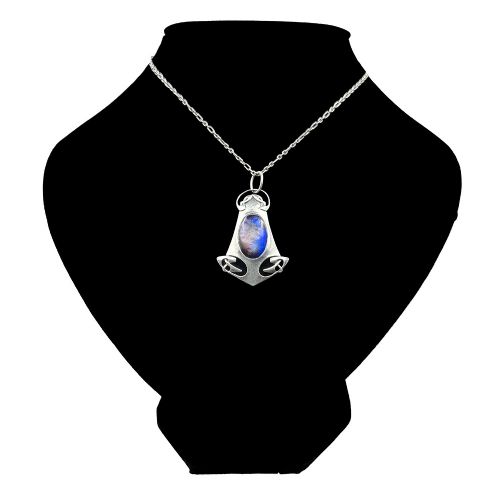
You are most likely to meet 9ct gold or silver settings holding aquamarine, sapphire, blue enamel, turquoise, or zircon. These combine with pearls, diamonds, and sometimes moonstone or lapis lazuli in drop pendants and chain assemblies.
Materials and construction
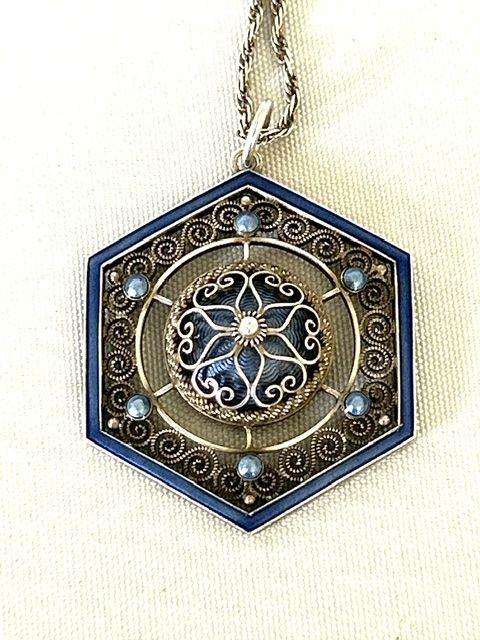
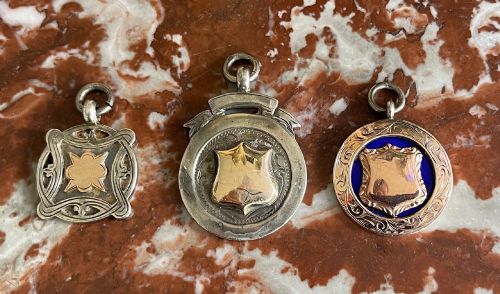
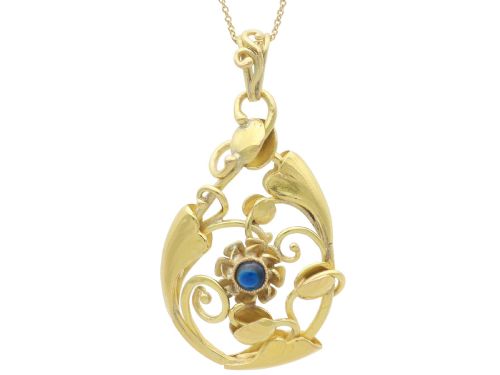
Goldsmiths set stones into 9ct and 18ct yellow or rose gold, platinum, and silver using collet or prong mounts. Enamel work, particularly guilloche and plique-a-jour, brings vibrant colour to silver and gold frameworks.
Craftsmen paired precious stones like sapphires, aquamarines, and diamonds with pearls and rock crystal. Chains often incorporate detailed links, drop configurations, and festoon arrangements.
Antique Blue Necklace Retail Price Guide 2026
Typical asking prices for blue necklace among the pieces listed under this phrase on Sellingantiques today, from the lower quarter to the upper quarter. They describe what is for sale here now, not the wider market.
Pendant necklaces and drop designs dominate the forms, alongside watch fobs, chatelaines, and earrings sets.
Judging the work
The distinction between standard items and exceptional examples lies in the precision of the metalwork and the clarity of the stones. Finer pieces demonstrate careful handiwork in enamel application and balanced stone proportions.
Maker attribution and design complexity elevate certain pendants and necklaces. Strong artistic integration, such as distinct Art Nouveau curves or Arts and Crafts motifs, separates mass production from master craftsmanship.
Archibald Knox·Liberty and Co·Murrle Bennett·Marius Hammer·Mary Thew·R Lalique·Wilhelm Fuhner
The Antique Blue Necklace Glossary
- Negligee necklace
- A necklace featuring two unequal drops suspended from a central link or chain. This style gained popularity during the Edwardian period.
- Festoon necklace
- A necklace composed of draped chains or swags of beads and gemstones that hang in curves across the neckline.
- Guilloche enamel
- A decorative technique where enamel is applied over metal engraved with an intricate geometric pattern. It creates a translucent, shimmering coloured surface.
- Plique-a-jour
- An enamelling technique similar to stained glass, where the enamel has no backing, allowing light to shine through the transparent or translucent colour.
- Foil back
- A method of placing a thin sheet of metallic foil behind a gemstone to enhance its brilliance and colour. This technique appears frequently in older jewellery.
Antique Blue Necklace: Frequently Asked Questions
What periods do these blue necklaces cover?
The pieces span from the 19th century through the Victorian, Edwardian, Art Nouveau, Arts and Crafts, and Art Deco eras up to the mid-century.
Design motifs shift from ornate Victorian revival styles to flowing organic lines and geometric Art Deco structures.
What materials make up the blue stones?
Gems and materials include natural aquamarine, sapphire, blue topaz, zircon, lapis lazuli, turquoise, and glass alongside blue enamel.
These components appear alongside diamonds, pearls, chalcedony, and moonstone set in gold, silver, or platinum.
How do I wear a drop necklace?
Drop necklaces and pendants feature central motifs or cascading stones that sit below the main chain line. They pair well with lower necklines that allow the pendant drop space to hang clearly.
Shorter lengths rest near the collarbone while festoon and negligee designs drape lower across the upper chest.
How can I tell Edwardian from Victorian pieces?
Victorian jewellery often uses heavier gold settings, darker garnets or rich multi-stone clusters, and sentimental motifs like snakes or heavy halos.
Edwardian and Art Nouveau items tend to use lighter platinum and silver-topped gold, featuring airy lace-like openwork and cooler aquamarines or soft blue enamel.