



Antique Blanket Rail
An antique blanket rail is a practical piece of freestanding furniture designed to organise textiles, bringing period timber into daily use.
Antique Blanket Rail
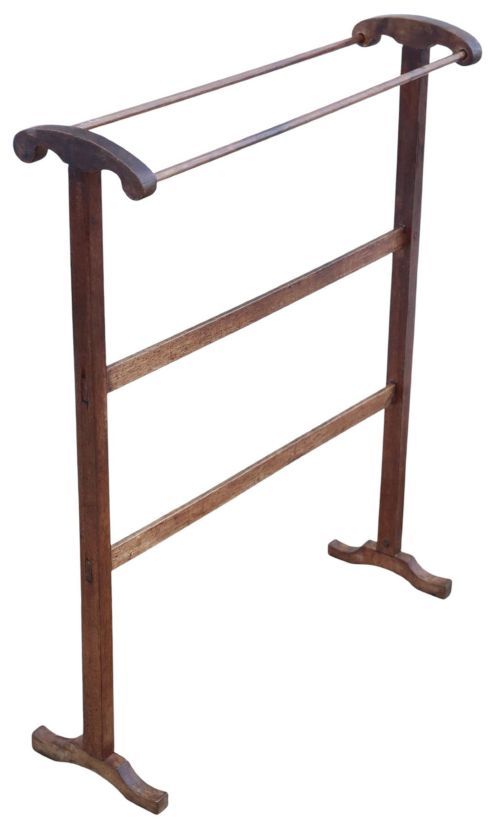
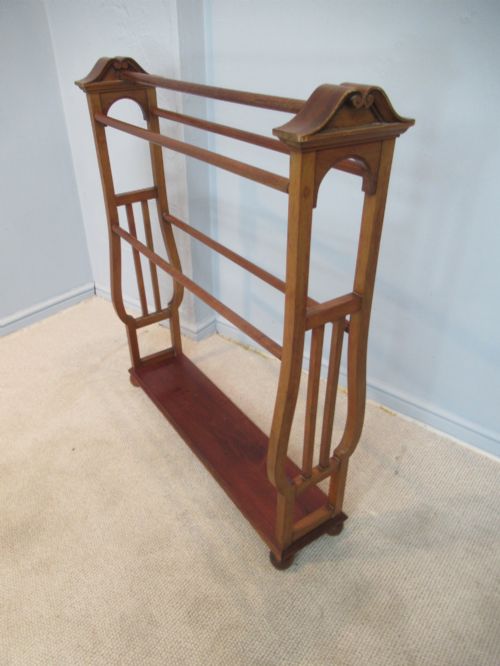
When you search for an antique blanket rail, you are looking at functional wooden stands designed to hold household textiles and clothing. The forms seen in these listings include towel rails, standing towel stands with multiple bars, clothes racks, and robe stands.
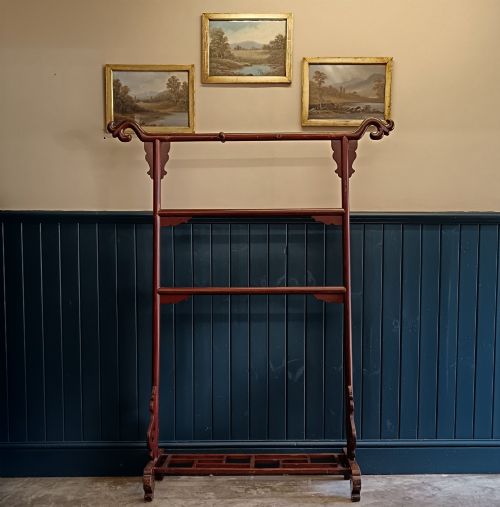
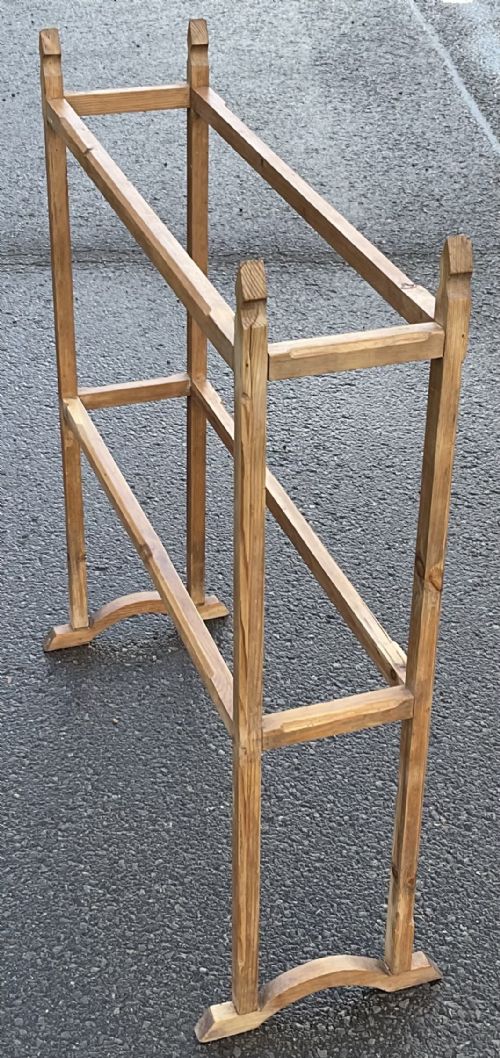
The versions you are most likely to meet on this page date from the Victorian, Edwardian, and Regency periods, alongside pieces from around nineteen hundred. They are constructed in forms ranging from simple pine frames to generous mahogany silhouettes and Chinese lacquered clothes racks.
These items serve as portable furniture for bedrooms and bathrooms, offering multiple rails or bars to drape fabrics. Their construction reflects the domestic needs of the nineteenth and early twentieth centuries, providing accessible hanging space before fitted wardrobes became standard.
How they were made
Makers constructed these pieces using solid timbers such as mahogany, oak, walnut, pine, and boxwood, selecting each wood for its strength and grain. Workshops also utilised ebonised wood and lacquered finishes to achieve dark surfaces or decorative Oriental schemes involving pigment.
Construction techniques focus on creating stable standing frames capable of supporting the weight of damp towels or heavy garments across multiple bars. Joinery methods secure the upright supports to horizontal rails, ensuring the freestanding structures remain rigid during daily use.
Antique Blanket Rail Retail Price Guide 2026
Typical asking prices for blanket rail among the pieces listed under this phrase on Sellingantiques today, from the lower quarter to the upper quarter. They describe what is for sale here now, not the wider market.
Some nineteenth-century makers evidently decided five bars were strictly necessary for morning ablutions.
What varies in quality
Quality in these pieces is dictated by the selection of timber and the refinement of the turning or joinery on the upright supports. Superior examples display dense grains in woods like mahogany or walnut, whereas simpler versions rely on utility pine.
The Antique Blanket Rail Glossary
- Mahogany
- A durable tropical hardwood prized for its rich reddish-brown colour and fine grain. It was frequently utilised for fine furniture throughout the nineteenth century.
- Ebonised wood
- Timber treated with a chemical stain or black paint to imitate expensive ebony. This dark finish was popular for decorative and formal household objects.
- Robe stand
- A freestanding wooden rack designed for hanging garments rather than folding them. These items provide open access to clothing in domestic chambers.
- Regency
- An architectural and decorative style dating from the early nineteenth century. Pieces from this era often feature clean classical lines and dark timbers.
- Inlaid
- A decorative technique where contrasting materials such as boxwood are inserted into recesses cut into the primary timber surface. This creates patterns and borders on the wood.
Antique Blanket Rail: Frequently Asked Questions
Where were blanket rails used?
These items were traditionally placed in bedrooms, dressing rooms, and bathrooms to air and store textiles. Their portable nature allowed them to be moved near heat sources or where clothing was needed.
Today, they serve similar practical functions in modern homes while displaying nineteenth and early twentieth-century woodworking styles.
How do I identify a Victorian rail?
Victorian rails typically employ dense timbers like mahogany and walnut, reflecting the furniture production methods of the nineteenth century. They often feature robust turned supports and simple functional proportions.
Comparing the timber choice and structural design helps distinguish these pieces from later Edwardian or twentieth-century examples.
Are Edwardian rails different?
Edwardian rails often incorporate lighter construction methods and decorative touches such as boxwood inlay on mahogany frames. They frequently feature multiple bars for organising household linens.
These pieces bridge the gap between Victorian utility and twentieth-century domestic design, utilising pine alongside polished hardwoods.
How do I care for timber rails?
Wooden rails require stable indoor humidity levels to prevent the timber from drying out or splitting. Dusting regularly with a soft cloth preserves the polished surface.
Avoid placing damp textiles directly onto vulnerable antique finishes for extended periods to protect the original wood and lacquer.