
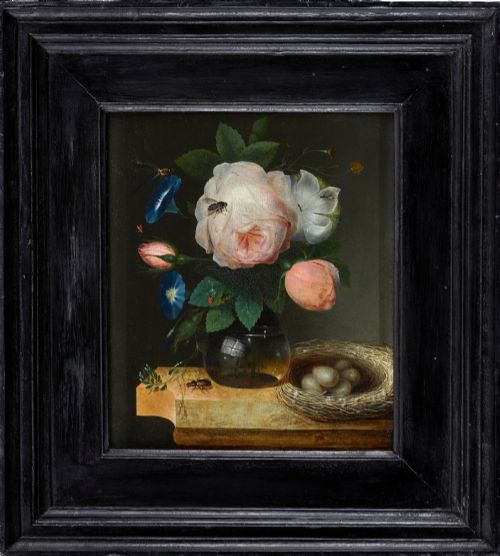


Antique Bird Nest Painting
These antique bird nest painting works capture delicate avian clutches amidst mossy banks, offering a charming slice of natural history for your walls.
Antique Bird Nest Painting
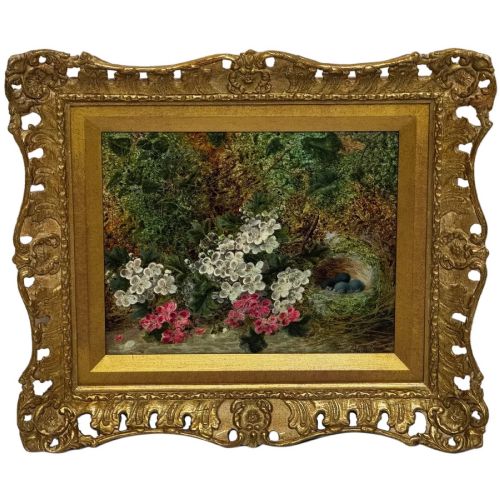
When searching for an antique bird nest painting, you are looking at detailed natural history studies and still life compositions that frequently centre on eggs resting within moss or foliage. The versions you are most likely to meet on this page span the nineteenth century, often reflecting Victorian naturalism and the careful observation of woodland flora.
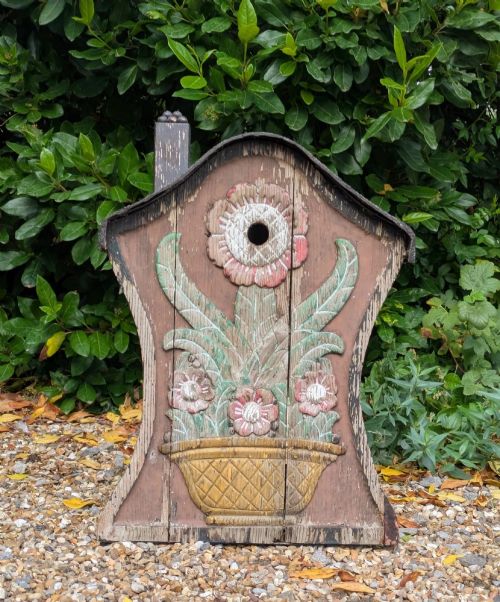
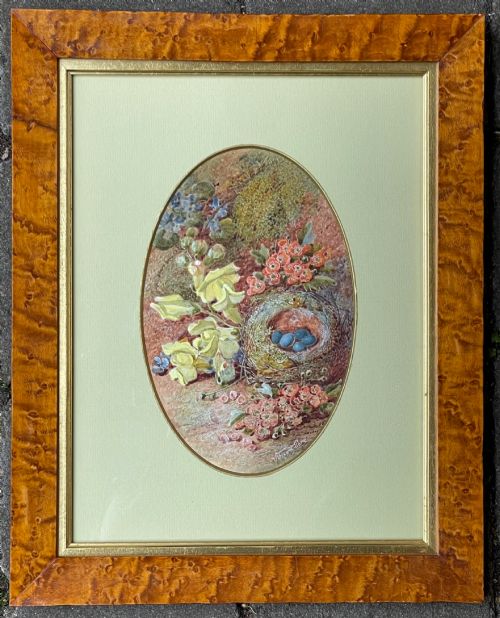
Many of these works take the form of oil paintings on canvas or panel, whilst others are executed in watercolour on paper. Alongside traditional canvas art, related pieces range from folk art bird boxes and porcelain vases to decorative wall art capturing similar rural subjects.
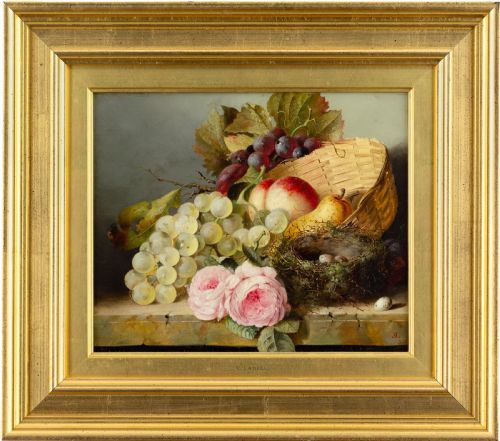
Origins stretch from English and Victorian workshops to Scandinavian country pieces and continental Dutch golden age styles. The subjects combine ornithological interest with the rich textures of primroses, blossom, and wicker baskets.
Judging the quality
Quality rests in the precision of the brushwork and the naturalism of the rendering, particularly how convincingly the artist depicts the woven twigs of the nest and the sheen upon delicate eggs. Superior examples demonstrate a subtle handling of light across mossy banks and floral surroundings.
The distinction between standard decorative pieces and finer works lies in the depth of composition and the anatomical accuracy of the flora and fauna. Well-executed pieces integrate the nest harmoniously with surrounding primroses, fruit, or foliage rather than treating it as an isolated motif.
Several artists clearly spent hours staring into damp hedges, returning indoors only when they had memorised every single blade of moss.
Oliver Clare·Vincent Clare·Edward Ladell·Gaspar Peeter Verbruggen·Eloise Harriet Stannard·William Stephen Coleman·John Sherrin·George Clare·G Stainton·William Cruikshank
The Antique Bird Nest Painting Glossary
- Victorian Naturalism
- An artistic movement focusing on the detailed, accurate depiction of the natural world without idealisation. This style underpins many nineteenth-century still life works.
- Still Life
- A painting or drawing featuring inanimate commonplace objects, which in these examples typically include nests, eggs, baskets, and gathered flowers. Artists arranged these elements to study light and texture.
- Oil on Canvas
- Pigments mixed with a drying oil, applied to a stretched woven fabric support. This combination allows for rich blending and durable surface textures.
- Watercolour
- Fine pigment suspended in a water-based, translucent solution applied to paper. It demands immense control to achieve delicate botanical precision.
Antique Bird Nest Painting: Frequently Asked Questions
How should I hang an antique painting?
Keep these artworks away from direct sunlight and damp walls to protect the canvas, paper, and wooden frames. Stable indoor temperatures prevent the paint and panel from warping over time.
Use sturdy picture hooks suited to the weight of the frame and hang the piece at eye level. This ensures proper viewing of the intricate brushwork within the nest and foliage.
What subjects accompany bird nests?
These compositions frequently feature spring blossoms, primroses, and mossy banks gathered together in woodland settings. Some pieces incorporate wicker baskets, fruit, or butterflies to enrich the still life arrangement.
The inclusion of these natural elements reflects nineteenth-century interests in botany and field naturalism. Each item is painted with careful attention to botanical accuracy.
Are watercolours as durable as oils?
Watercolour paintings on paper require protective glass and stable framing to prevent fading and moisture damage. They are more sensitive to light than oil paintings on canvas or panel.
When properly glazed and kept out of direct sunlight, watercolours retain their vibrant pigments for generations. Both mediums demand gentle care during cleaning.
How do I identify Victorian naturalism?
Victorian naturalism is characterised by a scrupulous attention to botanical and zoological detail. Artists sought to portray nature exactly as observed, focusing on textures like feathers, moss, and petals.
This approach contrasts with idealised landscape painting by bringing close-up woodland subjects into domestic interiors. The resulting works celebrate the quiet details of the countryside.