


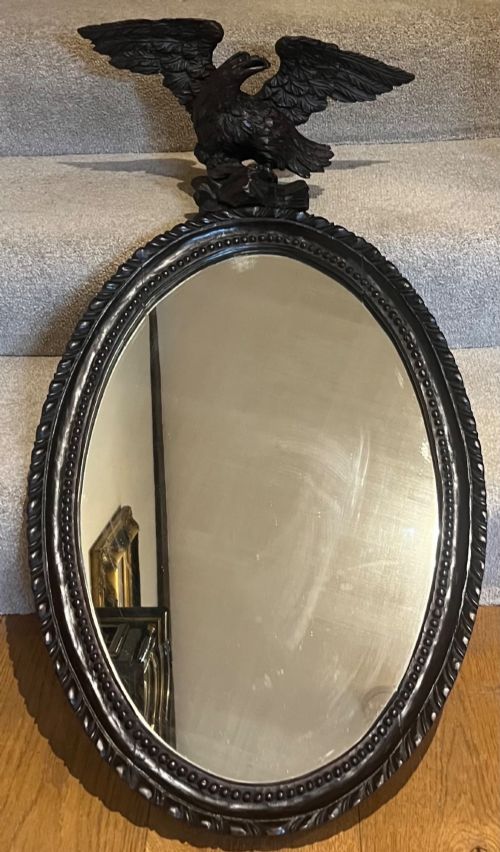
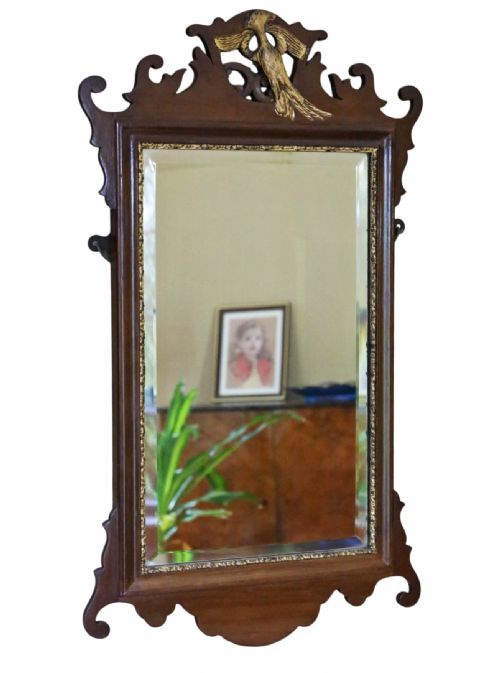


Antique Bird Carved Mirror
An antique bird carved mirror brings character to a room through traditional craftsmanship and detailed wooden crests.
Antique Bird Carved Mirror
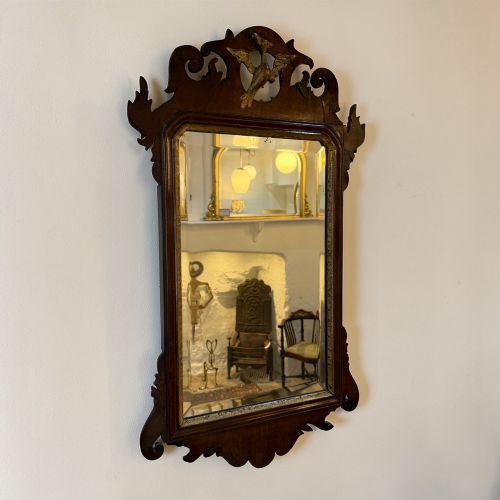
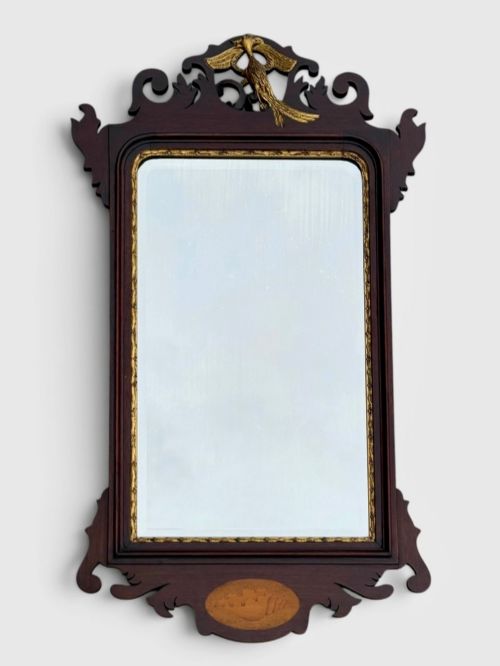
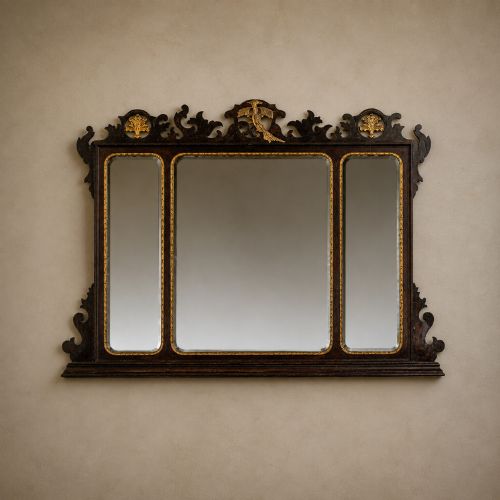
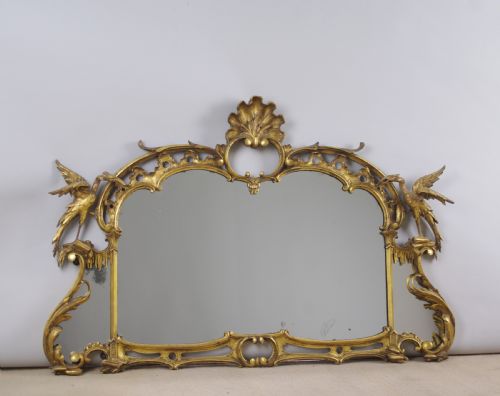
When you search for an antique bird carved mirror, you encounter wall mirrors, overmantel mirrors, and fretwork frames originating from the eighteenth, nineteenth, and early twentieth centuries. These pieces typically feature crested wooden frames decorated with birds, most notably the mythical Ho-Ho bird or an eagle.
The version you are most likely to meet on this page is a mahogany or giltwood wall mirror drawing upon Georgian, Chippendale, or Victorian styles. They serve as striking focal points in hallways, above fireplaces, and across reception rooms.
Judging the quality
Depth and crispness separate an ordinary frame from a superior antique bird carved mirror. Master carvers gave feathers and foliage a three-dimensional vitality, whereas lesser examples remain flat and formulaic in their execution.
Originality dictates the standing of each piece, from the integrity of the gilding and paint to the retention of the early glass plate. Frames that retain their original crests and untouched surfaces hold considerably more character than those altered over the decades.
Antique Bird Carved Mirror Retail Price Guide 2026
Typical asking prices for bird carved mirror among the pieces listed under this phrase on Sellingantiques today, from the lower quarter to the upper quarter. They describe what is for sale here now, not the wider market.
Regional variations on this page include Irish giltwood triptychs and Black Forest carved bird of prey frames.
Gabriel Viardot
The Antique Bird Carved Mirror Glossary
- Ho-Ho bird
- A stylized Chinese phoenix commonly found on eighteenth and nineteenth-century English and Irish mirrors. It perches atop the central crest, surrounded by openwork foliage.
- Giltwood
- Timber coated with a thin layer of gold leaf over a prepared gesso ground. This finish provides the characteristic metallic warmth seen on many period frames.
- Fretwork
- Openwork ornamentation cut from a thin board using a fretsaw. This technique creates the intricate, geometric silhouettes characteristic of Chippendale style wall mirrors.
- Gesso
- A plaster-like mixture applied to wooden frames as a smooth base for gilding or painting. It allows carvers to model fine details that timber alone cannot hold.
- Overmantel mirror
- A large mirror designed to hang specifically above a fireplace mantelpiece. They often incorporate triptych glass plates and elaborate bird crests.
Antique Bird Carved Mirror: Frequently Asked Questions
What is a Ho-Ho bird on a mirror?
The Ho-Ho bird is a Western adaptation of the Chinese phoenix, symbolizing virtue and grace. Carvers placed these mythical creatures at the crest of eighteenth and nineteenth-century frames.
Their distinctive swept-back crests and ornate tail feathers add a theatrical focal point to Chippendale and Regency style mirrors.
How should I clean my gilded frame?
Dust the carved wooden surfaces gently with a soft, dry brush to remove particles without disturbing the finish. Avoid all moisture and chemical cleaning agents, as water strips historic gold leaf and gesso.
Professional conservators should handle any significant restoration or deep cleaning required on fragile antique gilding.
Are antique mirrors made of original glass?
Many period pieces retain their original glass, which often displays minor foxing, subtle warping, or small blemishes. These natural imperfections confirm the age and authenticity of the mirror plate.
Replacement glass occasionally appears in pieces that suffered damage during their long history, though surviving original plates remain preferred by collectors.