
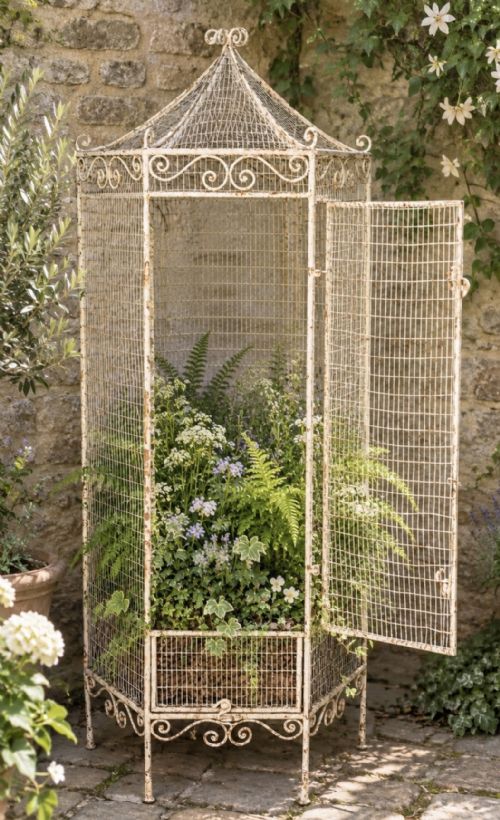


Antique Bird Cage
An antique bird cage brings the charm of historic aviaries into a room, spanning brass work, wooden housing, and the clever mechanical forms of tilt-top tables.
Antique Bird Cage
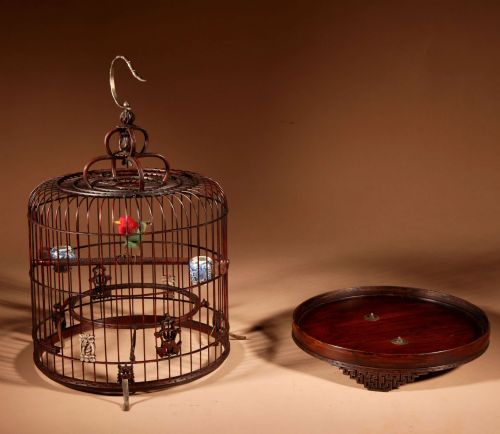
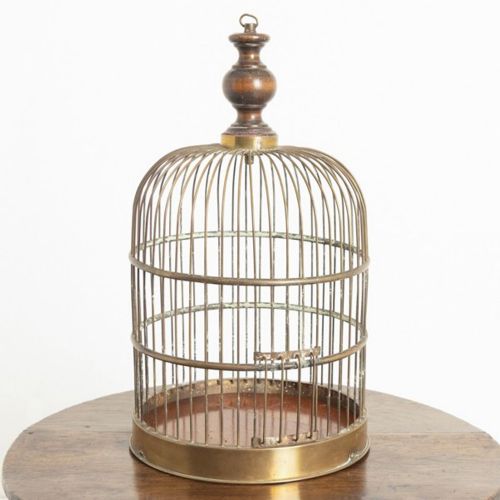
The term antique bird cage covers actual historic enclosures for animals alongside specialised furniture forms known as bird-cage tables. When searching this phrase, buyers encounter both decorative hanging cages in brass and wire, and Georgian mahogany occasional tables featuring the distinctive rotating wooden block beneath the top.
The selection ranges from Victorian cast iron stands and French wirework pavilions to eighteenth-century tripod tables with snap-top actions. These objects record both domestic animal care and inventive domestic carpentry across the Georgian, Victorian, and Edwardian periods.
Materials and construction
Makers utilised a combination of timber, wire mesh, brass, and wrought iron to construct these pieces, often pairing mahogany with intricate turning for furniture supports. Metal cages rely on soldered wire and cast components, while wooden examples incorporate joined slats, painted pine, and bamboo.
Table versions employ the characteristic bird-cage wooden mechanism beneath the surface, allowing the top to tilt or revolve smoothly on a central pillar and tripod base.
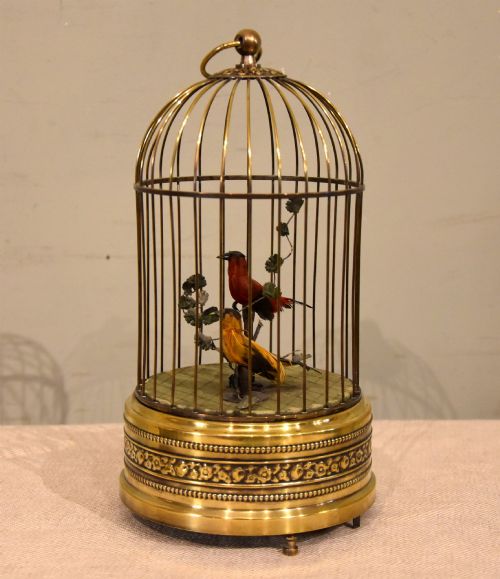
Several Victorian enclosures once housed mechanical singing birds that still perform within their brass wire homes.
Judging quality
Quality rests upon the crispness of the carpentry joints, the gauge of the wire, and the integrity of the rotating mechanism on table formats. Finer examples display well-figured mahogany timber, precise brass casting, and original painted surfaces without clumsy repairs.
Plain utilitarian enclosures sit at one end of the spectrum, while highly decorative French chandeliers styled as birdcages or elaborate automaton singing bird boxes represent a much higher level of craftsmanship.
Karl Griesbaum·Paul Lelong
The Antique Bird Cage Glossary
- Bird-cage action
- A wooden block and pivot construction beneath a table top that allows the surface to tilt or revolve. This mechanism originated to save space in eighteenth-century rooms.
- Snap-top
- A table top secured by a catch that locks the surface flat when in use and releases it to tilt upright. It works in tandem with the bird-cage support.
- Tripod base
- A table support featuring three curving legs radiating from a central pillar. This form provides stable footing on uneven historic floorboards.
- Automaton
- A mechanical device containing clockwork movements to animate figures or birds. Examples include singing birds housed inside brass cages.
- Gilded bronze
- Metal cast and coated with a thin layer of gold, frequently seen on elaborate chandelier frames shaped like cages.
Antique Bird Cage: Frequently Asked Questions
What is an antique bird cage table?
A bird cage table is a piece of Georgian or Victorian furniture featuring a small wooden framework beneath the top. This clever block and pivot mechanism allows the surface to tilt upright or revolve.
Craftsmen built these tables primarily in mahogany, pairing the pivoting action with a central pillar and tripod base for stability in domestic parlours.
Were these cages meant for real birds?
Many examples served as actual housing for pets, constructed from wood, wire mesh, and brass with integrated feeding trays and breeding compartments. Others were strictly decorative objects or architectural folk art pavilions.
Some sophisticated pieces contained mechanical singing birds driven by clockwork movements rather than live animals.
How do I date a brass bird cage?
Dating relies on assessing the manufacturing techniques visible in the wirework, the thickness of the brass, and the fastening methods. Victorian and Edwardian examples often feature heavier cast components and distinct patination compared to later reproductions.
Stylistic cues such as Art Nouveau curves or specific Georgian proportions also help place the object within its proper period.
Where should I place an antique bird cage?
These pieces function well as focal decorative objects on occasional tables, sideboards, or suspended from sturdy brackets depending on whether the design is a hanging model or a floor-standing stand.
Keeping them away from damp environments preserves the historic wire, painted wooden surfaces, and delicate brass components.