



Antique Art Deco Dining Room
An antique art deco dining room brings together bold architectural lines and rich figured timbers from the interwar years for modern homes.
Antique Art Deco Dining Room
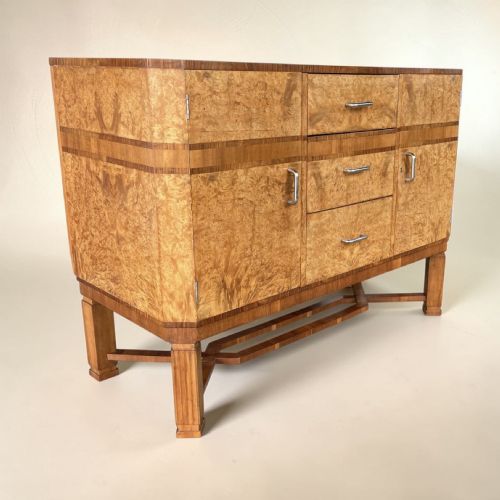
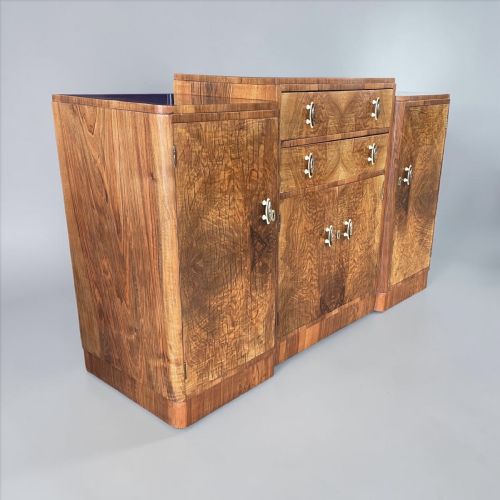
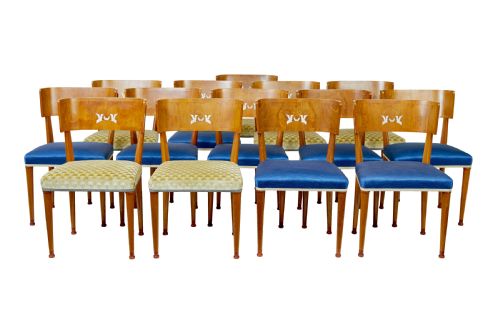
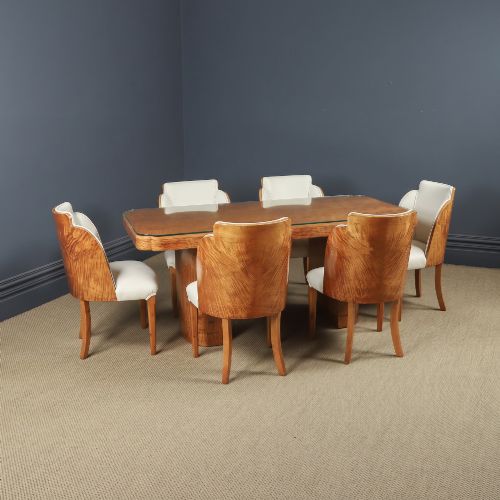
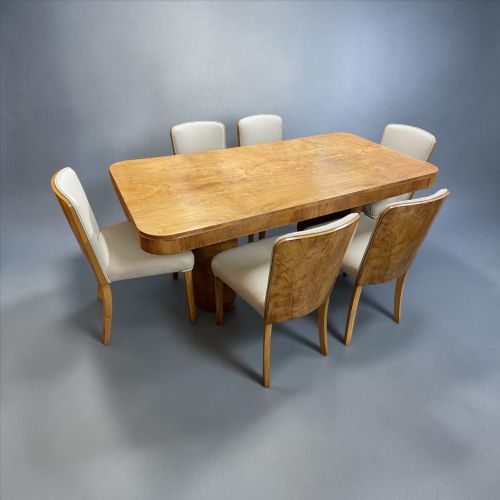
An antique art deco dining room brings together coordinated tables, chairs, and sideboards designed to anchor the principal entertaining space of a home. These suites originate primarily from the 1920s and 1930s, capturing the confident geometry and streamlined forms typical of the style. Buyers searching for an antique art deco dining room will most commonly encounter complete sets featuring a central table alongside matching upholstered chairs and substantial storage furniture.
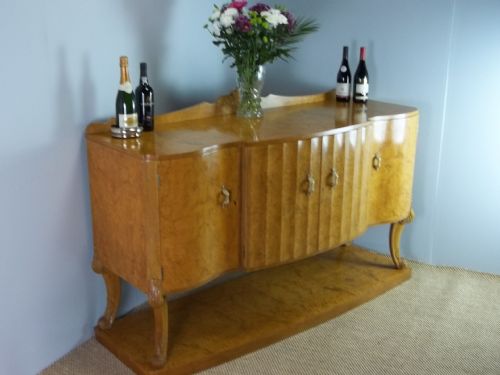
The individual components vary from matched suites of tables and chairs to standalone sideboards, buffets, and cocktail cabinets intended for sophisticated entertaining. English and French workshops dominate these offerings, deploying distinctive timber choices that define the aesthetic of the period. A complete room setup frequently pairs a pedestal or draw-leaf table with leather or fabric-upholstered seating and a coordinating serving cabinet.
How these pieces were made
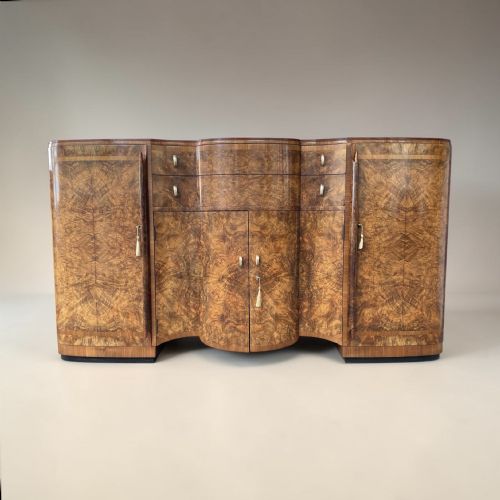
Craftsmen built these dining rooms using solid structural timbers overlaid with decorative veneers selected for their striking grain patterns. Burr walnut, walnut, and oak form the foundation of most pieces, enhanced by exotic accents such as calamander, macassar, and ebony on finer French examples. Satinwood and maple also appear, providing a lighter contrast within English dining suites.
Makers applied these veneers with precision to create symmetrical patterns across large flat surfaces like sideboard doors and table tops. Metal fittings in brass, alongside glass inserts and leather upholstery on chairs, complete the construction details recorded across the pieces.
Antique Art Deco Dining Room Retail Price Guide 2026
Typical asking prices for art deco dining room among the pieces listed under this phrase on Sellingantiques today, from the lower quarter to the upper quarter. They describe what is for sale here now, not the wider market.
What varies in quality
The standard of an antique art deco dining room rests largely on the choice and matching of its wood veneers. Superior suites display carefully book-matched burr walnut or exotic hardwoods that create symmetrical, highly decorative patterns across every surface. Lesser examples rely on plain timber or repetitive graining with less attention to the overall visual rhythm.
Construction methods and designer attribution also separate standard production from the finest work of the period. Pieces bearing the mark of prominent makers like Maurice Adams or Harry and Lou Epstein demonstrate superior architectural presence, heavier gauge timbers, and more refined hardware details.
Maurice Adams·Harry and Lou Epstein·Hamptons of Pall Mall London
The Antique Art Deco Dining Room Glossary
- Art Deco
- A design style emerging in the 1920s and peaking in the 1930s, characterised by streamlined geometric forms, symmetry, and modern industrial influences. It rejected Victorian ornamentation in favour of sleek lines and luxurious materials.
- Burr Walnut
- A specialised wood cut from the abnormal growth of a walnut tree, producing highly twisted, swirling grain patterns. Cabinetmakers prized this timber for creating decorative focal points on sideboard doors and table tops.
- Sideboard
- A long serving cabinet placed in a dining room to store tableware, linen, and bottles. In art deco suites, these often feature curved double-bow fronts and ample internal shelving.
- Cocktail Cabinet
- A specialised piece of furniture designed for mixing and serving drinks during the interwar social boom. These cabinets typically incorporate mirrored interiors, glass shelving, and dedicated storage for glassware.
- Pedestal Table
- A dining table supported by one or more central columns rather than standard corner legs. This construction allowed for greater legroom and suited the clean architectural lines of art deco interiors.
Antique Art Deco Dining Room: Frequently Asked Questions
What pieces make up a complete dining room suite?
A complete dining room suite typically includes a dining table accompanied by a set of chairs, usually numbering six, alongside a matching sideboard or serving cabinet.
Additional pieces such as cocktail cabinets or smaller side cabinets frequently complemented these central items to provide comprehensive dining and entertaining furniture.
How do English and French art deco furniture differ?
English art deco dining furniture frequently relies on figured burr walnut, walnut, and occasional light timbers like satinwood and maple to create structured, architectural forms.
French examples often push further into luxury by incorporating exotic, dark hardwoods such as calamander, macassar, and ebony across large multi-piece suites.
How should I care for walnut veneer surfaces?
Walnut veneer surfaces require protection from direct sunlight and excessive heat to prevent the underlying wood from drying out and the veneer from lifting.
Regular dusting with a soft, dry cloth maintains the finish without moisture damage, and periodic application of appropriate furniture wax preserves the timber sheen.