

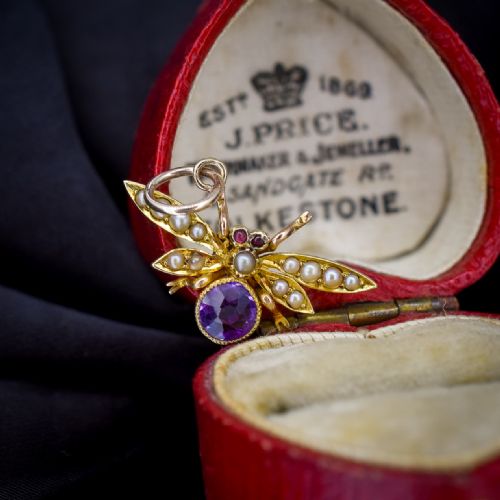


Antique Amethyst Charm
An antique amethyst charm is a pocket-scale gemstone talisman in gold, and you want one for its rich colour and Victorian or Edwardian craftsmanship.
Antique Amethyst Charm
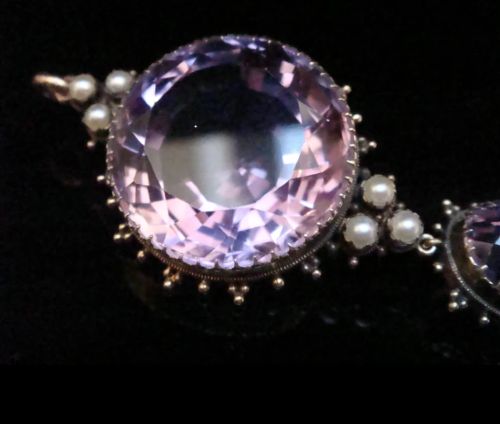
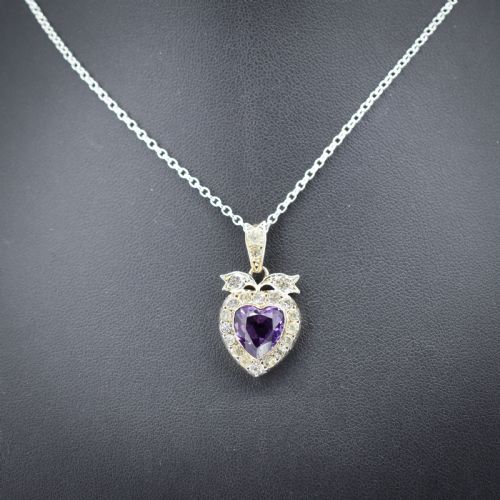
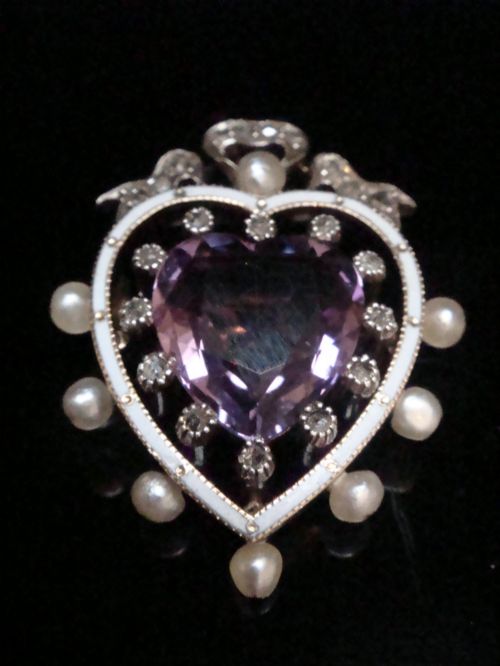
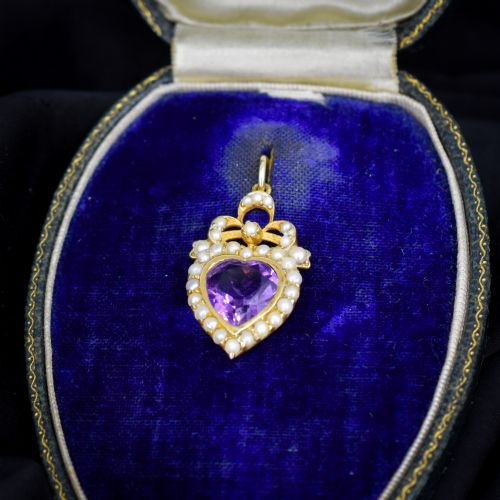
When you search for an antique amethyst charm, you encounter miniature pendants, fobs, and charms designed to be suspended from chains or watch keys. The versions most commonly met on this page take the form of heart pendants, insects, and fob seals originating from the nineteenth century, the Victorian era, and the Edwardian period. Makers fashioned these small ornaments to combine deep purple gemstones with seed pearls, enamel, and gold mounts.
The selection ranges from simple gold-mounted amethyst drops to intricate double heart crown designs and carved bird or owl charms. Victorian and Edwardian examples predominate, frequently incorporating seed pearls or tourmaline alongside the central purple stone. Art Nouveau interpretations also appear, showing flowing organic lines paired with amethyst and pearl work.
How they were made
Goldsmiths worked primarily in 9ct, 15ct, and 18ct gold, as well as silver, to construct the bezels, claws, and suspension loops for each stone. Amethysts were cut into heart shapes, cabochons, or faceted drops, and sometimes substituted with amethyst paste or glass in alternative tiers of production. Seed pearls were meticulously drilled and pegged or wired onto the gold framework.
Enamel work, particularly guilloche enamel, added coloured pattern beneath translucent layers on select Edwardian pieces. Jewelers set old-cut pastes and small diamonds by hand into the surrounding metalwork to frame the central amethyst. Construction methods rely on traditional soldering and bezel setting appropriate for delicate pendant charms.
Antique Amethyst Charm Retail Price Guide 2026
Typical asking prices for amethyst charm among the pieces listed under this phrase on Sellingantiques today, from the lower quarter to the upper quarter. They describe what is for sale here now, not the wider market.
Fly and owl charms demonstrate that Victorian sentimentality happily extended to tiny winged creatures guarding your lapel.
What varies in quality
The distinction between tiers rests upon the choice of precious metal and the precision of the stone cutting. Higher grades utilise solid 15ct or 18ct gold paired with natural amethyst and finely matched seed pearls, whereas simpler items employ 9ct gold or paste substitutes. The depth of the gemstone colour and the crispness of any engraved or enamelled detail dictate the standing of the piece.
Design complexity further separates standard items from exceptional examples. Pieces featuring carved motifs, such as birds or insects, demand a higher degree of lapidary and goldsmith skill than standard faceted drops. The preservation of original enamel and the intact state of delicate pearl settings determine the overall integrity of the surviving jewel.
The Antique Amethyst Charm Glossary
- Amethyst
- A purple variety of quartz prized for its violet hue in antique jewellery. It serves as the primary focal gemstone in these charms and pendants.
- Seed pearl
- A very small, natural or saltwater pearl used extensively in Victorian and Edwardian cluster designs. These tiny pearls accent the borders of heart pendants and insect motifs.
- Guilloche enamel
- A decorative technique involving precise engine-turning beneath translucent enamel layers. This method creates repeating geometric patterns on Edwardian gold charms.
- Fob charm
- A short pendant traditionally attached to a pocket watch ribbon or chain. Many examples double as seals or decorative charms set with amethysts or citrines.
Antique Amethyst Charm: Frequently Asked Questions
How were antique amethyst charms worn?
These small ornaments typically hung from watch chains, chatelaines, or delicate neck chains as personal talismans. Victorians and Edwardians frequently wore them close to the heart or as decorative fob seals.
Over time, the function shifted from practical timekeeper accessories to standalone pendants worn on modern chains.
How do I tell Victorian from Edwardian pieces?
Victorian charms from the nineteenth century often display heavier gold weights, deeper mounting styles, and naturalistic motifs like insects or solid hearts. Edwardian pieces, dating from around 1901 onwards, frequently incorporate lighter gold mounts, guilloche enamel, and bright seed pearl borders.
Examining the metal purity marks and the overall lightness of the setting helps distinguish the two distinct eras.
Are all the amethysts natural?
Most pieces utilise natural quartz amethysts, though some listings feature amethyst paste or glass alternatives. The historical use of paste was common in the nineteenth century for achieving specific colour tones and sizes.
Reviewing the specific material details in each listing clarifies whether the stone is mined quartz or historical paste.
How should I care for an antique gold charm?
Keep the piece away from harsh chemical cleaners and ultrasonic machines, particularly when seed pearls or enamel are present. Gentle wiping with a soft, dry cloth preserves the gold surface and protects the delicate pearl settings.
Store the charm separately in a lined box to prevent scratching against other items of jewellery.