



Antique Albert Bracelet
An antique albert bracelet is a heavy pocket watch chain adapted for the wrist, prized for its secure dog clips and swinging T-bars.
Antique Albert Bracelet
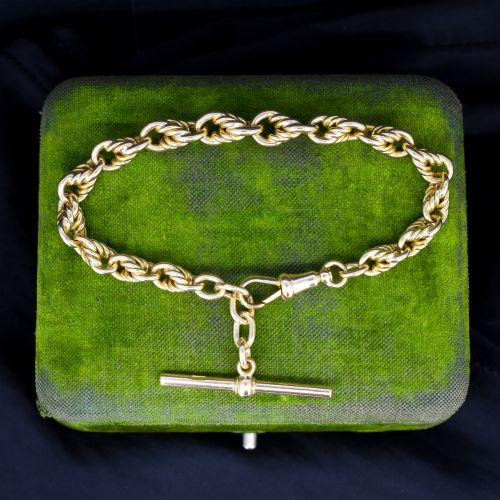
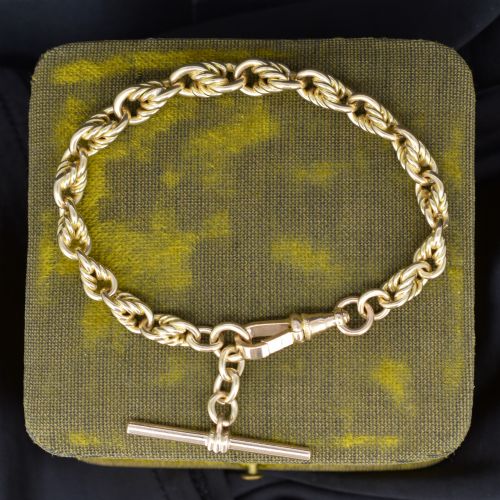
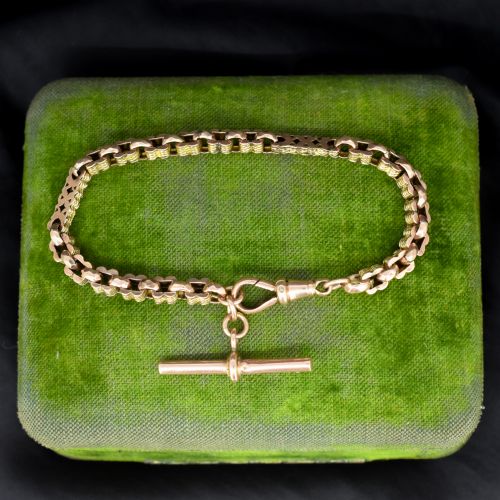
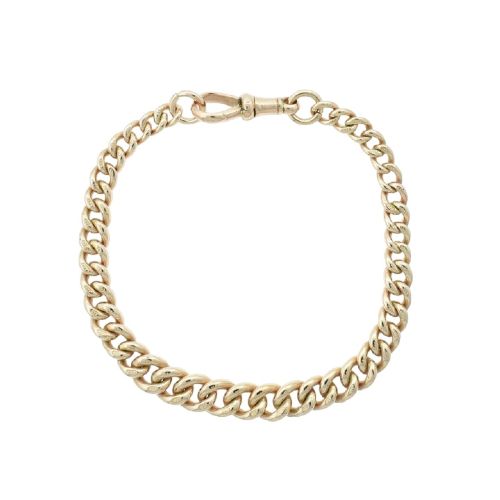
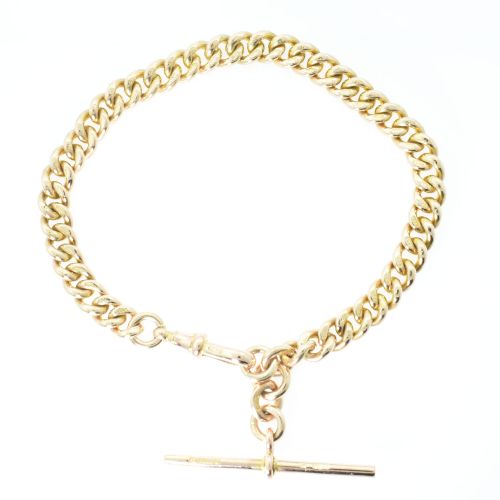
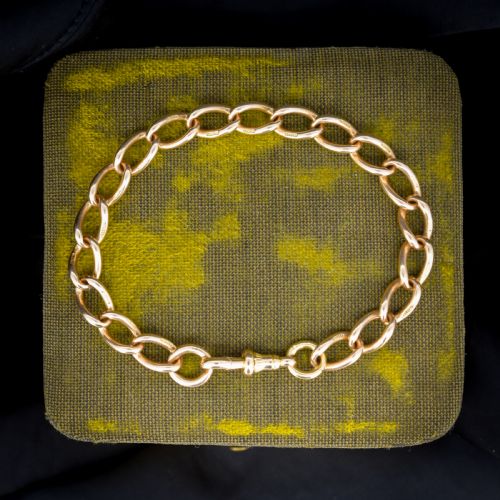
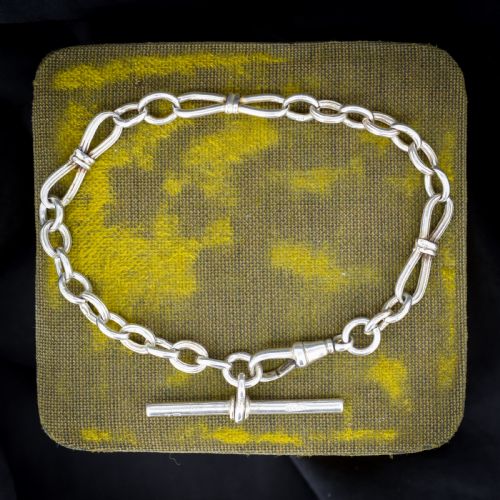
When you search for an antique albert bracelet, you are looking at substantial watch chains originally designed to secure pocket watches to waistcoats, now shortened or worn directly on the wrist. These pieces carry a distinct weight and presence, often featuring the characteristic T-bar that once passed through a buttonhole.
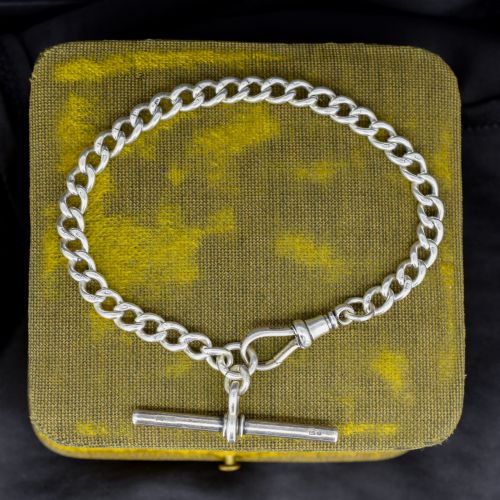
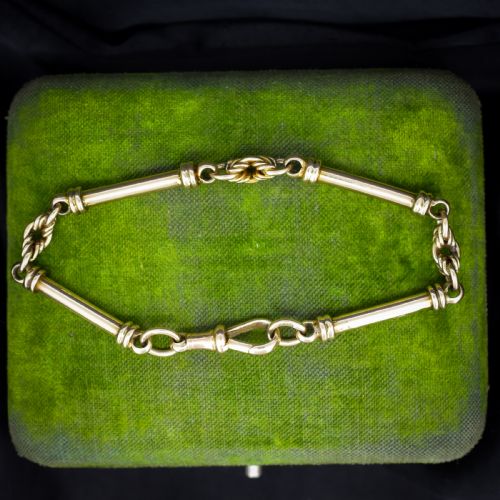
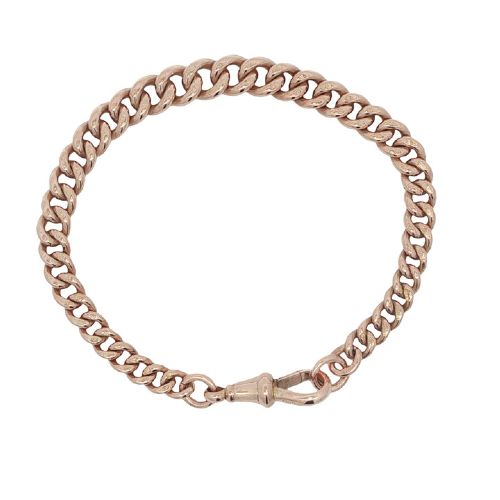
The versions you are most likely to meet on this page hail primarily from the Victorian and Edwardian eras, stretching into the mid-twentieth century. They appear in robust forms including curb links, belcher links, fancy links, and love knot patterns.
Originating as practical gentleman's accessories, these chains have transitioned into enduring wristwear. Their survival in such solid forms reflects the sturdy utility of late nineteenth and early twentieth-century goldsmithing and silversmithing.
Materials and construction
The construction relies heavily on solid precious metals, predominantly 9ct gold in yellow and rose tones, alongside rarer 15ct gold and sterling silver. Links are individually formed and joined, often with graduated sizing that tapers gracefully toward the clasp.
Functional hardware defines the build, incorporating robust spring-loaded dog clips and fixed or swinging T-bars. Tubular bar elements and love knot motifs are worked directly into the chain structure, demonstrating meticulous link-by-link assembly by period artisans.
Antique Albert Bracelet Retail Price Guide 2026
Typical asking prices for albert bracelet among the pieces listed under this phrase on Sellingantiques today, from the lower quarter to the upper quarter. They describe what is for sale here now, not the wider market.
Every time you fidget with a T-bar drop, you are reenacting a Victorian gentleman checking the time on his pocket watch.
Factors of distinction
The distinction between average examples and superior pieces rests on the heft of the metal and the complexity of the link formation. Heavy, solid construction and substantial gram weights signal a higher grade of manufacture, whereas hollow or light links offer a different feel on the wrist.
Subtleties in the hardware also set pieces apart. Original, well-sprung dog clips that snap shut firmly and fully intact T-bars with clear hallmarks indicate a higher level of preservation and original integrity.
The Antique Albert Bracelet Glossary
- Dog clip
- A spring-loaded swivel fastening used to secure the chain, designed to hook onto a pocket watch or directly onto a link.
- T-bar
- A short transverse bar attached to the chain by a short length of link, originally slotted into a waistcoat buttonhole.
- Graduated link
- A design where the links decrease in size progressively from the centrepiece towards the fastening.
- Belcher link
- A style of chain made from wide, interlocking links that are uniform in shape and slightly rounded on the outside.
- Curb link
- A chain pattern composed of identical flat, interlocking links that lie relatively flat against the wrist.
Antique Albert Bracelet: Frequently Asked Questions
What is an albert bracelet?
An albert bracelet is a repurposed pocket watch chain designed to be worn around the wrist. These pieces retain the functional elements of their origins, such as dog clips and T-bars.
They offer a robust alternative to conventional bracelets, showcasing heavy link construction from the Victorian and Edwardian periods.
How do I fasten the bracelet?
Fastening is typically achieved by opening the spring-loaded dog clip and attaching it to either the T-bar, an end ring, or directly onto one of the chain links.
This method allows the T-bar to dangle as a decorative charm, mirroring how the chain hung from a gentleman's pocket.
What metals were used?
The pieces utilise sterling silver and various grades of gold, most commonly 9ct yellow and rose gold, alongside occasional higher-purity 15ct gold examples.
These metals provide the substantial weight and durability characteristic of nineteenth and early twentieth-century watch chains.
How do I tell the periods apart?
Victorian and Edwardian pieces often feature distinct link styles like love knots or curb patterns paired with hand-stamped hallmarks. Mid-century examples, such as those from the 1960s, tend to present heavier silver belcher links with simpler proportions.
Examining the style of the dog clip and any assay office stamps helps narrow down the exact decade of manufacture.