



Antique Aesthetic Jewellery
Antique aesthetic jewellery captures the refined taste of the late nineteenth century through earrings, bangles, and lockets.
Antique Aesthetic Jewellery
Antique aesthetic jewellery comprises wearable ornaments and small personal containers produced during the Victorian era, specifically around the final decades of the nineteenth century. These items embody the artistic philosophies of the period, turning everyday adornment into a canvas for naturalistic and decorative motifs.
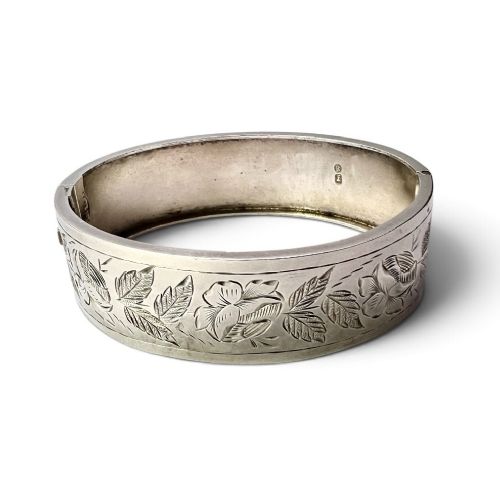
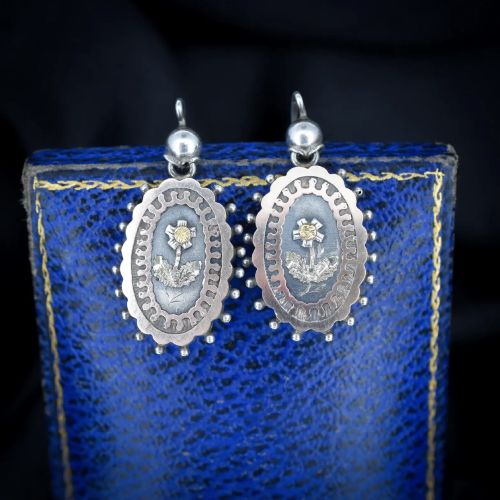
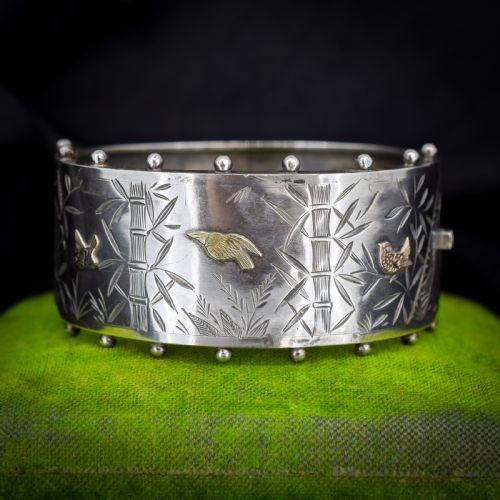
The forms range from floral drop earrings to rigid silver cuffs adorned with gold accents. Buyers encounter pieces that directly reflect the Victorian fascination with symmetry, nature, and stylized bird or botanical subjects.
How they were made
Silversmiths and jewellers utilised sterling silver as the primary foundation for these items, often incorporating gold accents to create tonal contrast on cuffs and lockets. Metalwork techniques of the Victorian period involved detailed chasing, studding, and hinged construction to ensure both flexibility and durability.
Beyond metal, select pieces utilised exotic hardwoods such as coromandel for fitted boxes, demonstrating fine cabinetry alongside metalcraft. The decorative elements rely on precise engraving and applied metal motifs, including bamboo patterns and floral sprays.
Antique Aesthetic Jewellery Retail Price Guide 2026
Typical asking prices for aesthetic jewellery among the pieces listed under this phrase on Sellingantiques today, from the lower quarter to the upper quarter. They describe what is for sale here now, not the wider market.
Swallows and bamboo stalks feature repeatedly, proving that nineteenth-century jewellers were deeply devoted to feathered friends and exotic foliage.
What varies in quality
The distinction between standard production and superior craftsmanship lies in the depth of the metalwork and the crispness of the engraved motifs. Pieces featuring mixed metals, such as combined silver and gold accents, demonstrate greater technical ambition than plain silver items.
Structural integrity also separates the grades, particularly in hinged bangles and lockets where secure closures and well-preserved joints dictate utility and original build standard. Maker involvement further elevates a piece, as demonstrated by marked London silver items from known workshops.
James Hennell
The Antique Aesthetic Jewellery Glossary
- Aesthetic Movement
- A late nineteenth-century design philosophy emphasising visual beauty and decorative arts over narrative or moral themes.
- Sterling Silver
- A silver alloy containing ninety-two point five percent pure silver and seven point five percent other metals, standard for quality British silverware.
- Coromandel
- A dense, heavily grained tropical hardwood imported from Asia and utilised for luxury nineteenth-century boxes.
- Hinged Cuff Bangle
- A rigid bracelet featuring a hinge and clasp mechanism, popular in Victorian wristwear design.
Antique Aesthetic Jewellery: Frequently Asked Questions
What defines aesthetic period jewellery?
This jewellery is defined by its late Victorian origins and adherence to the aesthetic movement, which prioritized visual grace and stylized natural motifs over traditional Victorian sentimentality.
Items typically feature subjects like birds, bamboo, and floral patterns rendered in sterling silver with occasional gold accents.
How do I care for antique silver?
Antique silver requires gentle handling and storage away from humid environments to prevent tarnishing. Regular dusting with a soft cloth maintains the surface without removing the fine engraved details.
Harsh chemical dips should be avoided, as they strip the subtle patination built up over a century of existence.
Are these pieces marked with hallmarks?
Many Victorian silver items bear official British hallmarks indicating the assay office, standard of silver, and year of production. These stamps provide a reliable method for dating the object.
Certain smaller pieces or foreign-market items may carry partial marks or maker stamps rather than full assay office strikes.
What materials are common in these boxes?
Boxes from this era frequently utilise coromandel wood, known for its dark, dramatic grain patterns and exceptional hardness. They often feature fitted interior trays lined with velvet or silk for storing delicate ornaments.
Brass fittings and escutcheons complete the construction, securing the lid and providing structural reinforcement.