


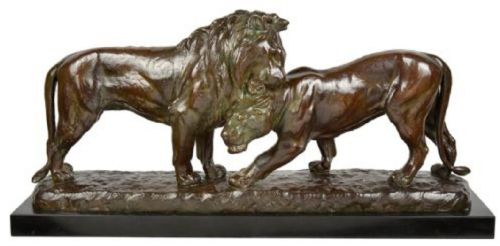


Animalier Lion Bronze Cast
These animalier lion bronze cast sculptures capture fierce feline strength in metal, offering collectors striking nineteenth and early twentieth century desk ornaments and bookends.
Animalier Lion Bronze Cast
When you search for animalier lion bronze cast, you encounter sculptural works depicting lions and lionesses across the nineteenth and early twentieth centuries. These figures range from small desk studies to substantial mantle sculptures and heavy bookends.
The objects stem predominantly from French and Austrian workshops, encompassing the French animalier tradition and the Vienna school. You will frequently find pairs designed to hold books or single imposing casts of resting and prowling beasts.
Forms vary from realistic portrayals of wild cats to patinated plaster alternatives mimicking metal. These pieces reflect a nineteenth century fascination with exotic wildlife and naturalistic sculpture.
Materials and casting methods
The works rely on bronze and cold-painted bronze, often mounted on green marble or timber bases. Metal is shaped through traditional casting methods, capturing fine musculature and fur detail.
Surface finishes include dark patination and intricate hand painting, as seen in Vienna cold-painted pieces. Alternative materials such as bronzed plaster occasionally substitute for solid metal.
Animalier Lion Bronze Cast Retail Price Guide 2026
Typical asking prices for animalier lion bronze cast among the pieces listed under this phrase on Sellingantiques today, from the lower quarter to the upper quarter. They describe what is for sale here now, not the wider market.
Listings feature periods spanning from the early nineteenth century through to the nineteen-twenties, incorporating bronze, marble, and timber.
Distinctions in craftsmanship
Quality rests in the crispness of the chase work and the fidelity of the animal anatomy. Finer casts retain sharp facial details and tactile textures in the mane and paws.
The sophistication of the foundry work and the richness of the patination elevate certain examples above standard commercial productions. Integrated bases of veined green marble or timber further distinguish superior compositions.
Franz Bergman·C Omin·Paul-Édouard Delabrièrre·G. Gardet·Louis Riche·Al Barye·Barbedienne·Antoine-Felix Bouré
The Animalier Lion Bronze Cast Glossary
- Animalier
- A nineteenth century sculptural movement focusing on realistic depictions of animals. Practitioners studied captive beasts in menageries to achieve lifelike poses.
- Cold-painted bronze
- Metal sculpture painted with non-fired oil or enamel paints. This technique became a speciality of Austrian workshops.
- Patination
- The surface coloration of metal achieved through chemical application or natural ageing. It protects the bronze while enhancing visual depth.
- Grand Tour
- Extended travels across Europe undertaken by the elite to collect art and antiquities. Souvenirs from these journeys often included small bronze casts.
Animalier Lion Bronze Cast: Frequently Asked Questions
What is an animalier lion bronze cast?
An animalier lion bronze cast is a nineteenth or early twentieth century metal sculpture depicting lions, created within the naturalistic animalier artistic movement.
These pieces function as decorative ornaments, desk studies, or practical bookends.
How do I identify a cold-painted bronze?
Cold-painted bronzes feature hand-applied oil or enamel colours directly onto the metal surface without kiln firing.
This delicate finish requires careful handling to preserve the original pigment.
Where were these lion sculptures made?
The pieces originate primarily from French foundries and Austrian schools active during the nineteenth and early twentieth centuries.
French makers focused on muscular naturalism, while Austrian workshops specialised in polychrome cold-painted surfaces.
How should I display bronze bookends?
Bronze bookends require stable shelving or desks capable of supporting heavy metal weight.
Keep them away from direct moisture to protect the patination and any marble or timber bases.