



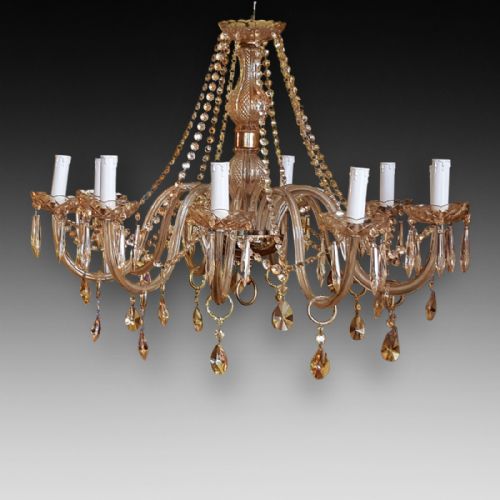
Amber Crystal Light
These amber crystal light pieces bring warmth and rich colour to a room, offering the sparkle of vintage glass with distinctive golden hues.
Amber Crystal Light
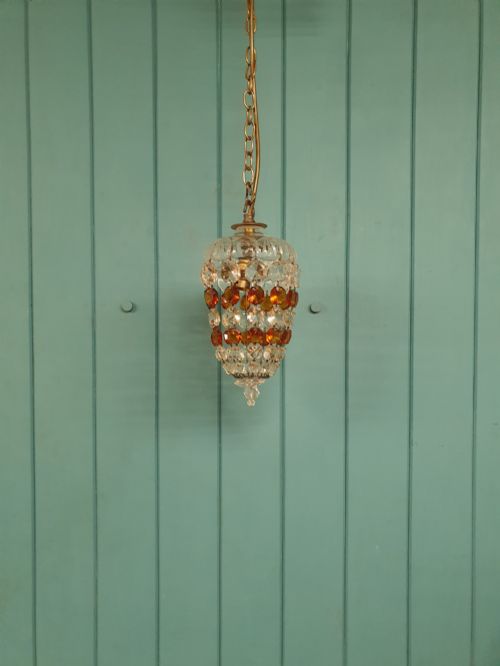
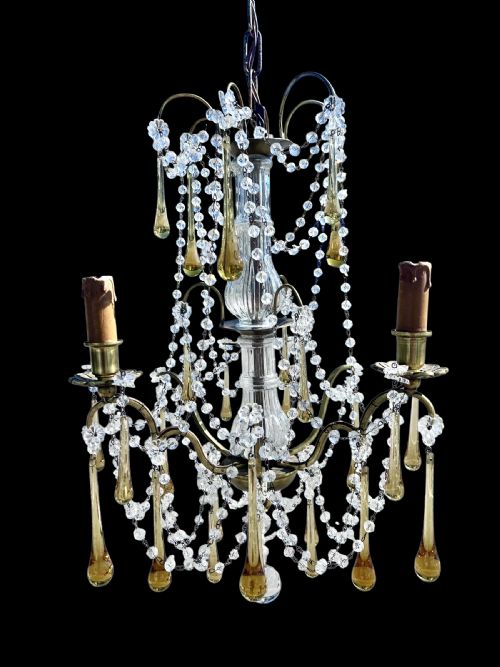
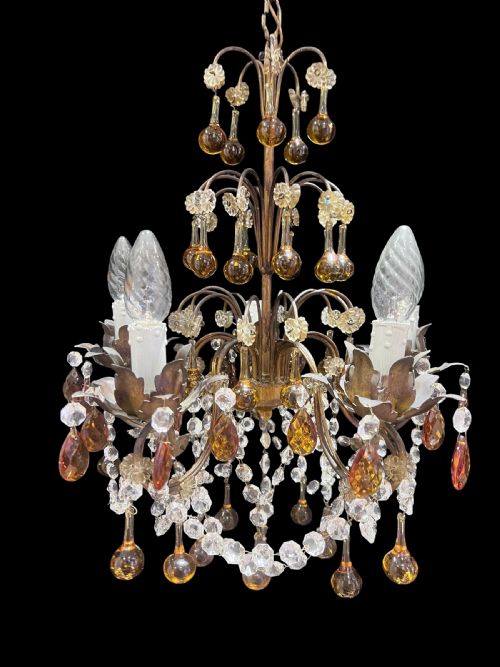
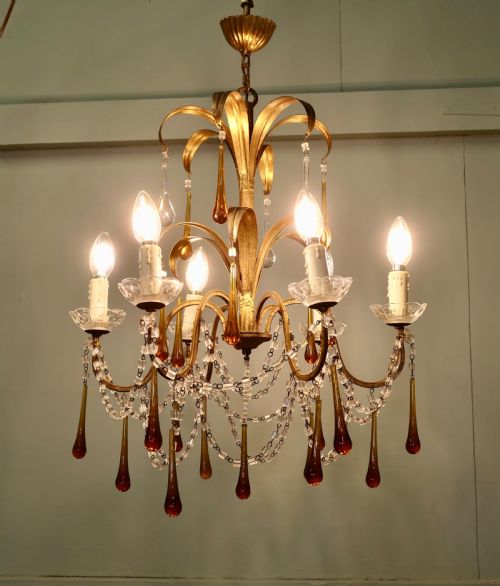
When you search for amber crystal light, you are looking at chandeliers, ceiling lights, and wall lights defined by coloured glass and crystal drops. The pieces found here span the late nineteenth century, the Edwardian era, and the art deco period.
You are most likely to meet French and Italian chandeliers hung with amber teardrops or fruits, alongside English basket chandeliers and Florentine wall-lights. These fittings range from intimate multi-light fixtures to monumental architectural installations.
The forms combine metal frames in brass, gilt metal, or toleware with suspended glass elements that catch and refract illumination. Each object reflects the decorative tastes of periods from eighteen ninety up to nineteen thirty.
How they were made
Makers constructed the structural frames of these fittings using cast brass, gilt metal, and painted toleware to support the weight of the glass components. These metal skeletons were shaped into arms, baskets, and wall brackets designed to hold multiple light sources.
Workers formed the hanging elements from lead crystal, cut glass, and mirrored glass, shaping them into teardrops, beads, fruits, and coloured drips. Artisans then wired and hung these translucent components by hand to maximise the play of light.
Amber Crystal Light Retail Price Guide 2026
Typical asking prices for amber crystal light among the pieces listed under this phrase on Sellingantiques today, from the lower quarter to the upper quarter. They describe what is for sale here now, not the wider market.
Some French chandeliers on this page come equipped with orange drips that mimic melting candle wax permanently frozen in time.
What varies in quality
The refinement of the glass cutting and the depth of the amber colour separate the finer examples from simpler production. Superior pieces feature crisply faceted crystal drops that disperse illumination cleanly, while lesser examples use plain moulded glass.
The complexity of the metalwork also distinguishes the range, with intricate gilt bronze or detailed toleware frames standing apart from basic brass stampings. Complete sets of matching droplets and balanced arm configurations mark out the more ambitious designs.
The Amber Crystal Light Glossary
- Toleware
- Painted sheet metal objects, often used for decorative light fixtures and frequently finished in gilt or dark tones. This technique provides a durable and colourful alternative to polished brass.
- Lead crystal
- Glass containing lead oxide, which increases the weight, refractive index, and clarity of the material. This composition allows for sharp cutting and brilliant light dispersion.
- Teardrop
- A drop-shaped pendant of glass or crystal hung from the arms and bobeches of a chandelier. These elements move slightly with air currents to catch the surrounding illumination.
- Mirrored glass
- Silvered glass plates used behind light sources to reflect and amplify the visual spread of illumination. It appears frequently in backplates and basket fittings.
- Bobeche
- A small collar or drip pan placed beneath a candle socket to catch wax and hold hanging crystals. They protect the lower portions of the chandelier from drips.
Amber Crystal Light: Frequently Asked Questions
What periods do these lights come from?
The listings here cover pieces produced from the late nineteenth century through to the nineteen thirties. This includes Victorian, Edwardian, and Art Deco eras.
Designs shift from ornate French and Italian chandelier styles to more streamlined architectural forms by the nineteen thirties.
How do I clean amber crystal?
Cleaning requires removing the delicate glass drops and washing them individually in warm soapy water using mild agents. Harsh chemicals can damage the surface finish of coloured glass.
The metal frames should be dusted gently without introducing moisture to the electrical components or wiring.
Can these lights be rewired for modern use?
Most antique light fittings require rewiring to meet contemporary safety standards before installation in a home. Professional electricians can adapt the internal wiring while preserving the external period appearance.
It is advisable to check the weight capacity of your ceiling before hanging larger bronze and glass pieces.