



Alabaster Female Bust
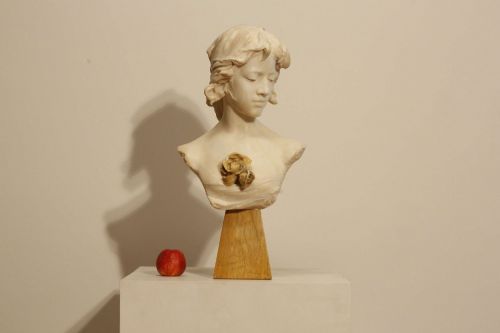
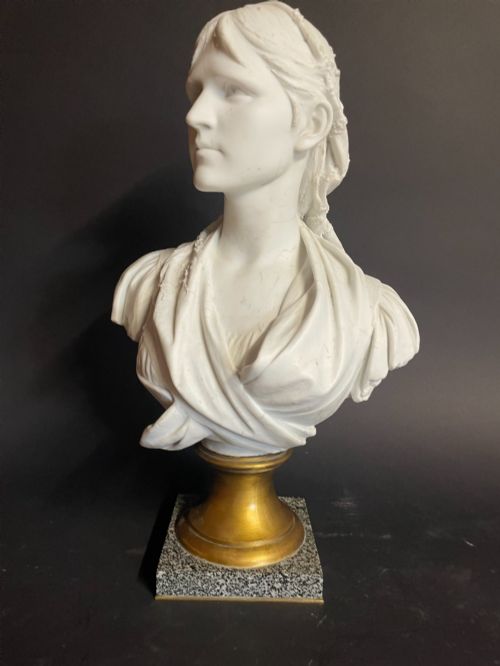
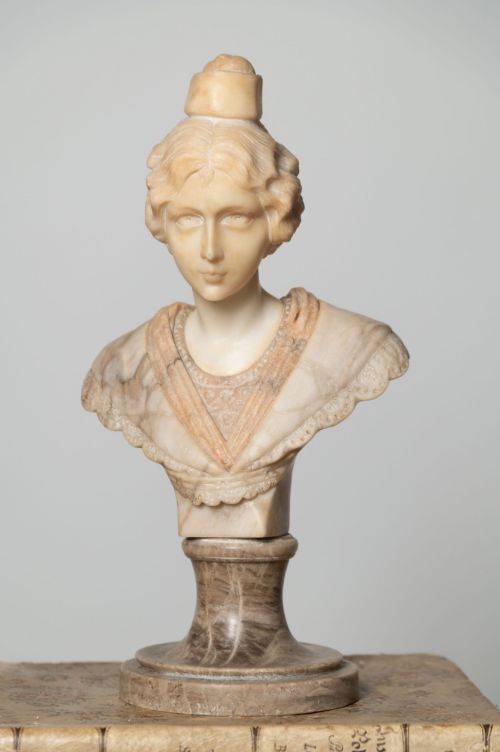
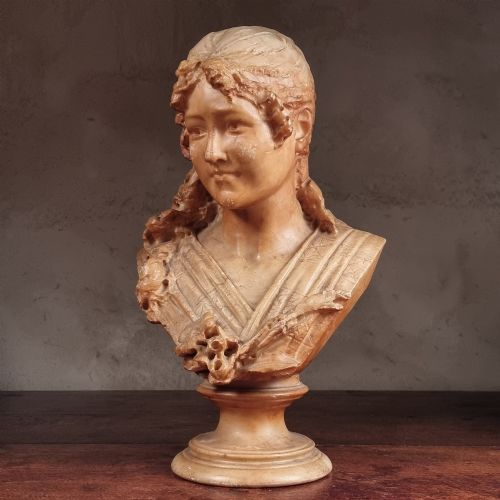
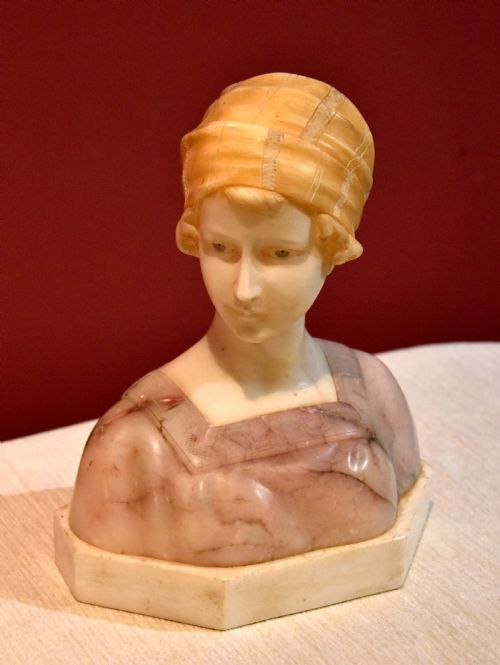
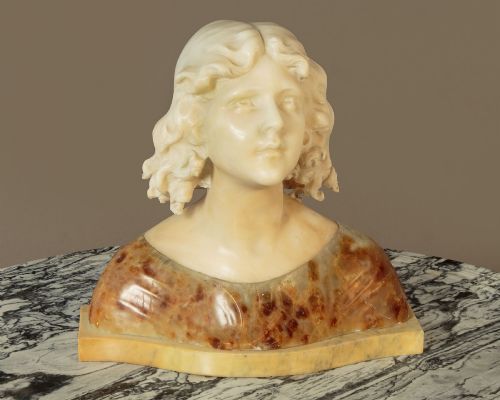
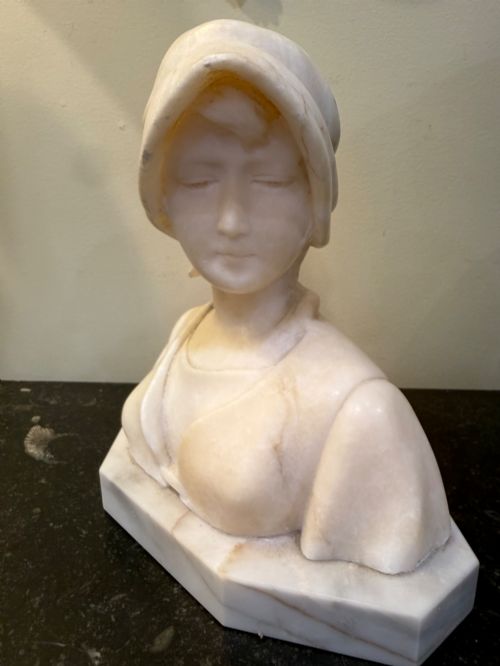
An alabaster female bust captures the likeness of a woman in carved stone, prized for its soft translucence and classical grace.
Alabaster Female Bust
An alabaster female bust portrays a woman's head and shoulders, carved from fine stone to capture realistic expressions and drapery. These pieces span the nineteenth century into the early twentieth century, originating from Italian and French workshops.
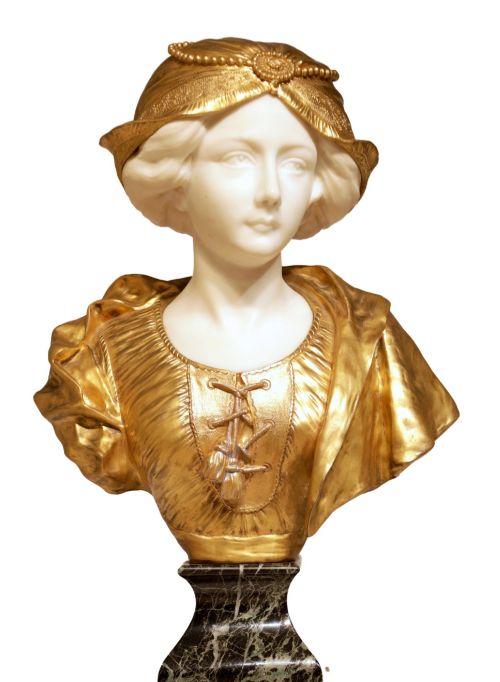
The version most commonly met on this page is the Italian or French carved bust from the late nineteenth century. These sculptures often depict young women or girls, sometimes set upon integral alabaster plinths or paired with bronze and ormolu mounts.
Makers and sculptors frequently signed these works, recording names like Affortunato Gory, Auguste Henri Carli, George Van Der Straeten, G.V. Vaerenbergh, R. Lusili, Greuze, and A. Cipriani. The forms range from strict neoclassical portraits to flowing Art Nouveau studies.
How they were made
Carving involves shaping blocks of alabaster or marble using chisels, rasps, and abrasive powders to achieve smooth skin tones and detailed hair. Artisans selected stone for its even grain and translucent quality, allowing light to penetrate the surface.
Mixed media components frequently complement the stone in these sculptures. Founders and makers incorporated gilt bronze, brass, ormolu, and spelter into bases, clothing details, and structural mounts.
Alabaster Female Bust Retail Price Guide 2026
Typical asking prices for alabaster female bust among the pieces listed under this phrase on Sellingantiques today, from the lower quarter to the upper quarter. They describe what is for sale here now, not the wider market.
Materials recorded across these listings include alabaster, marble, stone, bronze, brass, granite, gilt bronze, and carved marble.
What varies in quality
The fidelity of the carving defines the upper tier of these sculptures. Master carvers rendered delicate facial expressions, intricate hair strands, and subtle fabric folds with convincing realism, whereas lesser examples remain stiff and generalized.
The selection of materials marks another distinction in quality. Superior pieces utilise pure white or cream alabaster free from heavy veining, often enhanced by high-grade bronze or ormolu mounts rather than simpler base metals.
Affortunato Gory·Auguste Henri Carli·George Van Der Straeten·G.V. Vaerenbergh·R. Lusili·A. Cipriani
The Alabaster Female Bust Glossary
- Alabaster
- A fine-grained, translucent stone used for sculpture. It allows light to pass slightly beneath the surface, creating a warm glow similar to human skin.
- Ormolu
- Gilt bronze mounted onto decorative objects or sculptures. This technique involves applying a gold-mercury amalgam to bronze.
- Spelter
- A zinc alloy used as a substitute for bronze in decorative figures. It takes patination well but is softer and lighter than true bronze.
- Plinth
- A heavy block or base supporting a bust or sculpture. Many alabaster busts utilise matching stone plinths for stability and elevation.
Alabaster Female Bust: Frequently Asked Questions
How do I clean an alabaster bust?
Dust the surface gently with a soft, dry brush or microfiber cloth. Avoid using water, soap, or chemical cleaners, as alabaster is soft and water-soluble.
Keep these sculptures away from direct sunlight and damp environments to preserve the delicate stone and prevent discoloration over time.
How do I tell alabaster from marble?
Alabaster feels noticeably softer than marble and can be scratched with a metal coin. It also possesses a higher degree of translucency when held near light.
Marble is harder, heavier, and displays a more crystalline structure with distinct veining patterns across the carved surface.
Where were most of these busts made?
The majority of these sculptures originated in Italy and France during the nineteenth and early twentieth centuries. Italian workshops specialised in carving fine alabaster.
French studios frequently combined carved stone with cast bronze, brass, and ormolu mounts to create ornate decorative pieces.
What styles do these sculptures represent?
The listings span several aesthetic movements including Neoclassical, Victorian Classical, Art Nouveau, and Arts and Crafts. Neoclassical works emphasise classical restraint and antique dress.
Art Nouveau pieces feature flowing hair, organic forms, and naturalistic expressions that reflect turn-of-the-century design preferences.