





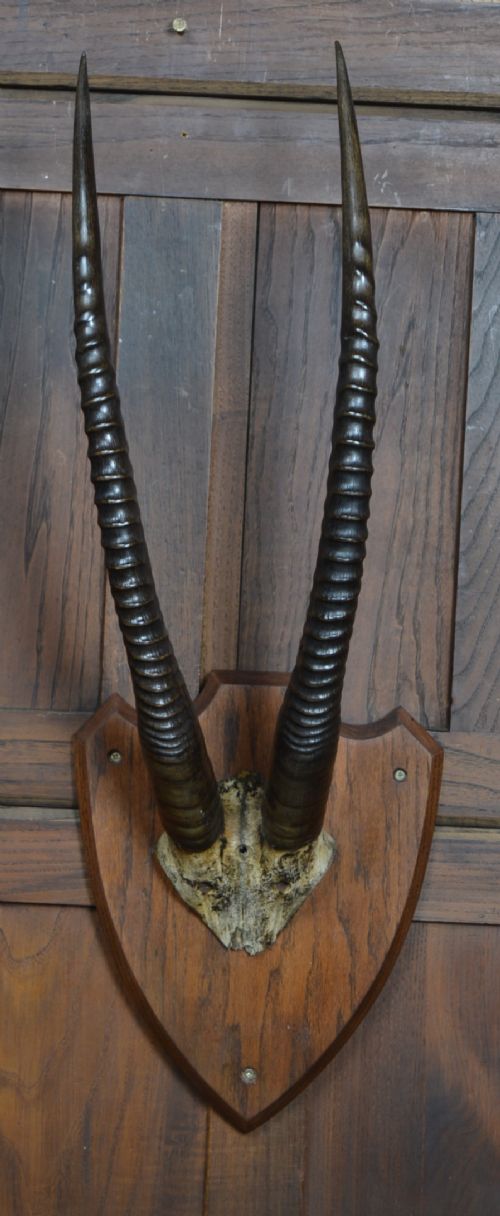
African Taxidermy Mount
These african taxidermy mount pieces are historical hunting trophies that bring striking natural forms into a room.
African Taxidermy Mount
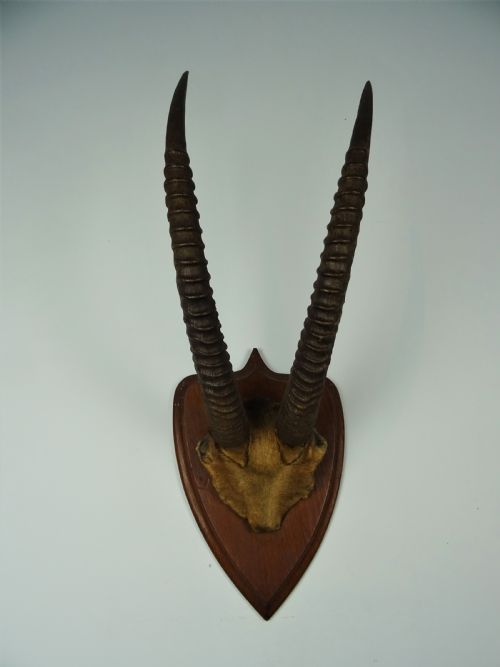
When you search for african taxidermy mount, you are looking at preserved animal specimens and horns collected from the African continent during the late nineteenth and early twentieth centuries. These pieces typically take the form of wall-mounted trophy heads or paired horns set onto wooden shields.
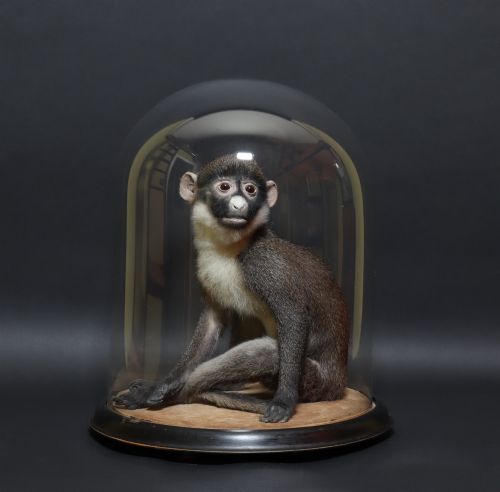
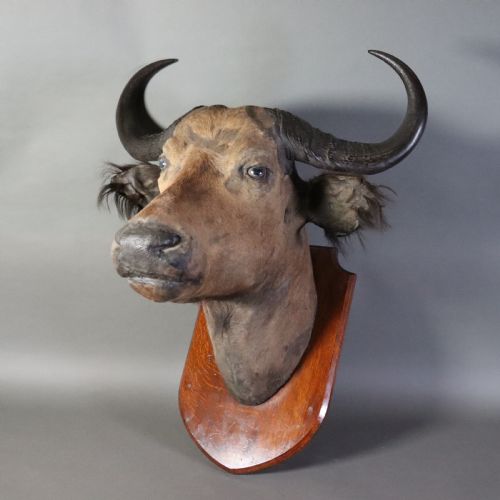
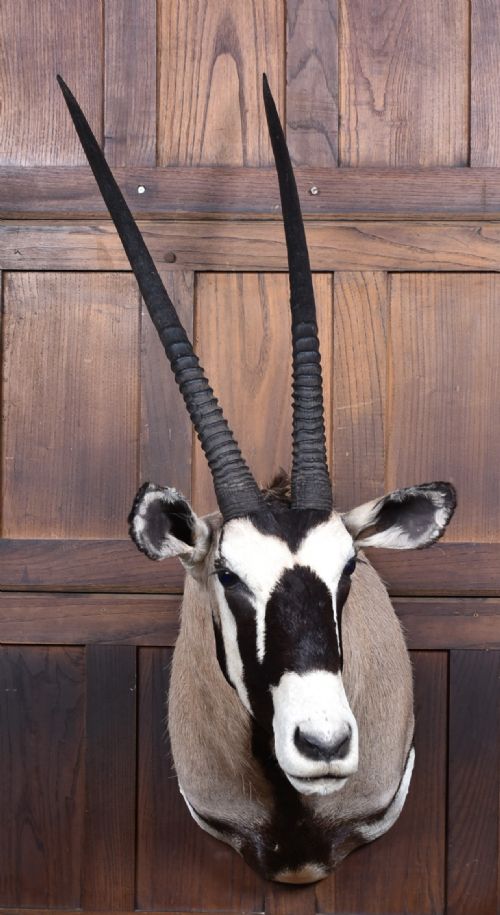
The selections on this page span the Victorian and Edwardian periods, including specific examples dated from 1898 to 1920. Common animal subjects include antelopes such as the Thomson's gazelle, gemsbok, waterbuck, springbok, bushbuck, sable antelope, koodoo, Coke's hartebeest, and oryx, alongside larger game like the Nile buffalo and occasional avian specimens.
Most items belong to recognised stylistic categories such as Victorian Natural History, Edwardian Taxidermy, Edwardian Sporting, and Highland Hunting Lodge aesthetics. Buyers frequently encounter entire trophy heads mounted with glass eyes and natural hide, or simpler horn mounts fixed to oak backing boards.
How they were made
The creation of an african taxidermy mount required careful taxidermy hide preparation and bone preservation over a shaped armature. Artisans stretched the natural hide over carved forms, fitted glass eyes, and secured the specimens to wooden shields made of oak or other woods.
Horns and skeletal elements such as bone were cleaned and polished before mounting. Master taxidermists constructed sturdy internal frameworks to support the heavy weights of larger specimens like the Nile buffalo and various antelope species.
African Taxidermy Mount Retail Price Guide 2026
Typical asking prices for african taxidermy mount among the pieces listed under this phrase on Sellingantiques today, from the lower quarter to the upper quarter. They describe what is for sale here now, not the wider market.
Among the large antelopes and buffaloes, a lone late Victorian African grey parrot keeps a watchful eye over the collection.
What varies in quality
The standard of an african taxidermy mount depends heavily on the skill of the original taxidermist in capturing realistic anatomical proportions and lifelike posture. Superior examples retain supple hide, undamaged hair, and correct facial contours without unnatural shrinkage.
Attribution to noted workshops elevates a piece, as seen in works by established makers who supplied high-end sporting clients. The condition of the original wood backing boards and the stability of the horn attachments also define the superior tiers of these specimens.
Edward Gerrard and Sons
The African Taxidermy Mount Glossary
- Taxidermy mount
- The artful preservation and mounting of an animal skin and horns for display. These pieces function both as scientific specimens and historical interior ornaments.
- Taxidermy trophy
- A preserved animal head or horns taken as a hunting souvenir. These objects reflect the sporting culture of the Edwardian and Victorian eras.
- Natural hide
- The untreated or preserved skin of an animal retaining its natural hair or fur. It forms the primary visible surface on mounted heads.
- Edwardian sporting
- A design aesthetic associated with the recreational hunting culture of the early twentieth century. Pieces from this era often feature robust wooden shields and careful horn arrangements.
African Taxidermy Mount: Frequently Asked Questions
What animals are found in these mounts?
The pieces feature a range of African game species, predominantly antelopes such as springbok, gemsbok, waterbuck, koodoo, and sable antelope. Larger mammals like the Nile buffalo and birds such as the African grey parrot also appear.
These selections reflect the specific fauna targeted by hunters during the late Victorian and Edwardian periods on the African continent.
How do I date an african taxidermy mount?
Dating relies on stylistic clues, taxidermy techniques, and occasional contemporary inscriptions or dated labels on the wooden backing boards. Pieces span the late Victorian era through to the Edwardian period and the 1920s.
Earlier examples often display distinct taxidermy methods and materials characteristic of nineteenth-century natural history preparation compared to later twentieth-century specimens.
How were these trophies originally displayed?
These mounts were typically hung on the walls of country houses, hunting lodges, and studies. They formed part of the Highland Hunting Lodge and Victorian Natural History interior aesthetics.
Wooden shields allowed the heavy heads and horn pairs to be securely fastened to wall studs in domestic or institutional settings.