




Adjustable Reading Lectern
An adjustable reading lectern brings historical mechanical ingenuity to holding books and scores at the exact angle needed for comfortable study.
Adjustable Reading Lectern
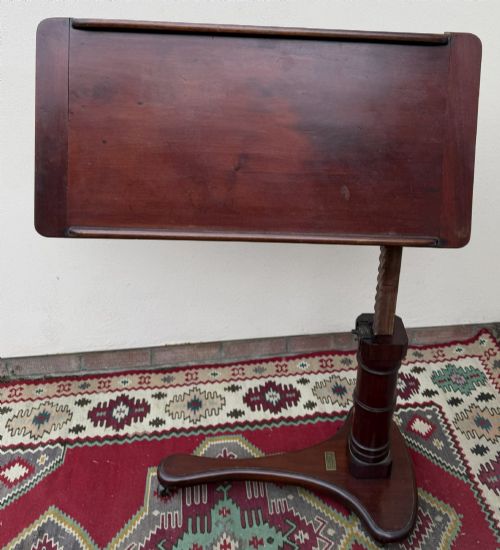
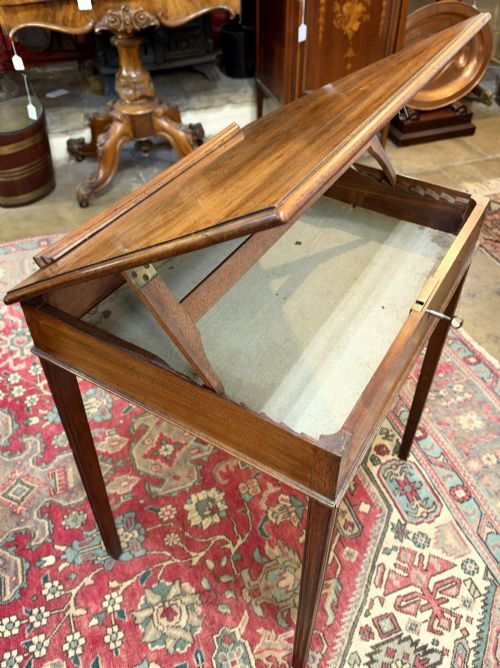
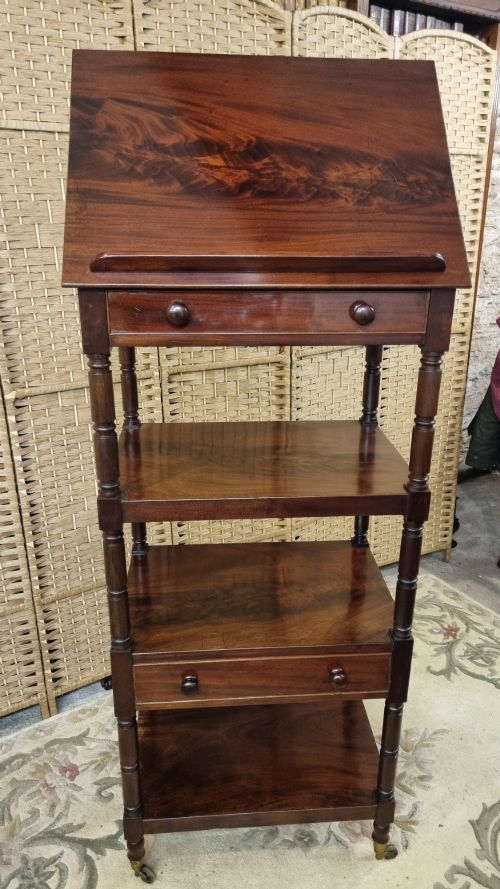
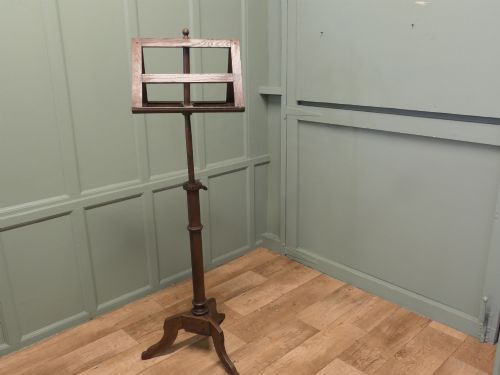
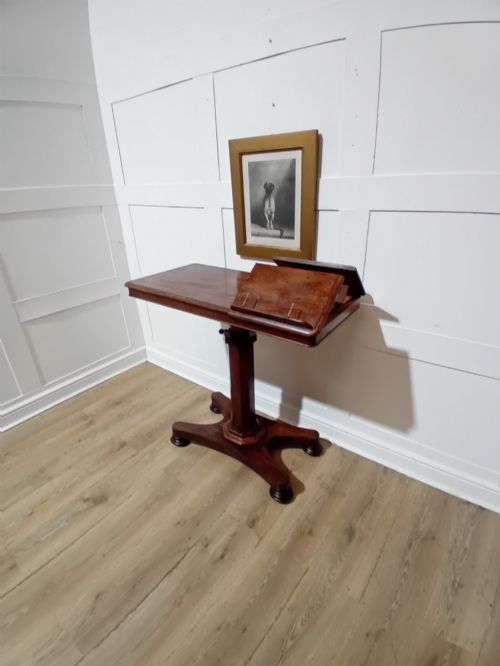
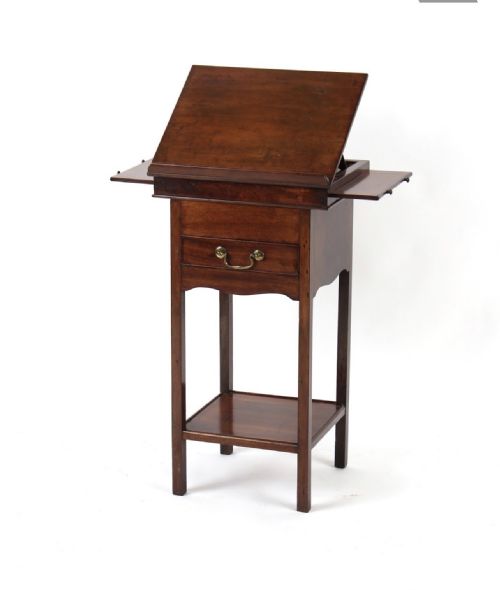
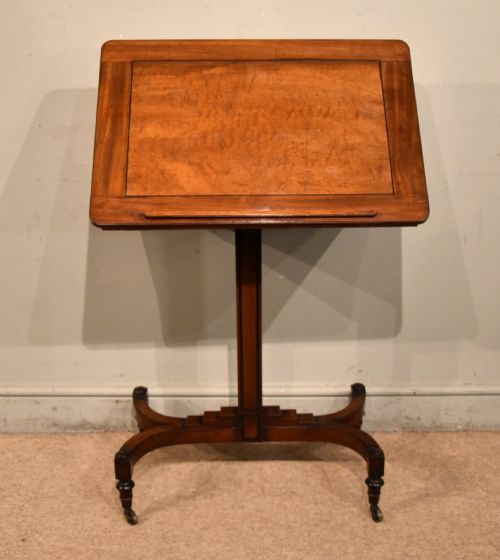
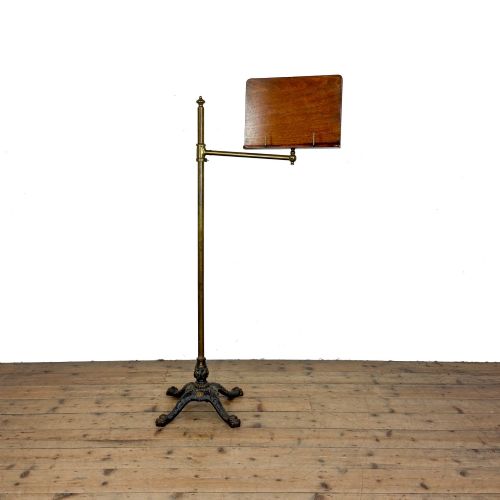
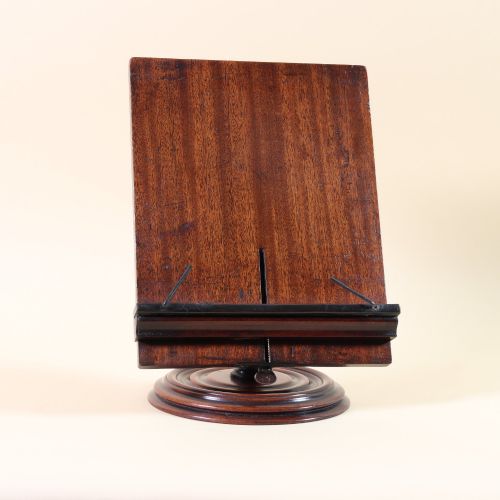
An adjustable reading lectern serves as a functional piece for supporting books, music sheets, or folios at variable heights and angles. When you search for an adjustable reading lectern, you find items designed to adapt to the reader, ranging from floor-standing music stands to table-top book rests.
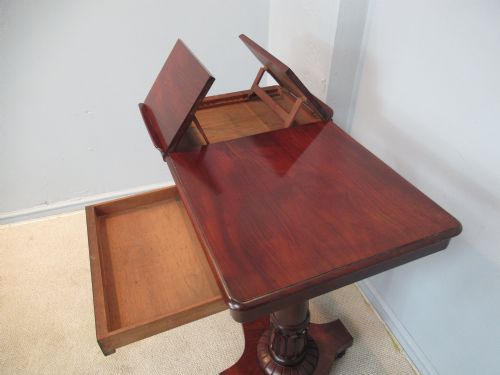
The pieces appearing on this page span several periods, with the Victorian era and the Regency period providing the most frequent examples. Forms vary from simple desk-top book supports to elaborate pedestal tables with pivoting tops and extending columns.
Materials include dense hardwoods like mahogany, rosewood, and oak, alongside industrial elements such as cast iron and brass. These objects frequently double as music stands or occasional tables, showing the multi-purpose design typical of nineteenth-century furniture.
How they were made
Cabinet makers utilised dense timbers such as mahogany, walnut, and rosewood, often figuring the grain on prominent surfaces like reading tops and occasional tables. Oak appears in sturdy floor-standing models and revolving bookcases, while exotic woods like Gonçalo Alves feature in specific tripod music stands.
Mechanical adjustability relies on brass ratchets, sliding wooden pillars, and cast iron mechanisms that permit height and tilt regulation. Metal components provide durability to moving parts, while wooden framing maintains traditional joinery standards across the Regency, Victorian, and Edwardian eras.
Adjustable Reading Lectern Retail Price Guide 2026
Typical asking prices for adjustable reading lectern among the pieces listed under this phrase on Sellingantiques today, from the lower quarter to the upper quarter. They describe what is for sale here now, not the wider market.
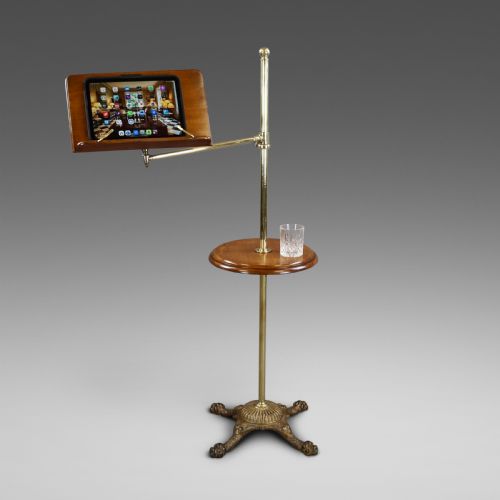
Some nineteenth-century readers required a mobility aid complete with cast-iron mechanics to bring literature directly to the armchair.
What varies in quality
The sophistication of the mechanical adjustment mechanism dictates much of the distinction between standard and superior pieces. Patent mechanisms by makers like Carters demonstrate advanced engineering that operates smoothly compared to simpler wooden ratchets.
Timber selection and decorative inlay further separate ordinary items from exceptional examples. Figured mahogany, burr walnut, and inlaid details indicate higher workshop ambition, whereas plainer items rely solely on utilitarian oak or standard mahogany construction.
Carters Of London·Gillows·Harrods
The Adjustable Reading Lectern Glossary
- Lectern
- A stand with a sloping top to hold a book or music score at a height for reading aloud or playing. These surfaces adjust in angle to suit the user.
- Campaign table
- Portable furniture designed for easy transport by travellers or military officers. These items often feature folding legs or collapsible reading stands.
- Gonçalo Alves
- A dense exotic hardwood with striking contrasting grain patterns. Furniture makers utilised this timber for decorative tripod music stands.
- Duet stand
- A wide music stand or lectern designed to accommodate two people reading from the same open book or folio. They frequently feature double-sided reading surfaces.
- Metamorphic furniture
- Pieces designed to transform from one form of furniture into another, such as a table converting into a reading desk.
Adjustable Reading Lectern: Frequently Asked Questions
What is an adjustable reading lectern used for?
These pieces served to hold books, folios, or music sheets securely at a comfortable reading angle. Users adjusted the height and tilt to accommodate reading while seated or standing.
They appeared in libraries, drawing rooms, and music rooms as versatile furniture that adapted to different domestic tasks throughout the nineteenth and early twentieth centuries.
How do I identify a Regency period lectern?
Regency examples typically exhibit classical proportions, dark mahogany timbers, and restrained brass mounts. Their design often draws on English Classical or Greek revival motifs.
Makers of this era focused on clean lines and stable tripod or pillar bases to support the adjustable reading surface.
Were these stands meant for music or books?
Many examples served a dual purpose for both reading texts and holding music scores. Adjustable ledges and pivoting book rests accommodated heavy bound volumes and thin sheet music alike.
Descriptions often interchange music stands, reading tables, and lecterns because the internal ratchets suited both functions equally well.
How do patent mechanisms work on these tables?
Patent models, particularly those from the Victorian period, incorporate metal ratchets, screws, and sliding columns operated by handles or levers. These allowed precise control over height and desk tilt.
Such engineering turned simple furniture into complex mobility aids or study desks tailored for the nineteenth-century reader.