

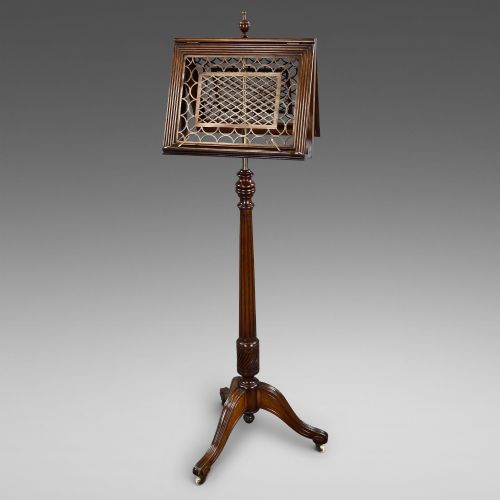


Adjustable Music Desk
An adjustable music desk brings architectural timber and brass mechanics together to hold scores at the exact angle a player needs.
Adjustable Music Desk
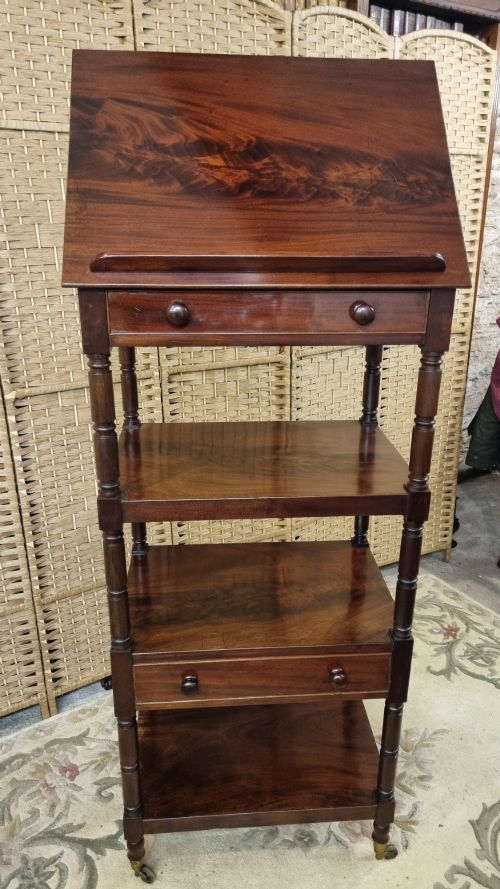
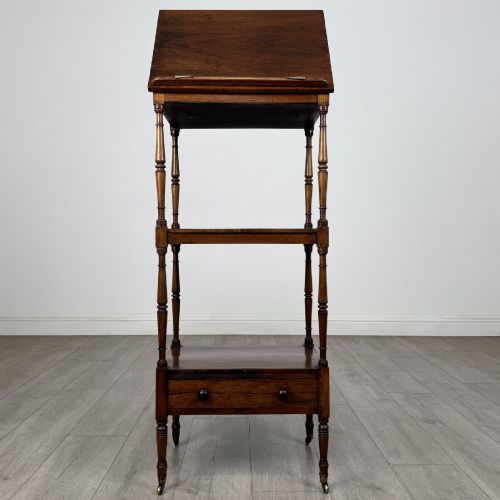
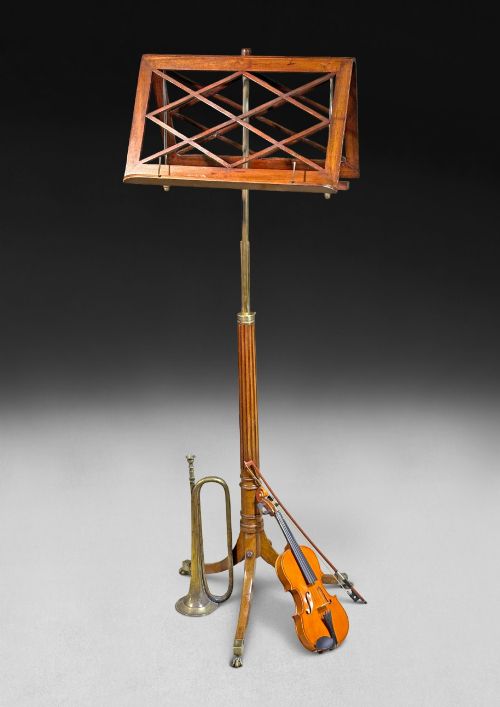
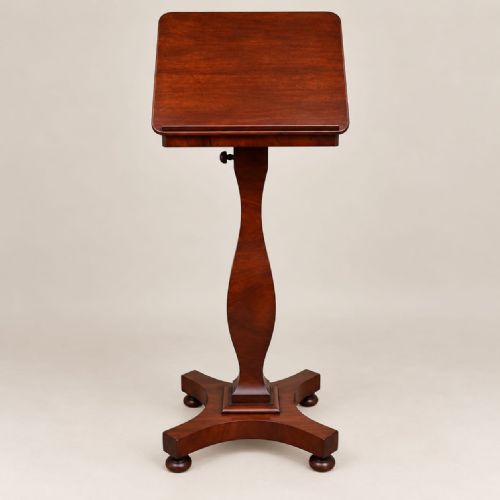
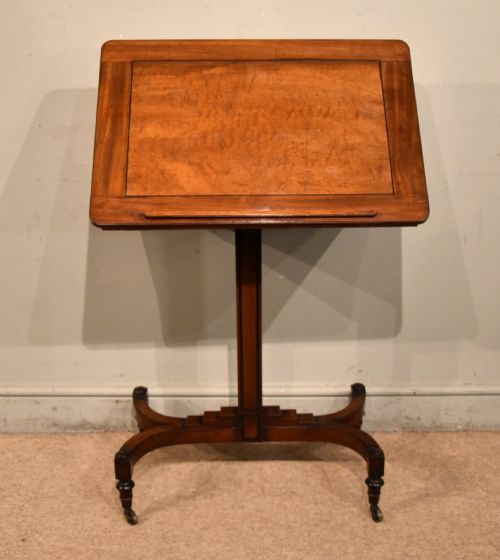
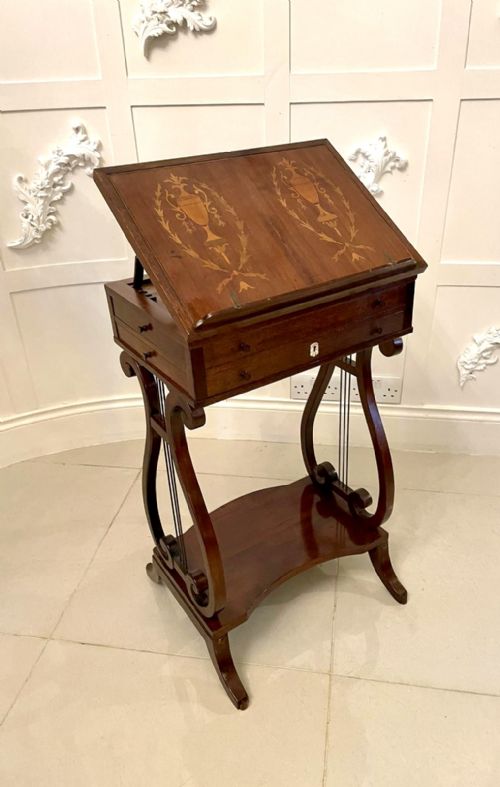
When you search for an adjustable music desk, you are looking at sturdy reading stands, lecterns, and duet stands designed to hold bound volumes and sheet music securely. These pieces span the Georgian, Regency, William IV, and Victorian periods, often doubling as occasional tables or writing desks.
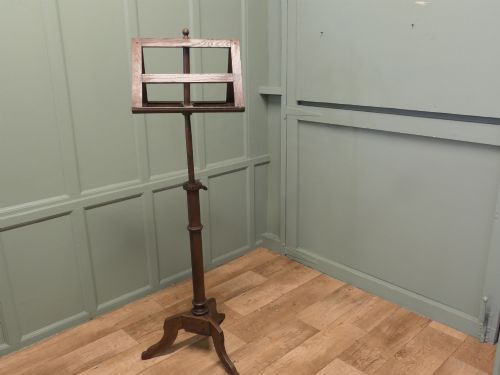
You are most likely to meet mahogany and rosewood examples from the nineteenth century on this page. They range from simple tripod music stands to elaborate inlaid reading tables with pivoting surfaces and brass ratchets.
How they were made
Cabinetmakers built these pieces primarily using dense timbers such as mahogany, rosewood, and walnut, frequently incorporating satinwood inlay and tooled leather surfaces. The timber was selected for strength and finished to highlight deep grain patterns.
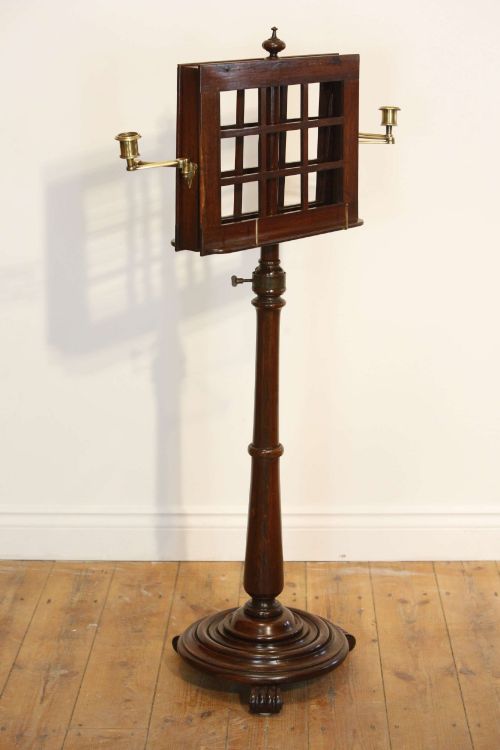
Makers utilised brass for ratchets, sliding stems, and pivoting mechanisms to allow height and tilt adjustment. Tripod bases and pedestal columns provided stability to support heavy folios without tipping.
Adjustable Music Desk Retail Price Guide 2026
Typical asking prices for adjustable music desk among the pieces listed under this phrase on Sellingantiques today, from the lower quarter to the upper quarter. They describe what is for sale here now, not the wider market.
The listings here feature timber varieties ranging from mahogany and rosewood to oak, walnut, and satinwood across the Georgian and Victorian eras.
What varies in quality
The refinement of the adjustment mechanism separates standard pieces from finer examples. Smooth-operating brass screws, reliable ratchets, and tight joints indicate superior workshop production.
Timber selection and decorative detail also define quality. Finely figured mahogany, burr walnut veneers, and crisp fretwork denote high-status commissions, whereas simpler oak or plain pine pieces serve utilitarian functions.
Gillows
The Adjustable Music Desk Glossary
- Duet stand
- A music stand wide enough to hold a double-page spread or accommodate two musicians sharing a single score. These often feature dual ledges or hinged folding leaves.
- Lectern
- A tall desk designed to support a book or manuscript at a height suitable for a standing reader. They frequently incorporate adjustable sloping surfaces.
- Ratchet support
- A notched metal mechanism fitted behind the desk surface to hold the reading slope at various angles. Fine versions engage cleanly without slipping under pressure.
- Tripod base
- A three-legged support base commonly used on music stands and reading tables to ensure stability on uneven floors. They often terminate in carved scroll or claw feet.
- Gonçalo Alves
- A dense exotic timber with distinctive dark brown figuring, sometimes used in Regency and William IV furniture. It offers a heavier and more figured alternative to standard rosewood.
Adjustable Music Desk: Frequently Asked Questions
How do I adjust the height?
Most pieces utilise a central brass screw or a sliding stem secured by a thumbscrew. Loosening this mechanism allows the upper pillar to raise or lower before locking firmly into place.
Heavier reading tables often employ internal counterweights or rack-and-pinion systems operated by small turning keys.
Can I use it as a laptop stand?
The sturdy timber ledges and adjustable angles make these stands suitable for modern laptops and tablets. The pivoting mechanism lets you set a comfortable ergonomic typing or viewing angle.
Ensure the weight capacity of the brass ratchet matches your device before leaving it extended.
How do I distinguish Regency from Victorian pieces?
Regency stands tend to feature clean classical lines, brass inlay, and rosewood or mahogany surfaces influenced by ancient forms. They often present simpler, more restrained geometry.
Victorian examples frequently display heavier carving, burr walnut veneers, and more complex mechanical adjustments for multi-functional use.
What is a metamorphic table?
A metamorphic table transforms from one form of furniture into another, such as converting a writing table into a reading stand with a rising folio desk. These pieces use hidden hinges and folding flaps.
Cabinetmakers designed them to save space in nineteenth-century drawing rooms and libraries.