



Adjustable Book Rest
An adjustable book rest is a practical device designed to hold reading material at a convenient angle for the user.
Adjustable Book Rest
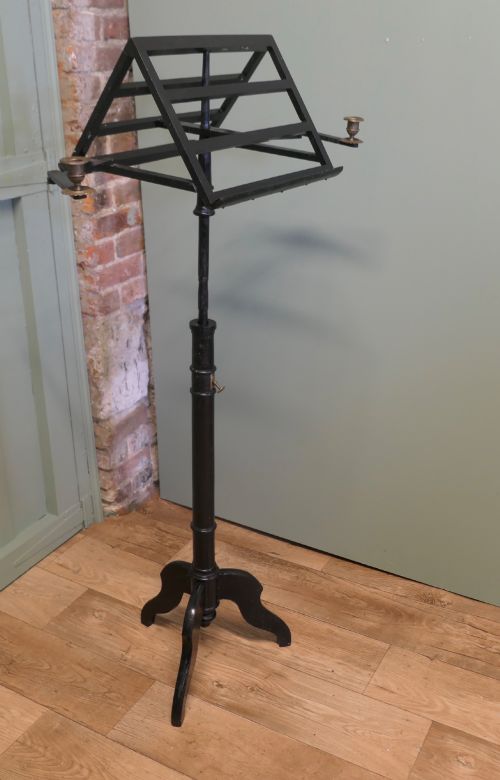
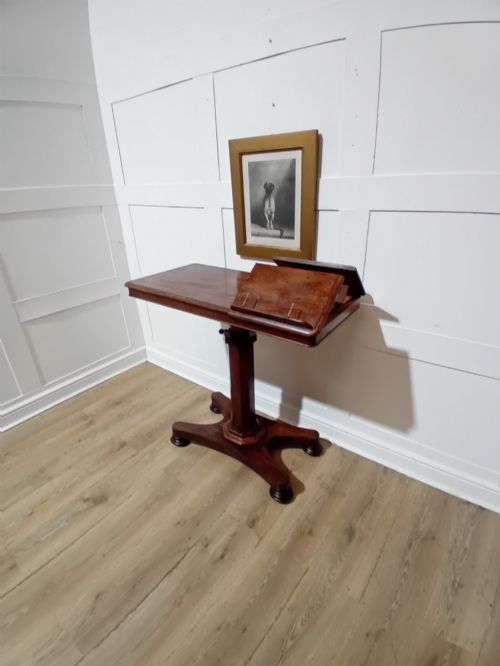
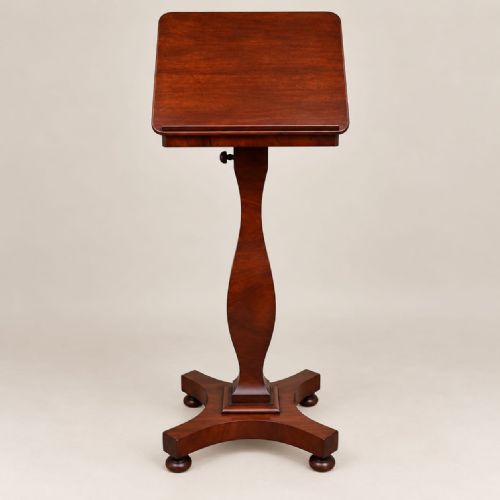
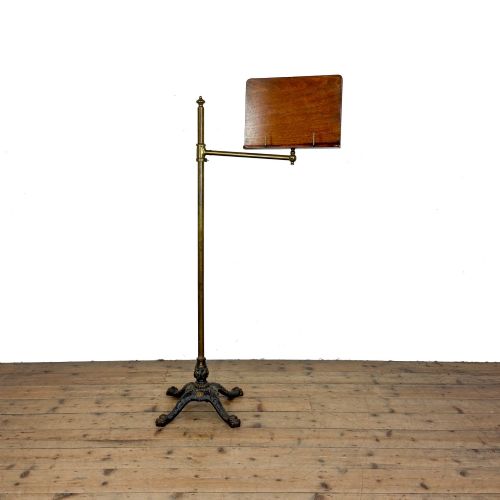
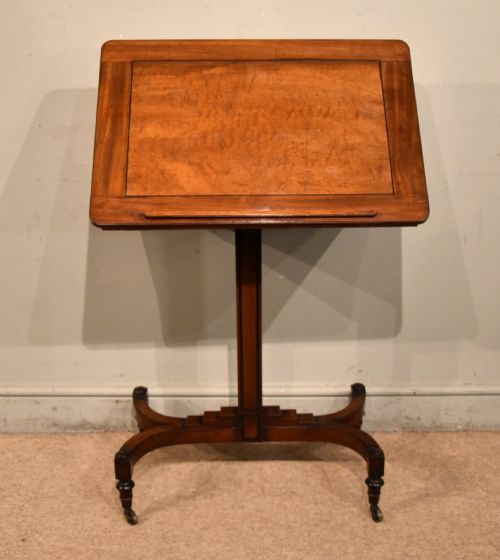
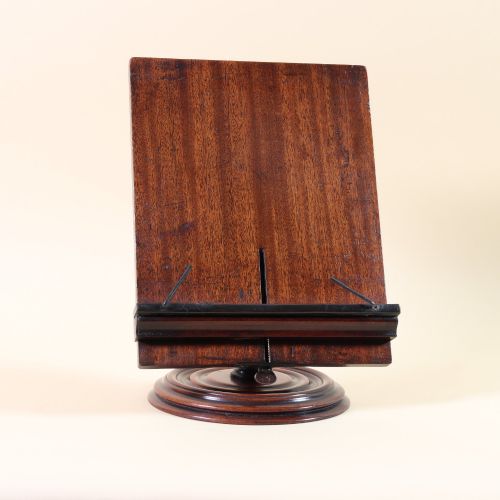
An adjustable book rest offers a practical mechanism to support books, folios, or sheet music at varied angles for comfortable reading. These pieces span centuries of design, appearing as desk-top stands, occasional tables, and floor-standing lecterns.
The versions most commonly met on this page include mahogany and walnut table-top rests alongside larger Victorian and Regency reading tables. Their primary purpose remains the support of heavy volumes, music sheets, or folios with stability and ease.
The lineage of the adjustable book rest encompasses periods from the eighteenth century through to the interwar period. Cabinet makers and brass founders adapted these stands for libraries, drawing rooms, and studies to suit the scholarly habits of the time.
How they were made
Makers utilised dense timbers such as mahogany, rosewood, walnut, and pine for the main structure and surfaces of the reading stands. These woods were chosen for their durability and capacity to take a fine polished finish.
Metal components, particularly brass and cast iron, formed the mechanical ratchets, hinges, and extending brackets that allowed the stands to articulate. Fretwork carving and inlaid details frequently decorated the timber panels of the more refined examples.
Adjustable Book Rest Retail Price Guide 2026
Typical asking prices for adjustable book rest among the pieces listed under this phrase on Sellingantiques today, from the lower quarter to the upper quarter. They describe what is for sale here now, not the wider market.
Several stands incorporate novel rests designed specifically to keep weighty music sheets from sliding onto the drawing room floor.
What varies in quality
The sophistication of the mechanical adjustment mechanism dictates the primary tier of quality in these pieces. Smoothly operating ratchets, solid brass screws, and well-fitted extending slides demonstrate superior craftsmanship compared to stiff or loose fittings.
Timber selection and the integration of secondary woods influence the overall integrity of the stand. Finely figured mahogany or walnut veneers matched with robust secondary framing separate standard utility pieces from exceptional examples.
Harrods·Carters of London·Jones and Willis
The Adjustable Book Rest Glossary
- Lectern
- A stand with a sloping surface used to hold a book or speech for a reader at podium height. These often feature adjustable ratchets to alter the viewing angle.
- Book slide
- An expanding rack designed to hold a row of books upright on a desk or table, often incorporating hinged ends that fold flat.
- Lutrin
- A French term frequently used in the trade for a music stand or reading desk with a sloping reading surface.
- Ratcheted support
- A mechanical rack and pawl device beneath the reading shelf that permits the user to alter the inclination of the book rest securely.
Adjustable Book Rest: Frequently Asked Questions
What is an adjustable book rest?
An adjustable book rest is a mechanical stand built to hold heavy volumes, folios, or sheet music at an inclined angle.
These objects range from small desk-top book slides to large floor-standing reading tables with articulated brass mechanisms.
How do you use a reading stand?
A reading stand is placed upon a desk or floor to support a book at eye level, reducing strain during prolonged study.
The adjustable mechanism allows the reader to alter the slant of the ledge to suit different lighting conditions and reading positions.
How are different periods identified?
Periods are identified through timber choices, joinery techniques, and the design of the metal ratchets.
Earlier pieces from the eighteenth century typically display simpler mahogany frameworks, whereas Victorian examples often incorporate cast iron and elaborate fretwork.
Where were these stands placed?
These stands were typically positioned in home libraries, studies, and drawing rooms for reading large reference books or Bibles.
Floor-standing versions often stood beside armchairs or music stools to hold scores and heavy folios.