


Academic Figure Painting Canvas
Academic figure painting canvas works capture human forms through formal studio training, offering rich historical narratives and classical draughtsmanship.
Academic Figure Painting Canvas
An academic figure painting canvas represents human subjects executed under rigorous traditional academy standards, frequently depicting historical scenes, nudes, or detailed portraits. These works emerge primarily from nineteenth-century European schools, alongside later British and continental interpretations.
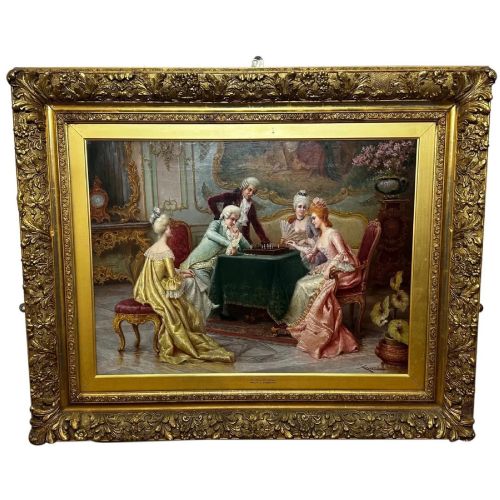
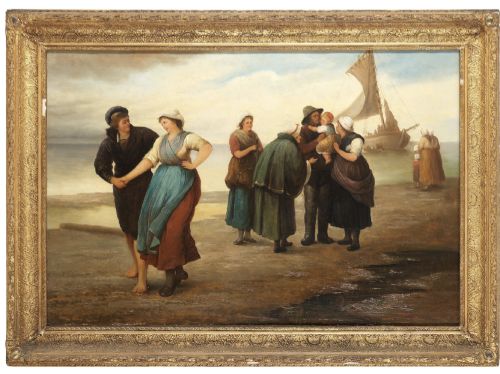
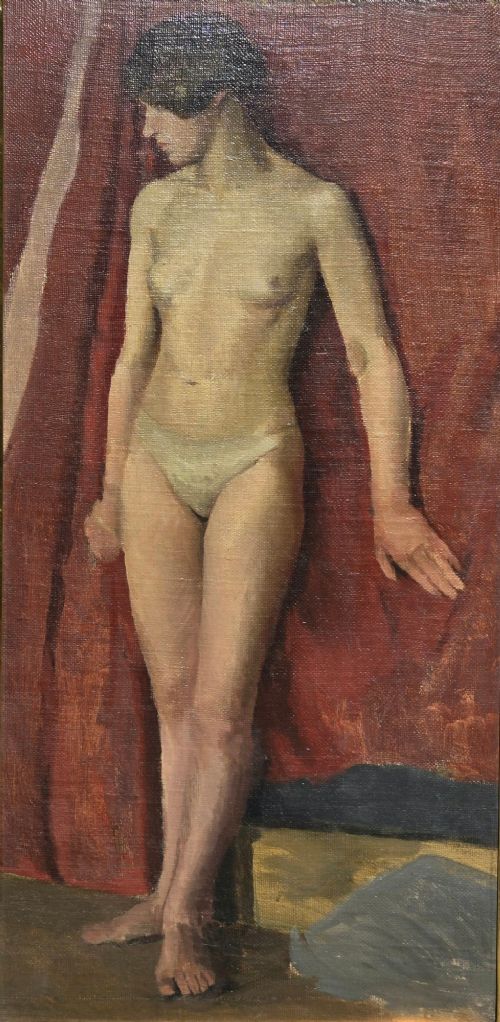
Buyers inspecting this page encounter various subject matters, ranging from solo portraits of musketeers and models to multi-figure genre scenes set in interiors. The predominant medium is oil paint applied to stretched canvas, often housed within period giltwood or gesso frames.
The selection spans from nineteenth-century French and Italian academic pieces through to early twentieth-century works and post-war British realism. Each piece reflects the structured training methods of academies where mastery of the human form remained paramount.
Materials and technique
Artists built these works using oil paint applied to woven canvas supports, sometimes stretched over wooden frames, allowing for subtle blending of tones and rich surface textures. The application relies on layered oil techniques to achieve depth in skin tones and drapery.
Many canvases are housed in ornate giltwood and gesso frames that complement the academic style. The underlying preparation of the canvas and careful layering of pigment define the technical execution of these works.
Materials recorded across the selection include oil paint, canvas, wood, giltwood, and gesso frames.
Evaluating quality and execution
Quality in these works rests upon the precision of anatomical rendering, the handling of light and shadow, and the psychological depth of the portraiture. Superior examples demonstrate confident brushwork and balanced compositional harmony.
The sophistication of the narrative and the handling of complex multi-figure arrangements distinguish finer academic works from more formulaic studio productions. The integrity of the canvas surface and the preservation of original pigment layers also influence the standing of each piece.
Johann Hamza·Ferdinand Victor Leon Roybet·Alexandre Louis Martin·Hermann Armin Kern·James Clark
The Academic Figure Painting Canvas Glossary
- Academic Realism
- A style of painting governed by the standards of European art academies, emphasising precise draughtsmanship, idealised forms, and traditional subject matter. This approach prioritises technical proficiency above expressive experimentation.
- Gesso
- A plaster-like mixture applied to wooden frames or panels to prepare a surface for gilding or painting. It provides a smooth, stable base for decorative frame mouldings.
- Genre Painting
- The pictorial representation of scenes from everyday life, involving ordinary people engaged in common activities. These works often carry narrative or moralising undertones.
Academic Figure Painting Canvas: Frequently Asked Questions
What defines an academic figure painting?
These works are defined by their adherence to the rigorous standards of nineteenth-century European art academies, focusing on precise human anatomy and traditional composition.
They frequently depict historical narratives, literary scenes, or detailed portraiture executed in oil on canvas.
How should I display an oil painting canvas?
Display these works away from direct sunlight and fluctuating humidity to protect the oil paint and canvas fibres from degradation.
Ensure the piece is securely hung using appropriate hardware suited to the weight of the canvas and its frame.
How do I identify the period of a canvas?
The period is often indicated by the stretcher construction, canvas weave, framing style, and artist signature or documentation.
Stylistic conventions, such as the clothing and setting of the figures, also offer clear chronological markers.
What subjects appear in these paintings?
Subjects include individual character studies, nudes, historical genre scenes, and portraits of notable historical figures.
The narratives range from quiet domestic moments to theatrical portrayals of figures like musketeers and scholars.