




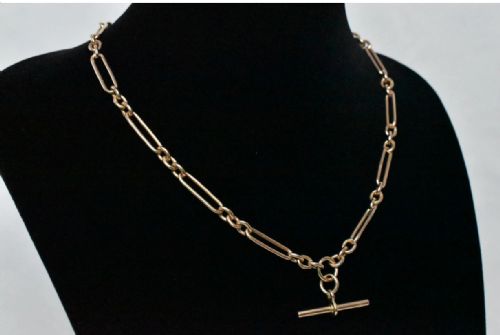


9ct Rose Gold Albert Chain
A 9ct rose gold albert chain brings the warm, coppery gleam of late nineteenth and early twentieth-century jewellery straight into modern wear as a substantial necklace or bracelet.
9ct Rose Gold Albert Chain
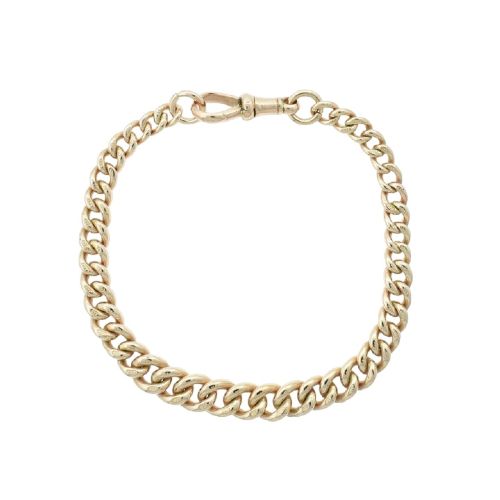
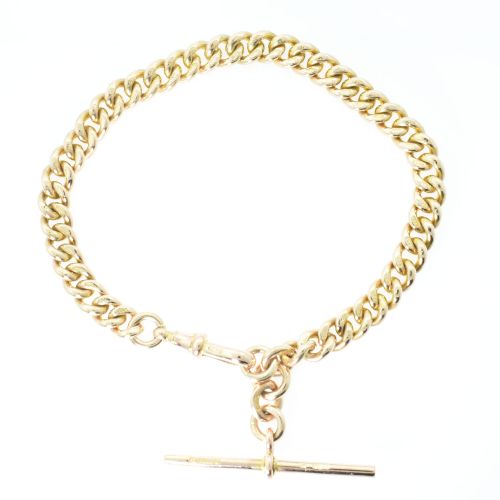
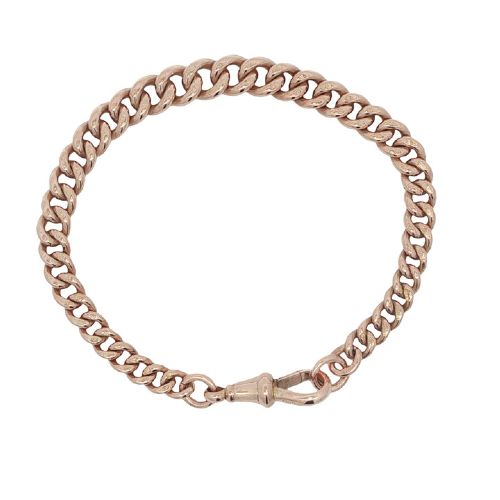
A 9ct rose gold albert chain is a substantial piece of jewellery originating from the Victorian and Edwardian periods, initially designed to secure pocket watches to waistcoats. These items now frequently serve as bracelets or necklaces, often retaining their original functional components such as the T-bar and dog clip swivel clasp.
The pieces appearing on this page span the Victorian era, the Edwardian period, and the early years of the twentieth century, specifically including the years nineteen hundred and nineteen ten. Alongside traditional pocket watch chains, buyers will encounter adapted bracelets and necklaces fashioned from the same robust links.
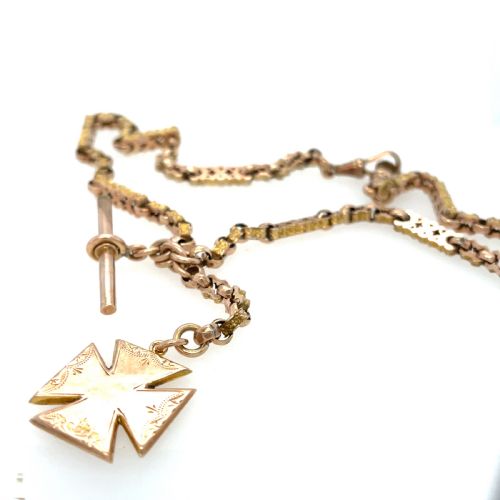
Forms vary from classic curb links and trombone patterns to unusual link arrangements and fetter and knot designs. Many examples retain significant weight, ranging from lighter wrist-wear to heavy pocket watch chains exceeding forty grams.
Materials and Construction
The primary material across all examples is nine-carat gold, predominantly rendered in a distinctive rose hue alongside occasional white gold accents. Goldsmiths of the nineteenth and early twentieth centuries constructed these pieces using durable metal alloys that provided both a warm reddish colour and the resilience needed for daily use.
Construction relies heavily on interlocking links such as curb, trombone, and fetter and knot designs, secured by mechanical dog clip swivel clasps and centred with decorative T-bars. These elements were hand-assembled by period artisans to withstand the physical demands of securing a pocket watch.
9ct Rose Gold Albert Chain Retail Price Guide 2026
Typical asking prices for 9ct rose gold albert chain among the pieces listed under this phrase on Sellingantiques today, from the lower quarter to the upper quarter. They describe what is for sale here now, not the wider market.
Some chains incorporate dog clips that have securely held timepieces through two world wars.
Judging Quality
Quality in a 9ct rose gold albert chain rests on the integrity of the links and the substantial feel of the metal. Heavier specimens with well-preserved gauge and solid link construction demonstrate superior craftsmanship compared to lighter, more worn counterparts.
The presence of original components such as fully functioning dog clip swivel clasps and intact T-bars elevates a piece. Furthermore, clear hallmarks and maker's marks from assay offices like Birmingham add historical substance to the physical weight of the gold.
The 9ct Rose Gold Albert Chain Glossary
- T-Bar
- A small horizontal metal bar attached to the centre of the chain by a short drop piece. It was originally passed through a waistcoat buttonhole to anchor a pocket watch securely.
- Dog Clip
- A spring-loaded swivel clasp resembling a miniature dog leash hook. It fastens the pocket watch or allows the chain to be worn doubled as a bracelet or necklace.
- Curb Link
- A classic chain design featuring uniform, flattened interlocking links that lie flat against the skin. This pattern provides both strength and flexibility for daily wear.
- Trombone Link
- A fancy chain link style alternating elongated rectangular bars with smaller circular or oval connecting rings. It borrows its name from the shape of musical instrument tubing.
- Graduated
- A design where the individual links increase in size progressively toward the centre of the chain. This creates a balanced visual weight typical of traditional pocket watch chains.
9ct Rose Gold Albert Chain: Frequently Asked Questions
How do I wear an albert chain today?
An albert chain can easily be styled as a substantial necklace or wrapped multiple times to form a distinctive bracelet. Many buyers attach the dog clip directly to the T-bar or to an end ring to secure the piece.
Longer chains offer versatility for layering, while heavier nineteen-century examples make a bold standalone statement on the wrist or neck.
What is the difference between Victorian and Edwardian pieces?
Victorian pieces, produced during the nineteenth century, often display heavier construction and robust link patterns like the trombone or traditional curb. They frequently incorporate substantial dog clips and prominent T-bars designed for practical utility.
Edwardian examples, dating from the early twentieth century, tend to show refined detailing and sometimes lighter link structures while retaining the characteristic warm rose gold tone.
What are fetter and knot links?
Fetter and knot links form a decorative pattern combining long oval links with tight, figure-eight or twisted knot connectors. This intricate style breaks up the uniformity of standard curb chains.
Victorian and early twentieth-century makers utilised this construction to add visual texture and distinction to watch chains and necklaces.