

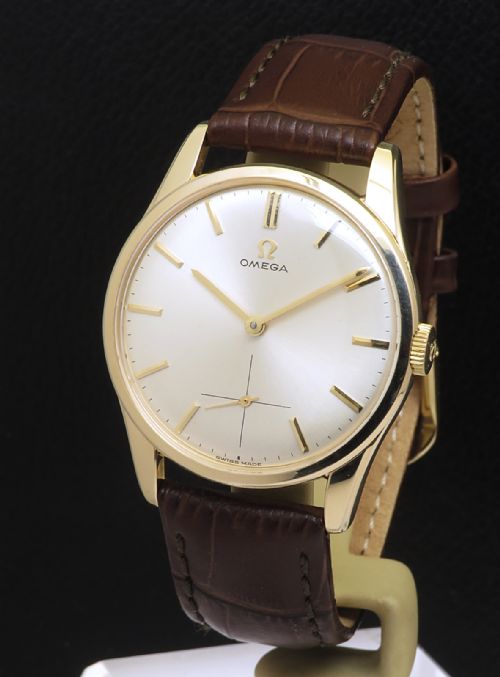
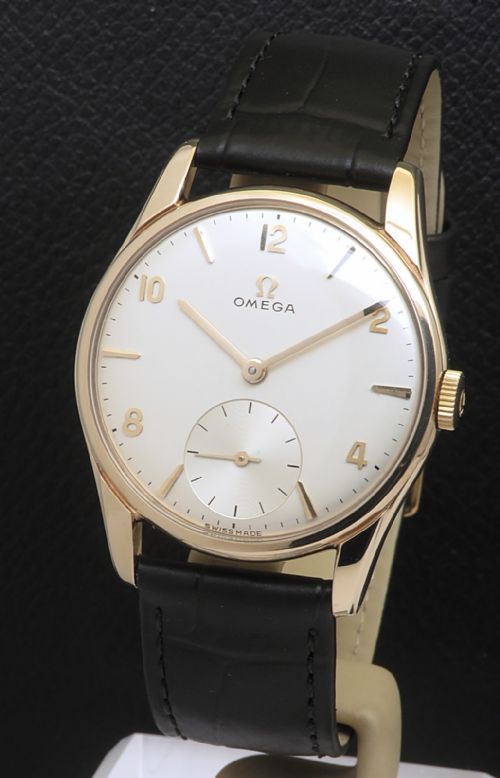


9ct Gold Omega
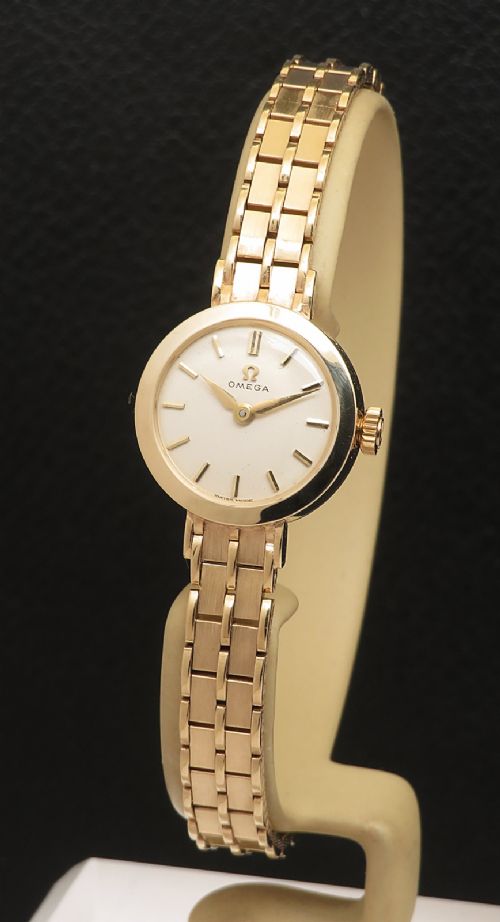
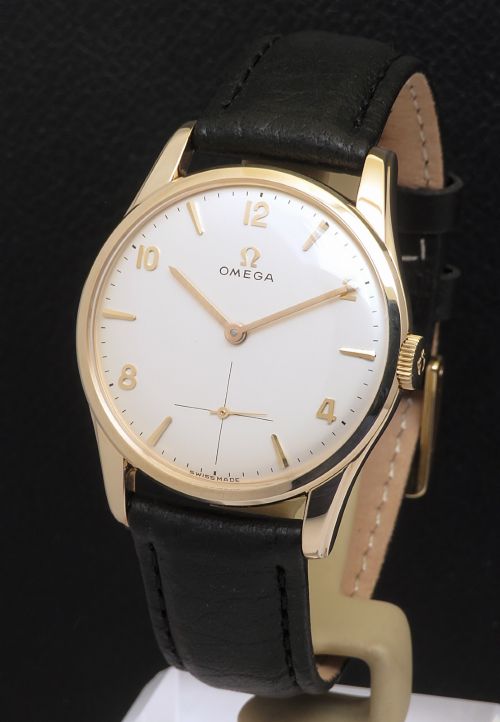
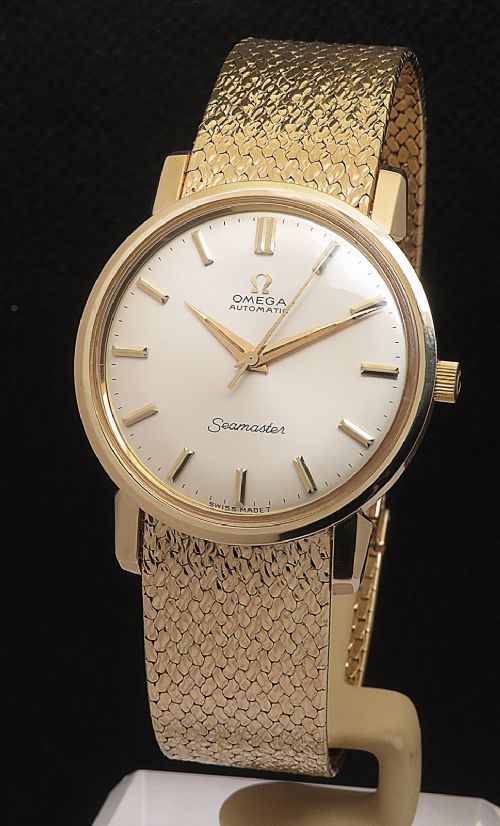
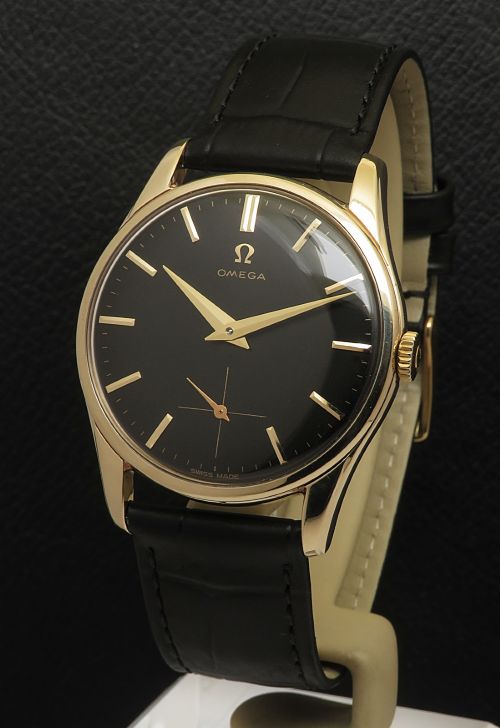
These mid-century 9ct gold omega wristwatches offer solid metal construction and reliable mechanical movements from the nineteen fifties and sixties.
9ct Gold Omega
A 9ct gold omega search brings up mid-century wristwatches produced primarily during the nineteen fifties and nineteen sixties. These pieces include automatic and manual-wind movements housed in solid yellow gold cases.
Buyers frequently encounter specific lines such as the Seamaster and Geneve alongside classic calibre models like the 265, 267, 268, 269, 552, and 562. Many examples survive with original presentation boxes and paperwork.
The aesthetic reflects mid-century modern design sensibilities, often featuring clean dials, explorer layouts, and minimal markers paired with leather straps.
How they were made
Cases are formed from solid 9ct yellow gold, enclosing mechanical movements driven by precision calibres. Dials are protected by glass or acrylic glass crystals.
Timepieces are fitted with leather straps to complement the metal case work, utilising traditional watchmaking assembly methods standard to Swiss manufacturing of the era.
Current listings span the nineteen fifties and nineteen sixties, focusing on solid yellow gold automatic and manual-wind wristwatches.
What varies in quality
Differences in quality hinge upon the original condition of the dial and the preservation of the solid gold case edges. Unworn examples retain factory sharpness on the metalwork compared to polished alternatives.
The presence of original boxes, papers, and factory-correct components elevates a piece, distinguishing standard survivors from preserved museum-grade examples.
Omega
The 9ct Gold Omega Glossary
- Calibre
- The specific internal mechanical movement manufactured for a watch. It designates the design and sizing of the gear train and escapement.
- Automatic
- A self-winding mechanical movement that uses a weighted rotor to tension the mainspring during wrist movement.
- Acrylic glass
- A lightweight synthetic material utilised for watch crystals prior to the widespread adoption of synthetic sapphire.
- Explorer dial
- A watch face layout featuring prominent numerals at the major compass points for enhanced legibility.
9ct Gold Omega: Frequently Asked Questions
Are these watches manual or automatic?
The selection includes both manual-wind mechanical movements and self-winding automatic calibres from the mid-century period. Each type relies on traditional springs rather than batteries.
Manual movements require regular hand winding, whereas automatic versions utilise natural wrist motion to maintain tension in the mainspring.
Do these watches come with boxes?
Several examples survive alongside their original presentation boxes and associated paperwork from the nineteen sixties. These accessories enhance the historical completeness of the timepiece.
Listings specify whether a particular watch includes its original fitted box or documents from the time of purchase.
What strap material is used?
These solid gold watch heads are traditionally paired with leather straps. The dark leather contrasts against the yellow gold metal case.
Straps secure the watch to the wrist using traditional metal pin buckles that complement the case finish.
How do I identify the movement calibre?
The movement calibre number is typically stamped directly onto the internal machinery, designating the specific mechanical design. Common numbers include the 265, 267, 268, 269, 552, and 562.
Consulting the movement number allows collectors to verify the production era and technical specifications of the watch.