




9ct Gold Gemstone Studs
These 9ct gold gemstone studs bring together mid-century charm, Victorian weight and colourful stones to sit neatly on the ear.
9ct Gold Gemstone Studs
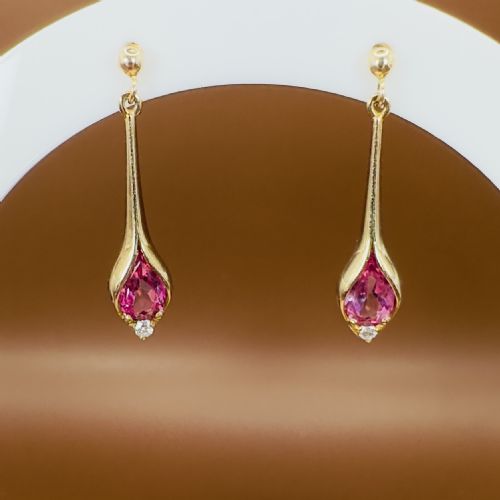
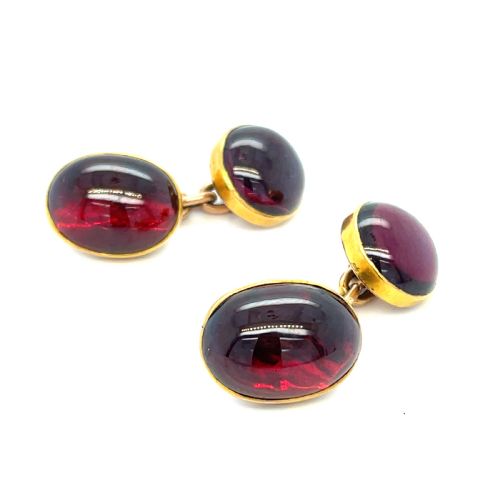
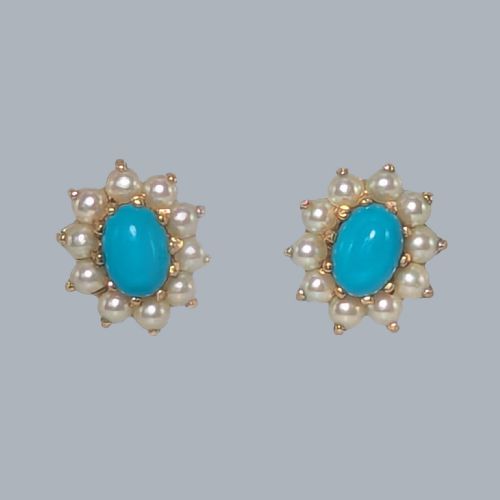
When searching for 9ct gold gemstone studs, buyers encounter a diverse range of earrings, drop earrings, and cufflinks spanning periods from the Victorian era through the mid-twentieth century. The selection leans heavily towards mid-century designs alongside Victorian and Edwardian examples, offering various interpretations of cluster, halo, and drop styles.
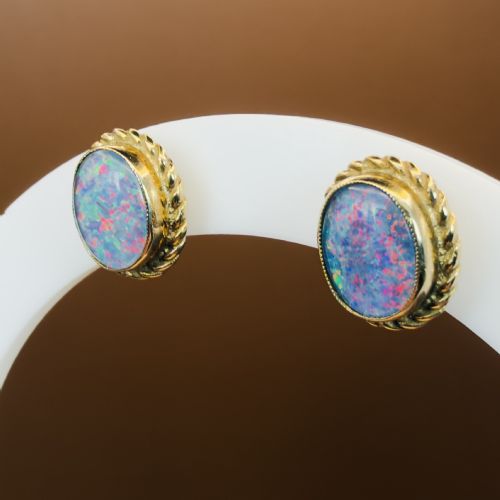
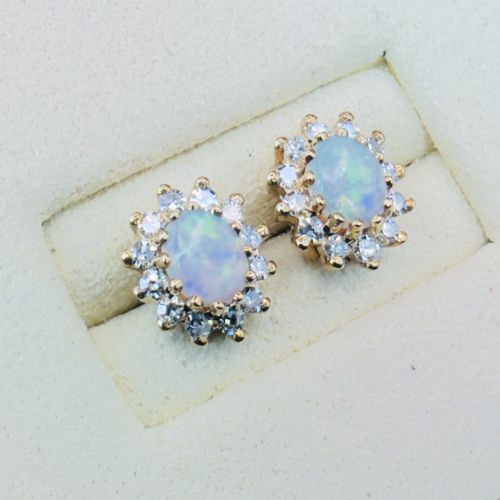
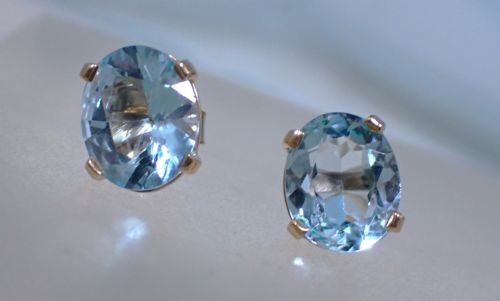
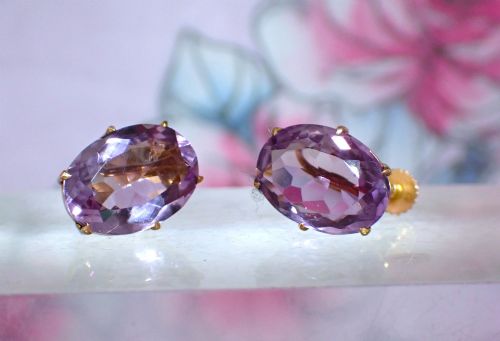
Stones set within these pieces range from dark garnets and amethysts to opals, aquamarines, rubies, and turquoise. Forms alternate between simple bezel or prong settings, intricate filigree frames, and clustered stone arrangements designed to catch the light from the earlobe.
How they were made
The foundation of these pieces relies on 9ct gold, appearing in yellow, white, and rose hues, shaped into bezels, prongs, and filigree wirework. Stones are cut in various facets and cabochons, secured by hand into mountings that range from traditional post fittings to screw-backs and clips.
Cluster and drop constructions employ soldering and clustering techniques to group smaller accent gems, such as diamonds or white spinels, around central coloured stones like rubies, sapphires, and opals.
Among the opals and amethysts, a pair of tiger's eye studs waits quietly to watch the room.
What varies in quality
Distinction across the range lies in the depth of the goldwork and the character of the chosen gems, where pierced filigree and balanced cluster arrangements demand greater skill than plain bezels. The selection of stones shows variation in natural colour saturation, optical play in opals, and precision in gemstone cutting.
Construction robustness also differs between simple daily wear posts and heavier Victorian screw-on mechanisms or multi-stone drop assemblies, reflecting the specific manufacturing standards of their respective decades.
The 9ct Gold Gemstone Studs Glossary
- Cabochon
- A gemstone shaped and polished with a smooth, rounded domed surface rather than faceted edges. This cut is common among opals, garnets, and turquoises in these listings.
- Cluster
- An arrangement where several smaller gemstones group closely around a larger central stone. This technique maximises visual impact on the ear.
- Filigree
- Ornamental work consisting of fine, twisted gold wire soldered in delicate patterns. It appears frequently on Edwardian and mid-century mountings.
- Screw-on
- A fastening mechanism that secures the earring via a threaded post and a backing nut turned by hand. These provide an adjustable fit for non-pierced lobes.
- Doublet
- A composite gemstone made of two joined sections, often seen here combining opal with a dark backing. This construction enhances colour play while providing structural support.
9ct Gold Gemstone Studs: Frequently Asked Questions
Are all these earrings for pierced ears?
The selection includes standard post-and-butterfly stud earrings alongside screw-on designs and clip-on mechanisms.
Buyers with unpierced ears will find specific historical fasteners among the Victorian and mid-century items.
How do I identify the period of the gold studs?
Victorian and Edwardian examples often feature heavier construction, screw fittings, or specific cluster arrangements like garnet and split pearl.
Mid-century pieces from the 1950s and 1960s tend to display modernist lines, bright synthetic spinels, or specific hallmarking details.
What is the difference between a stud and a drop earring?
Stud earrings sit directly and snugly against the earlobe without hanging below the base.
Drop or dangly earrings incorporate an extended section that suspends stones below the main fitting.
Do these earrings use natural or synthetic stones?
The pieces incorporate a wide variety of natural materials alongside manufactured stones typical of mid-century manufacturing.
Listings specify the exact composition, noting gems such as amethyst, garnet, opal, aquamarine, and white spinel.