
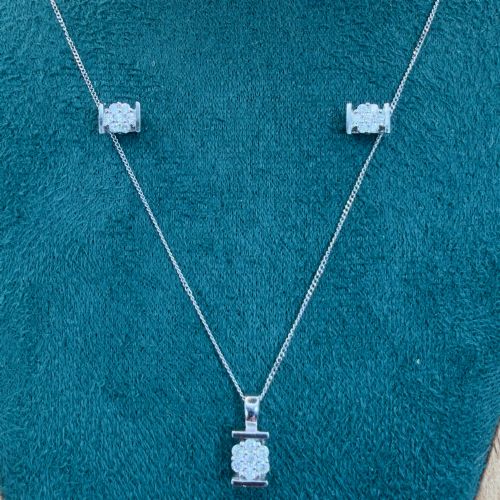
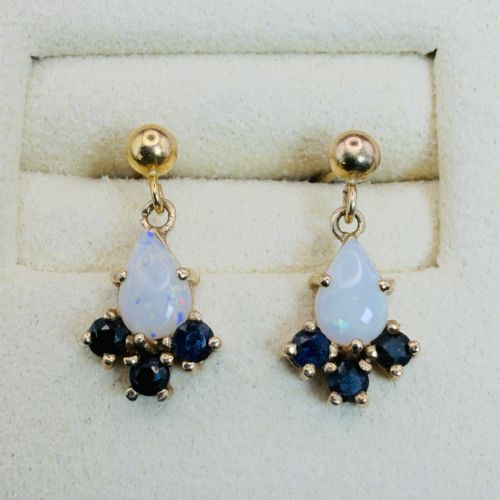
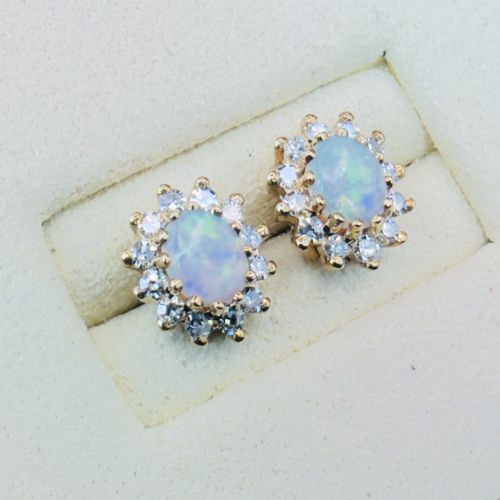
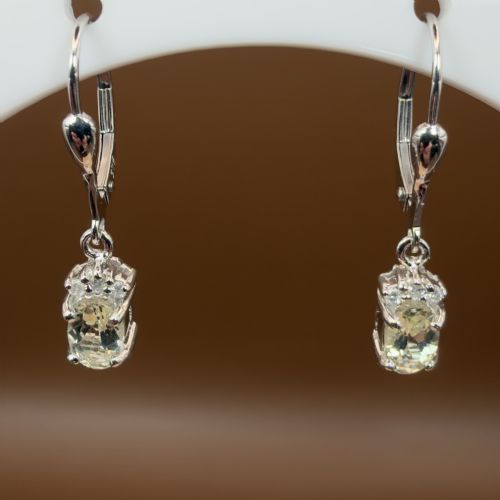


9ct Gold Cluster Earrings
These 9ct gold cluster earrings pair central gemstones with surrounding stones, bringing colour and period character to the lobe.
9ct Gold Cluster Earrings
When you search for 9ct gold cluster earrings, you encounter an array of period designs spanning the Victorian era through the mid-twentieth century. These pieces centre on a primary gemstone, such as sapphire, ruby, garnet, opal or diamond, encircled by smaller stones to form a floral, halo or geometric cluster. The format ranges from compact stud earrings to drop and dangle designs intended to move with the wearer.
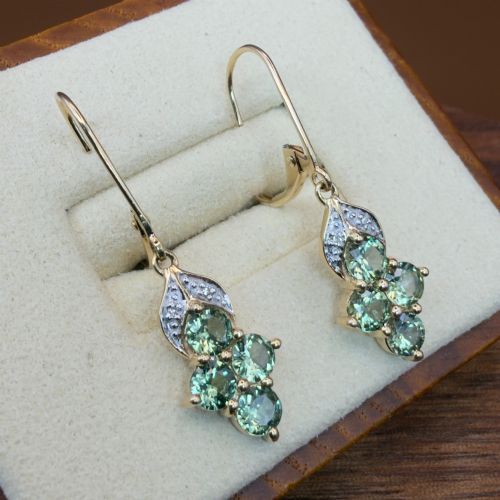
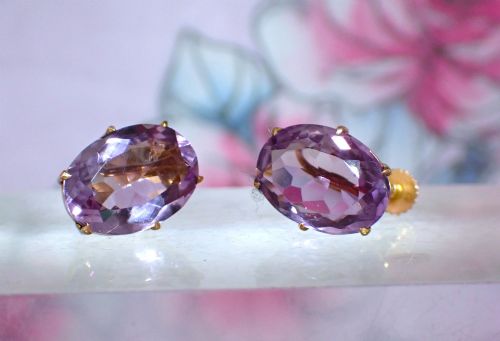
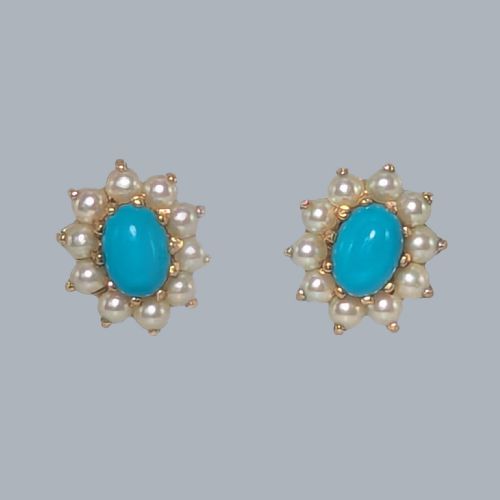
On this page, mid-century examples from the 1950s and 1960s appear frequently alongside Victorian and Edwardian pieces. You will find variations including screw-on backs, clip-on fittings, hinge backs and standard posts. Gemstone choices extend from traditional diamonds and pearls to coloured stones like amethyst, turquoise, green amethyst and spinel set in yellow, white or rose 9ct gold.
How they were made
The construction relies on 9ct gold, utilised in yellow, white and rose variations to hold the central stones and smaller accents. Gemstones are secured using claw settings, bezel settings or silver-topped mounts typical of older Victorian work. Component parts like screw-backs, hinges and drops are soldered to the main cluster frame.
Lapidary techniques shape the central stones into oval cuts, cabochons, pear cuts and round facets to maximise light return within the tight cluster layout. Pearl components utilise natural or cultured specimens mounted on pegs or wires within the floral motifs.
Sunburst screwbacks ensure your earlobes receive both stellar rays and a secure vintage hug.
What varies in quality
The standard of 9ct gold cluster earrings depends on the selection and matching of the gemstones, from evenly matched diamond halos to deeply saturated garnets and sapphires. Settings display different levels of hand-finished detail, such as fine grain work, canetille wirework or clean claw alignment.
Structural integrity of the mechanism also distinguishes the pieces, separating robust hinge backs and secure screw fittings from worn or later-altered mountings. The clarity and cut of the surrounding stones determine the visual depth of the cluster.
The 9ct Gold Cluster Earrings Glossary
- Cluster
- A jewellery arrangement featuring a central stone surrounded by a ring of smaller accent stones. This layout maximises visual impact and light reflection.
- Cabochon
- A gemstone shaped and polished with a smooth, rounded convex surface rather than faceted planes. This cut is common in opals, garnets and sapphires.
- Canetille
- An intricate filigree metalwork technique resembling lace, popular in nineteenth-century jewellery. It uses fine gold wires and tiny circlets.
- Hinge back
- A closure mechanism featuring a hinged wire that snaps securely into a notch behind the ear. This provides reliable fastening for drop earrings.
- Screw-back
- A mechanical earring fastening tightened via a threaded post and nut. It allows the wearer to adjust the pressure on the earlobe.
9ct Gold Cluster Earrings: Frequently Asked Questions
How do I secure screw-on earrings?
Screw-on earrings utilise a threaded post and a small threaded nut that winds down toward the lobe. You adjust the tension gently until the fitting rests comfortably against the skin without pinching.
Older mechanisms require careful alignment of the threads to avoid cross-threading. Take your time when winding the back into place to protect the vintage metal.
What is a halo cluster?
A halo cluster consists of one prominent central gemstone encircled by a single, uniform ring of smaller accent stones, usually diamonds. This configuration enhances the perceived size and brilliance of the middle gem.
Victorian and mid-century examples often substitute diamonds in the halo with pearls, sapphires or spinels. The surrounding stones frame the central colour with contrasting light.
Can I wear these every day?
These pieces suit regular wear provided you handle them with care, particularly delicate Edwardian or Victorian items with fine settings. Softer stones like opals and pearls require greater attention to avoid impact or harsh chemicals.
Check the security of the claws and fastenings periodically, especially on screw-backs or hinge mechanisms. Store them individually to prevent stones from scratching one another.
How do I date a pair?
Dating relies on stylistic clues, setting techniques and metal types combined with any available hallmarks or stamps. Victorian and Edwardian examples often feature closed-back foils, silver-topped gold or canetille work.
Mid-century pieces from the 1950s and 1960s introduce distinct cluster geometry, bright yellow 9ct gold and different fastening types. Comparing the cut of the gemstones also points toward a specific period of manufacture.