

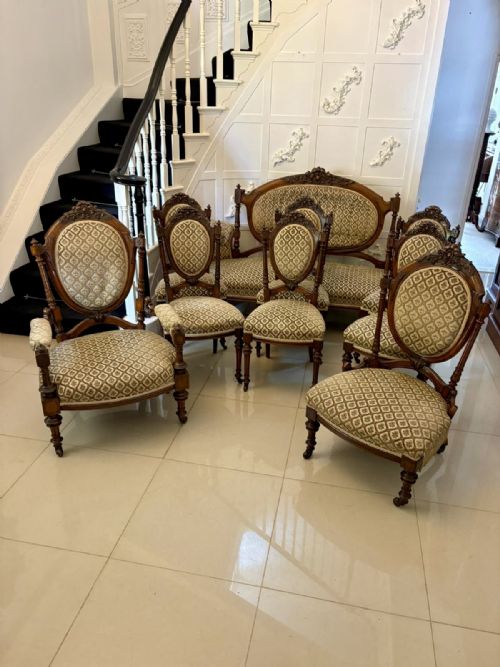


9 Piece Suite
A 9 piece antique suite brings together coordinated seating or bedroom furnishings from the nineteenth and twentieth centuries.
9 Piece Suite
A 9 piece antique suite consists of matching groups of furniture designed for reception rooms, parlours, and bedrooms. These ensembles typically comprise settees, armchairs, side chairs, and occasionally footstools or related matching items created as a unified group.
Buyers exploring this phrase encounter pieces spanning the Victorian, Edwardian, and Art Deco periods. Walnut, mahogany, and oak form the structural foundations of these large groupings, upholstered in period fabrics, leather, and velvet.
Salon and drawing room suites dominate the larger configurations, alongside bedroom furniture arrangements. The coordinated design language ensures uniform carving, inlay, or timber selection across every piece in the set.
How they were made
Cabinet makers utilised solid timbers such as walnut, mahogany, and oak, often applying veneers and intricate marquetry or ebonised details. Frames received hand-carved ornamentation reflecting prevalent styles including Rococo Revival, Arts and Crafts, and Louis XVI.
Upholstery techniques involved traditional stuffing and springing finished with high-grade textiles, velvet, fabric, or leather. Brass elements and giltwood accents provided functional and decorative hardware across the frames.
9 Piece Suite Retail Price Guide 2026
Typical asking prices for 9 piece suite among the pieces listed under this phrase on Sellingantiques today, from the lower quarter to the upper quarter. They describe what is for sale here now, not the wider market.
Some suites travelled from colonial workshops in India and Burma to British country houses.
What varies in quality
The refinement of the hand-carving and the choice of timber figure determine the distinction between standard production and exhibition grade suites. Selected burr walnut or figured mahogany denote superior workshop output.
Cohesion across all components within the ensemble dictates overall merit. Suites retaining matching upholstery finishes, intact inlay work, and original structural integrity demonstrate higher craftsmanship.
Waring & Gillows·Frank Taylor & Co.·B Cohen & Sons·Howard and Sons
The 9 Piece Suite Glossary
- Salon suite
- A coordinated set of seating furniture intended for formal entertaining rooms. These groupings usually include a settee and multiple matching chairs.
- Marquetry
- Decorative veneer work arranged in pictorial or geometric patterns using various woods. Artisans inlaid contrasting timbers into the primary surface of the furniture.
- Chinoiserie
- European decorative style employing Chinese artistic motifs and lacquer techniques. This aesthetic appeared on late Edwardian framework and bedroom furniture.
- Ebonised
- Timber treated with a dark finish to imitate ebony. This process created a dramatic contrast with inlaid brass or mother-of-pearl.
9 Piece Suite: Frequently Asked Questions
What is a 9 piece antique suite?
A 9 piece antique suite comprises a matched set of furniture, typically seating for a drawing room or elements of a bedroom arrangement. Each piece shares timber, carving, and upholstery styles.
These large groupings allowed Victorian and Edwardian households to furnish entire rooms with consistent decorative themes.
How were parlour suites arranged?
Parlour suites were positioned around reception rooms to facilitate formal conversation and hospitality. Settees took central placement with armchairs and side chairs arranged symmetrically.
Large suites provided ample seating for guests during social gatherings in nineteenth century homes.
How do I identify Art Deco suites?
Art Deco suites feature streamlined silhouettes, geometric marquetry, and burr walnut or oak construction. Cloud shapes and smooth leather upholstery frequently define the seating.
These pieces reflect the modern design movements of the 1920s and 1930s, moving away from Victorian ornamentation.
Are bedroom suites matched?
Bedroom suites included coordinated wardrobes, dressing tables, and seating sharing identical timber and inlay details. Oak and mahogany predominated these functional domestic groupings.
Matching sets created a unified aesthetic within private sleeping quarters during the Edwardian and Victorian eras.