




5 Light Gilt Chandelier
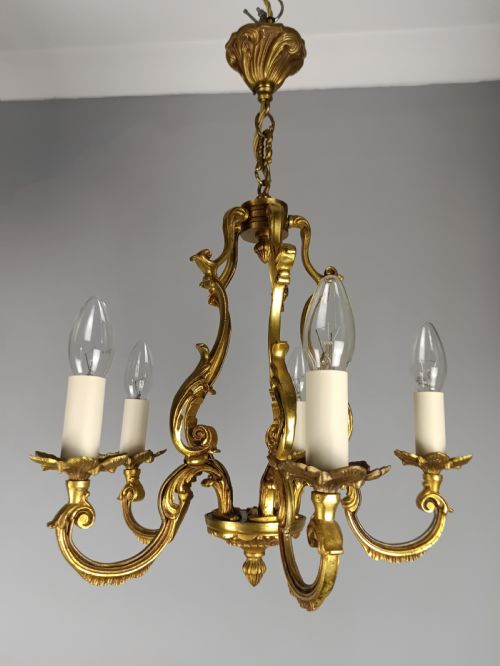
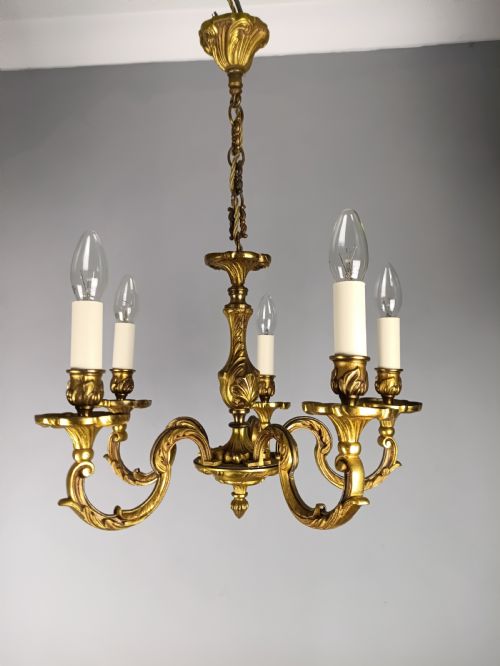
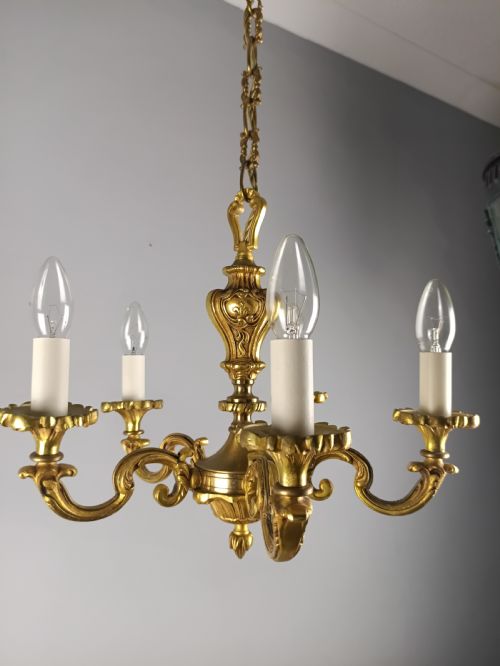
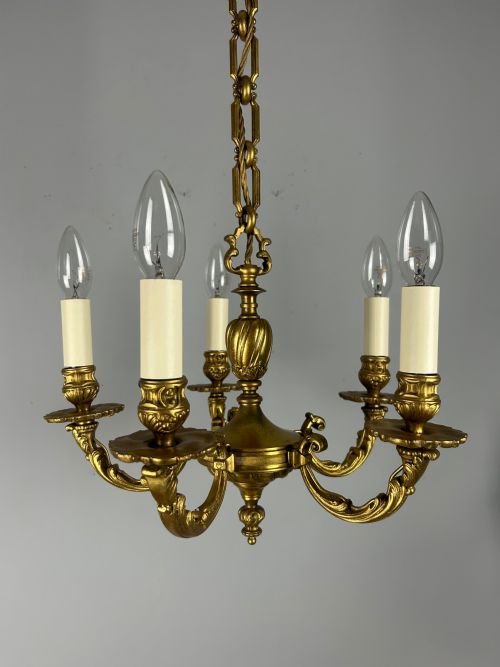
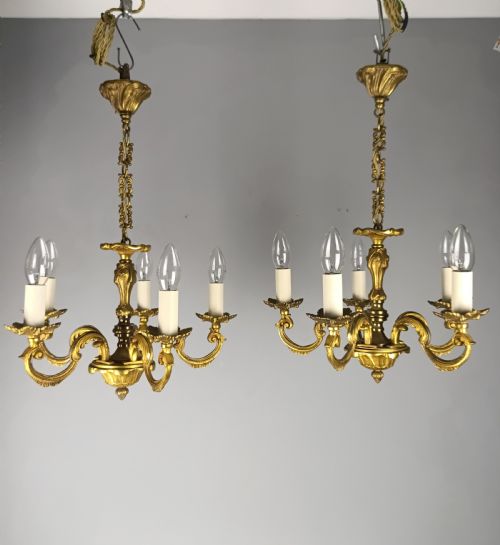
A 5 light gilt chandelier brings warmth to a ceiling through disciplined metalwork and disciplined branch distribution.
5 Light Gilt Chandelier
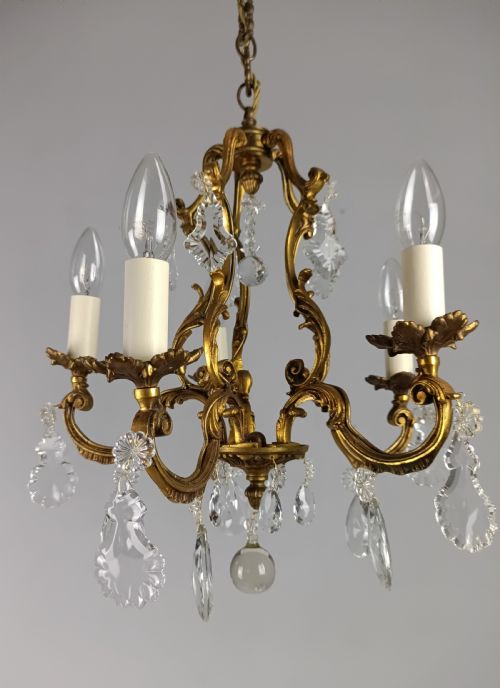
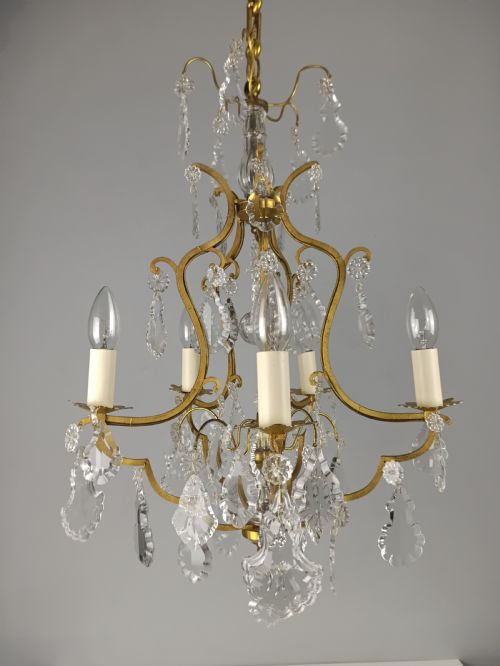
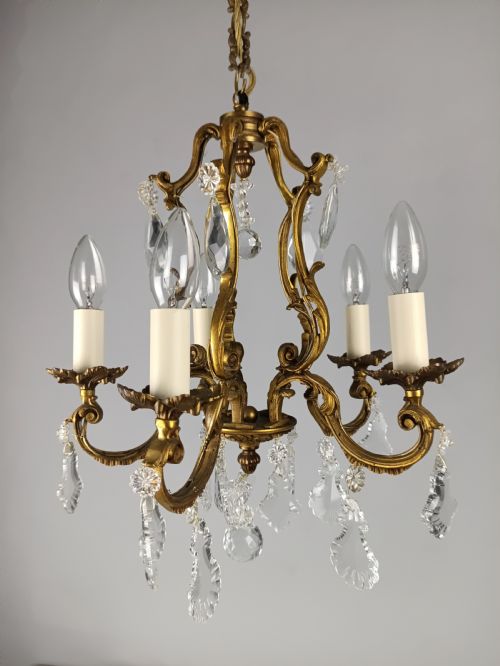
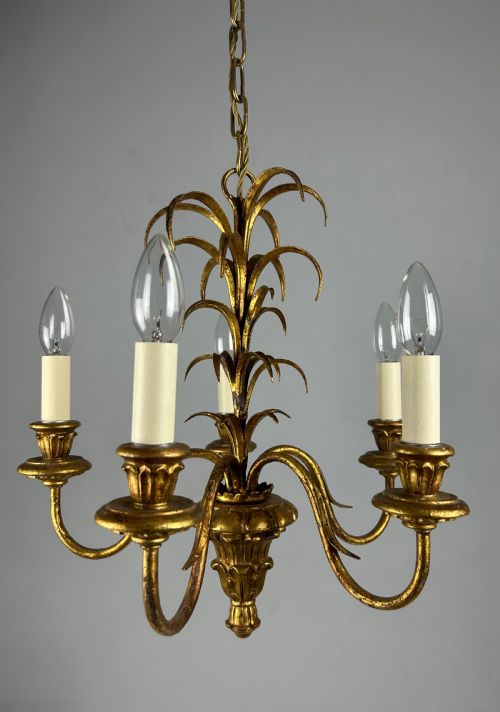
A 5 light gilt chandelier sits within a lineage of French and Italian lighting spanning the nineteenth and early twentieth centuries, recorded across periods like the Edwardian era, 1900, 1910, 1920, and 1930. These fixtures take forms such as birdcage frames, wheat sheaf motifs, palm branches, and classical Empire shapes.
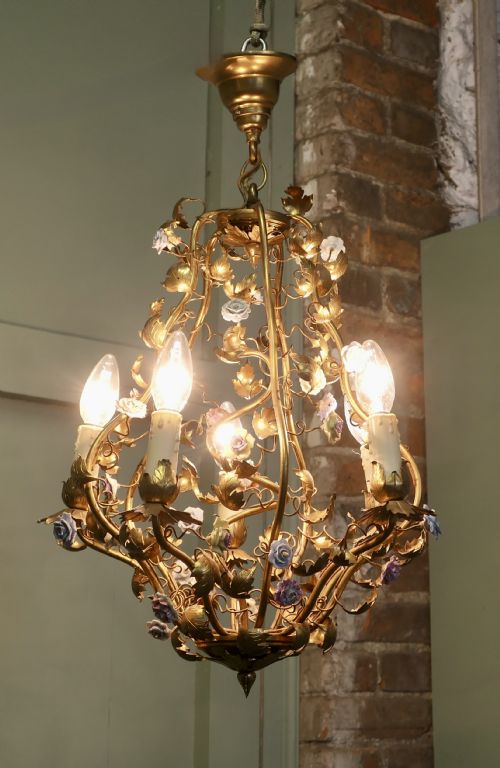
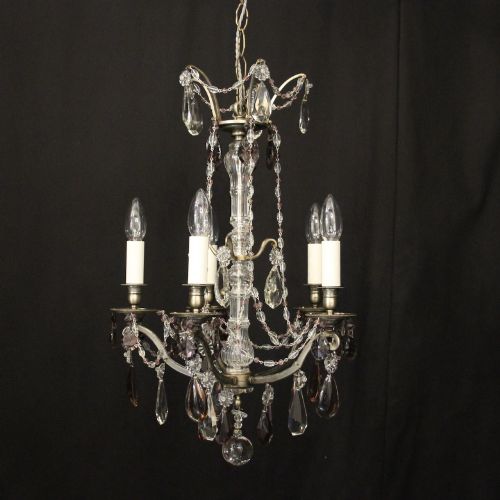
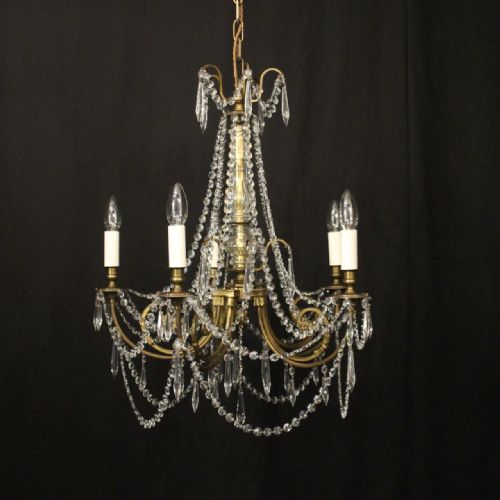
The version most commonly met on this page is the French gilt brass five light chandelier, frequently pulled from the nineteen-twenties archive and current listings. Alongside these standard fixtures, variations include Italian Florentine giltwood frames and pieces decorated with crystal drops, cut glass, and ceramic flowers.
How they were made
Makers utilised brass, bronze, spelter, and wood as core structural materials, applying gilt finishes via gilding or metal leaf to achieve a golden surface. Cast components define the heavier framework, whilst subsidiary elements incorporate toleware, ceramic flowers, and etched glass panes.
Suspended glass components rely on cut crystal drops, coffin prisms, and convex glass panels secured to the metal frames with wire or pins. Branch arrangements spread outward from a central stem, distributing five light points across symmetrical arms.
Listings span from the nineteenth century through 1930, featuring materials like gilt brass, bronze, crystal, and carved giltwood.
What varies in quality
The definition and depth of the casting separate simpler assemblies from finer pieces, particularly where hand-chasing enhances the foliage, cherubs, or structural mounts. Weight and rigidity in the central stem and arms indicate thicker metal utilisation during production.
The integration of crystal elements alters the overall character, with cut glass prisms and high-clarity drops reflecting light differently than moulded glass alternatives. Consistency in the gilding application across hidden junctions and primary surfaces marks the distinction between standard commercial output and workshop creations.
The 5 Light Gilt Chandelier Glossary
- Gilt
- Covered thinly with gold leaf or gold paint. This surface treatment provides the characteristic golden sheen across brass, bronze, and wood structures.
- Spelter
- A zinc alloy used as a substitute for bronze in decorative castings. It accepts gilt finishes well while maintaining lighter structural weight.
- Prism
- A cut glass pendant suspended from the arms or rim to refract light. Different periods utilise specific cuts, such as coffin prisms or spear drops.
- Toleware
- Painted or lacquered sheet metal formed into decorative elements like leaves and flowers. It frequently appears alongside gilt branches in floral-themed fixtures.
- Empire style
- A neoclassical design vocabulary drawing from ancient Roman and Greek motifs. Pieces in this style incorporate symmetrical arrangements, laurel wreaths, and restrained ornamentation.
5 Light Gilt Chandelier: Frequently Asked Questions
How do I hang a 5 light chandelier?
These fixtures require secure anchoring to a ceiling joist using an appropriate metal hook and electrical box capable of supporting the combined weight of metal and glass.
Wiring must be checked and adapted to current electrical standards by a qualified professional before connection to the mains supply.
What rooms suit a 5 light gilt chandelier?
The moderate footprint of a five-arm arrangement fits well into medium-sized dining rooms, bedrooms, or hallways where intense illumination is balanced by compact proportions.
Ceiling height dictates the suspension length, requiring enough clearance for passage beneath the lowest hanging crystal drops or lantern base.
How do I clean a gilt chandelier?
Dusting requires a soft feather duster or dry microfiber cloth applied gently across the arms, leaves, and glass drops to prevent displacement of delicate wiring or hanging pins.
Moisture and harsh chemical cleaners must be avoided on gilt surfaces to protect the original metallic leaf or paint finish from degradation.
How can I tell the period?
Stylistic indicators such as Art Deco geometric lines, Edwardian delicacy, or nineteenth-century neoclassical motifs point toward specific decades of manufacture.
Construction methods, including the type of fixings, wiring channels, and casting seams, provide physical evidence of the era in which the piece was fabricated.