


20th Century Office Desk
A 20th century office desk brings solid timber construction and practical workspace into a study, drawing on Edwardian, Art Deco, and revival designs.
20th Century Office Desk
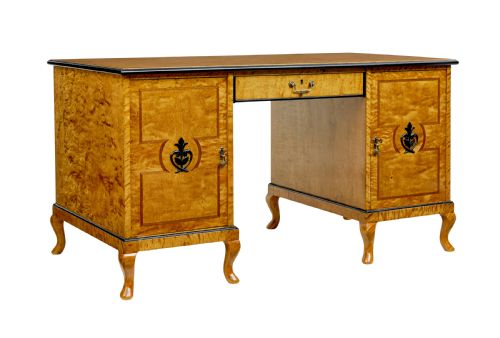
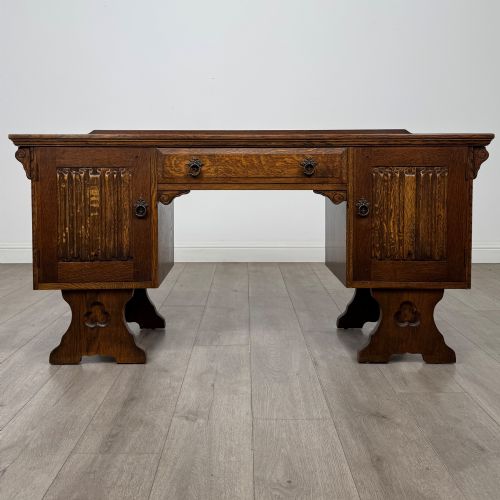
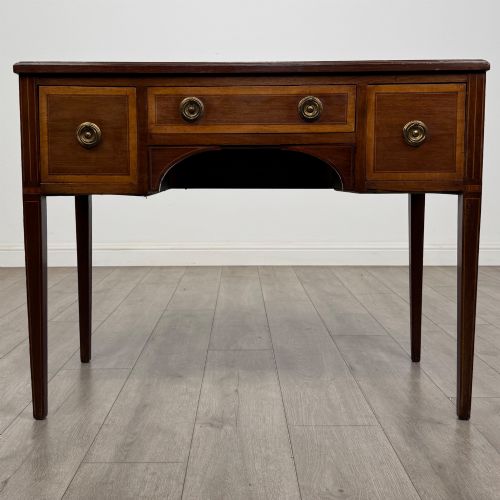
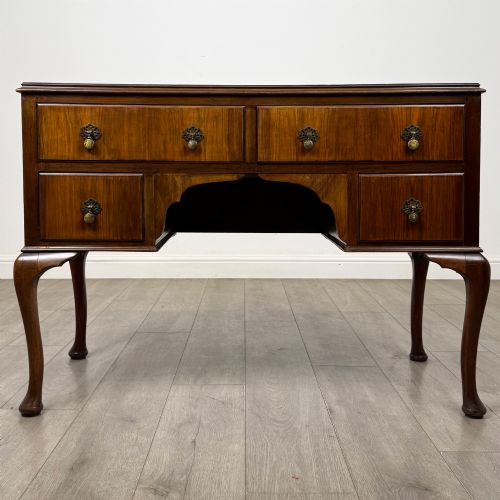
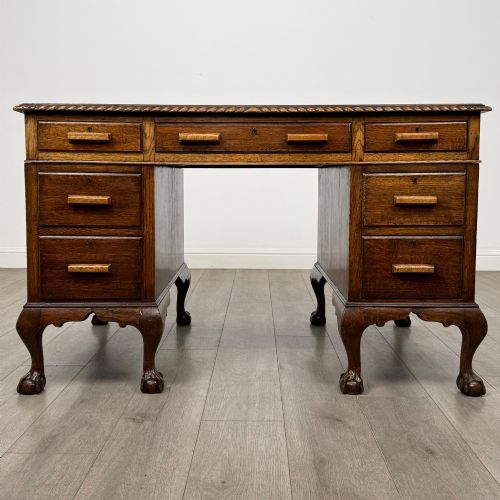
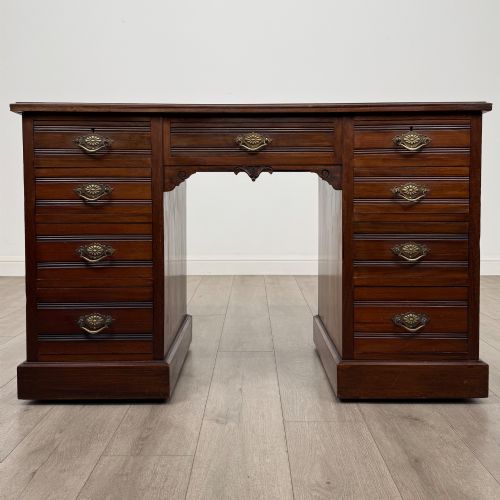
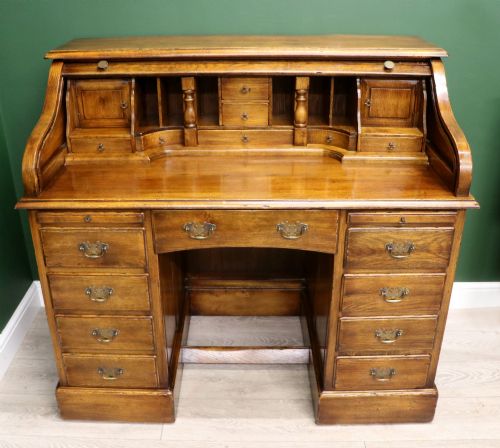
A 20th century office desk encompasses sturdy pedestal models, large writing tables, and roll top formats designed for administrative work. These pieces emerge from periods such as the Edwardian era, the 1920s, and the 1930s, reflecting the functional needs of past workplaces.
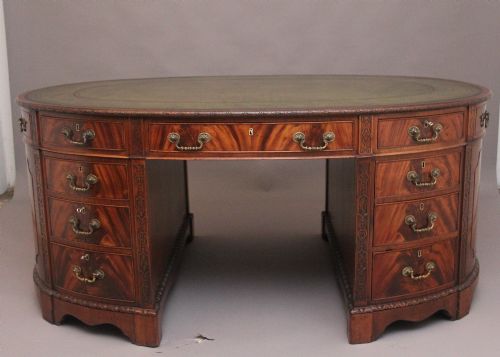
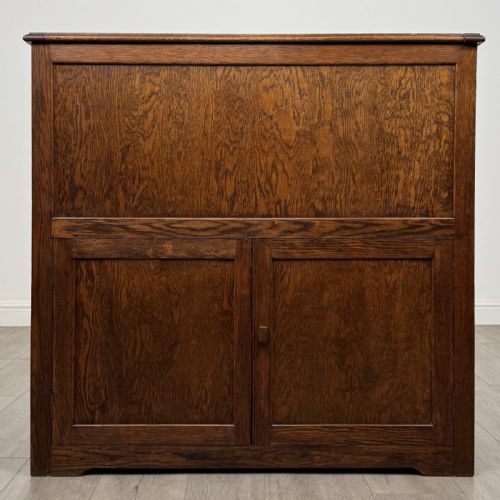
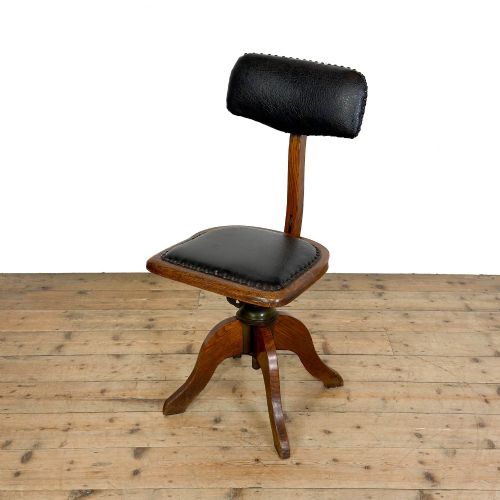
Mahogany and oak dominate the forms found here, often built as twin pedestal units or simpler writing tables. Alongside these, buyers encounter specialised variants like bureau bookcases, tambour front cabinets, and swivel desk chairs.
Stylistic influences range from straightforward Edwardian utility to Georgian Revival, Chippendale Revival, and French Empire aesthetics. Makers constructed these items to serve as substantial working surfaces with built-in drawers and pigeon holes.
How They Were Made
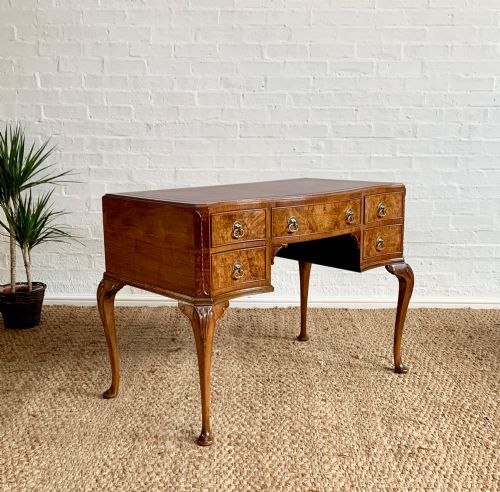
Carpenters utilised dense timbers such as mahogany, oak, and walnut, frequently applying burr walnut veneers or curl mahogany to visible surfaces. Many work surfaces incorporate inset leather writing pads, bordered by blind tooling.
Structural elements rely on traditional joinery, supported by brass handles, locks, and occasionally ormolu mounts. Swivel desk chairs and banker's desks integrate iron and metal hardware to allow movement and mechanical adjustment.
20th Century Office Desk Retail Price Guide 2026
Typical asking prices for 20th century office desk among the pieces listed under this phrase on Sellingantiques today, from the lower quarter to the upper quarter. They describe what is for sale here now, not the wider market.
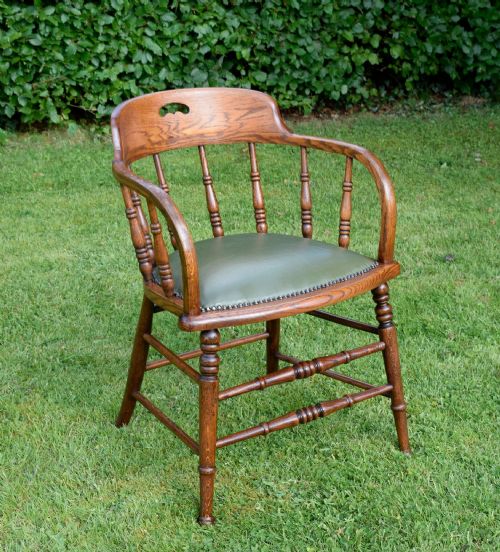
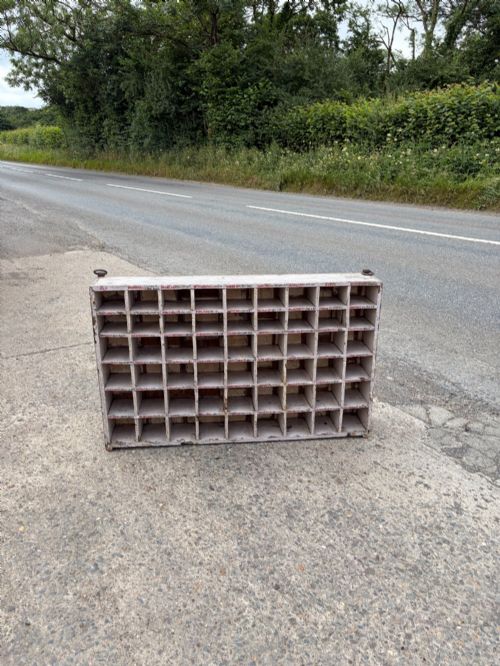
Machinist chairs and pigeon holes stand ready for industrious paperwork.
What Varies in Quality
The selection of timber dictates much of the character, moving from standard utility oak to figured burr walnut and curl mahogany veneers. Superior examples display careful grain matching across large desk tops and drawer fronts.
Execution of carved details, such as linenfold panels or revival motifs, separates standard production from finer cabinet work. Original hardware, intact leather inserts, and branded stamps from recognised makers elevate the standing of a piece.
Wylie & Lochhead Glasgow
The 20th Century Office Desk Glossary
- Pedestal Desk
- A heavy wooden desk comprising two separate stacks of drawers with a central writing surface bridging them. This form provides substantial storage beneath the top.
- Tambour Front
- A slatted wooden shutter that slides in tracks to conceal pigeon holes or desk interiors. It operates smoothly around a curved path.
- Partners Desk
- A large double-sided desk built with drawers and cupboards facing outward on both long sides. Two people work opposite each other at this form.
- Bureau Bookcase
- A combination piece featuring a sloping fall-front writing desk below enclosed shelving. The upper section typically has glass doors.
- Swivel Desk Chair
- An office seat mounted on a rotating spindle base, often equipped with wooden arms and steam-bent backrests. These items support movement around a workspace.
20th Century Office Desk: Frequently Asked Questions
How do I identify an Edwardian desk?
Edwardian desks often display straightforward proportions in oak or mahogany, occasionally incorporating revival styles like Chippendale or Georgian motifs. They utilise traditional brass hardware and standard writing table formats.
Many bear hallmarks of early twentieth-century mass production combined with solid timber construction.
What is a tambour front?
A tambour front consists of narrow wooden slats glued to canvas backing, allowing the panel to slide along a curved groove. This mechanism conceals pigeon holes and paperwork.
Cabinet makers utilised this technique to save space on office desks and cabinets.
Are swivel chairs original to these desks?
Swivel chairs featuring iron mechanisms and bentwood backs were standard companions to office desks of this era. They were built to endure heavy administrative use.
Matching timber species like oak or mahogany commonly link the chair to the desk.