

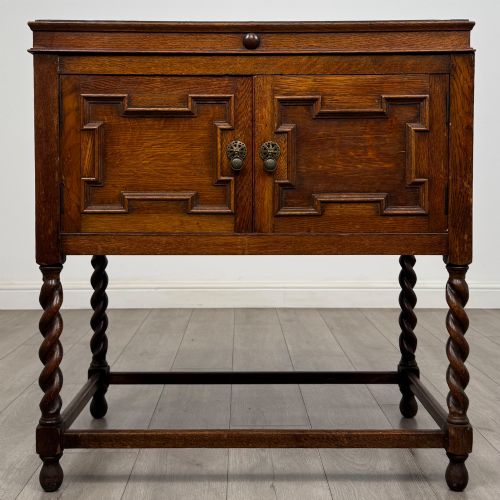
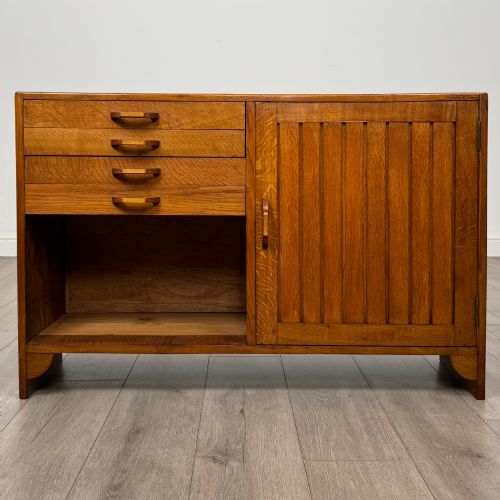


20th Century Oak Buffet
A 20th century oak buffet serves as a substantial storage piece, combining utilitarian practicality with the rich grain of English and continental cabinet-making.
20th Century Oak Buffet
When you search for a 20th century oak buffet, you are looking at heavy timber furniture designed for dining rooms and large living spaces. These pieces function primarily as sideboards, cupboards, and dresser bases for holding tableware and linen.
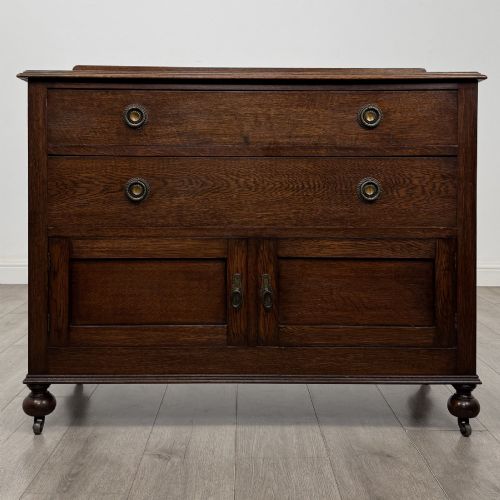
The most common versions met on this page date from the Edwardian period, though examples stretch from 1900 to 1940. They appear in golden oak and standard oak, spanning forms from simple side cabinets to monumental court cupboards.
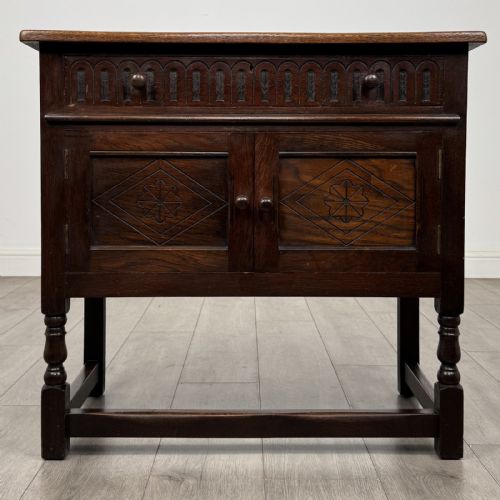
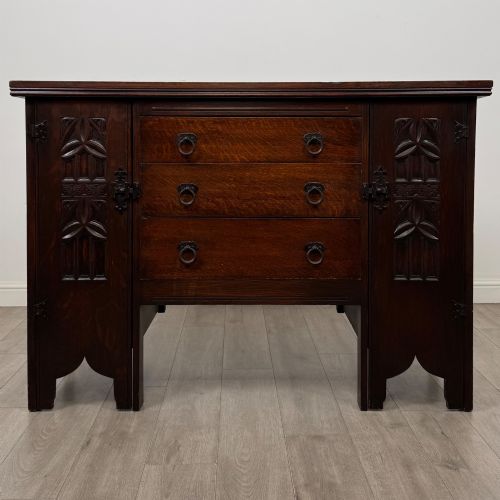
Makers drew on various aesthetic movements to shape these items. You will encounter Jacobean Revival, Arts and Crafts, Gothic Revival, Tudor Revival, Renaissance Revival, and mid-century modern designs.
What varies in quality
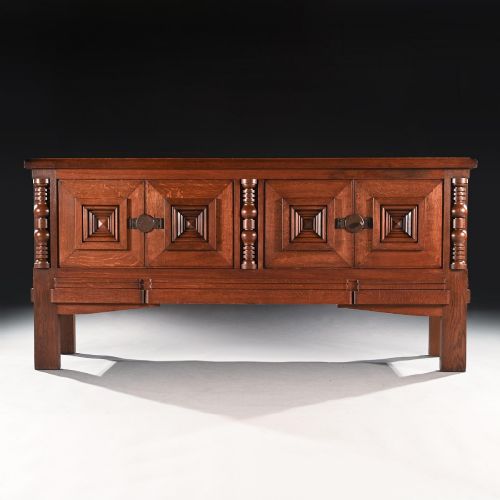
The standard of carving sets individual items apart. Simple geometric panels sit at the everyday end, while deep relief work, figural motifs, and turned elements like barley twist columns demonstrate higher labour input.
Material selection and surface finish dictate the overall impression. Standard dark oak finishes contrast with warm golden oak tones, and the crispness of the timber joinery determines the structural integrity.
20th Century Oak Buffet Retail Price Guide 2026
Typical asking prices for 20th century oak buffet among the pieces listed under this phrase on Sellingantiques today, from the lower quarter to the upper quarter. They describe what is for sale here now, not the wider market.
Some oak sideboards hide secret interior bottle racks behind heavy panelled doors.
Charles Dudouyt
The 20th Century Oak Buffet Glossary
- Court cupboard
- A traditional enclosed storage piece with an upper and lower section, often supported by heavy posts. These items date from early revival periods.
- Barley twist
- A turned wooden column resembling a twisted rope, commonly used on table legs and sideboard supports. This decorative detail gained popularity during revival periods.
- Golden oak
- A bright, warm timber finish applied to furniture, accentuating the natural grain of the wood. It distinguishes lighter Edwardian pieces from darker Victorian brown furniture.
- Arts and Crafts
- A design movement prioritising honest construction, visible joinery, and simplified forms. Pieces in this style often feature hand-hammered copper hardware.
20th Century Oak Buffet: Frequently Asked Questions
What is a 20th century oak buffet used for?
These pieces provide heavy-duty storage in dining rooms and large hallways for china, silver, and table linen. Their flat top surfaces also function well for serving food or displaying decorative objects.
They serve as focal points in period interiors, anchoring large rooms with their solid timber presence and traditional proportions.
How do I identify an Edwardian oak sideboard?
Edwardian pieces often combine traditional revival styles like Jacobean or Gothic with lighter golden oak finishes. They typically feature panelled doors and brass or iron hardware.
Check the interior construction and timber thickness to distinguish Edwardian production from later mid-century reinterpretations.
What is the difference between a court cupboard and a buffet?
A court cupboard incorporates enclosed upper and lower tiers with prominent support pillars. A buffet or sideboard focuses on a lower, extended surface for serving.
Both utilise solid oak construction, but court cupboards lean heavily into Renaissance and Tudor revival aesthetics.
How do I care for vintage oak furniture?
Keep wooden furniture away from direct heat sources and fluctuating humidity to prevent the solid oak from splitting. Regular dusting with a dry cloth maintains the surface finish.
Apply a traditional beeswax polish occasionally to nourish the timber without building up heavy chemical layers.