





20th Century Drinks Cabinet
A 20th century drinks cabinet is a fitted piece designed for hosting, and these examples combine period materials with practical storage for bottles and glassware.
20th Century Drinks Cabinet
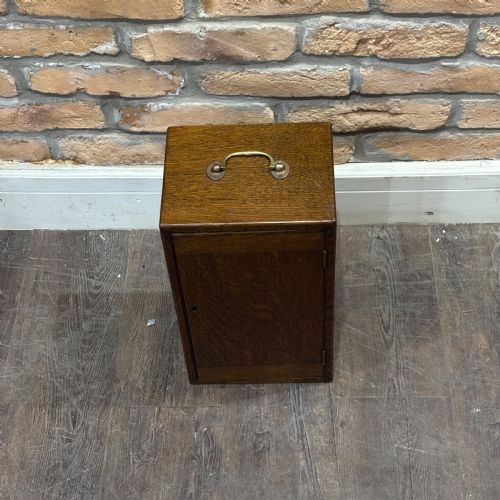
A 20th century drinks cabinet encompasses cocktail cabinets, fitted cupboards, wine coolers, and tea trolleys designed for entertaining. These pieces date from the Edwardian era through to the 1930s, reflecting changing domestic habits and social hosting traditions.
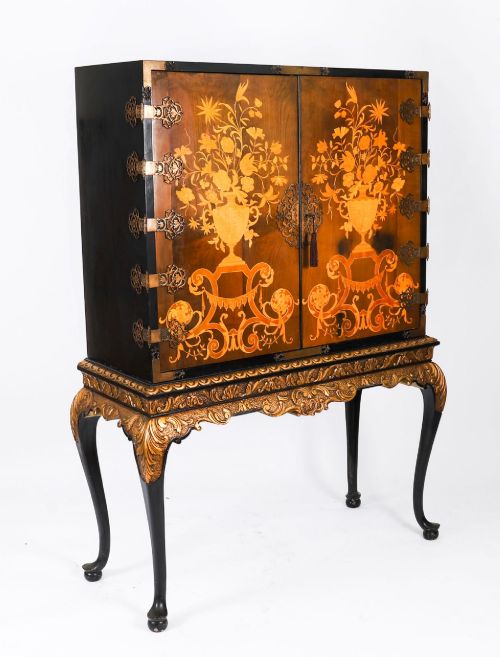
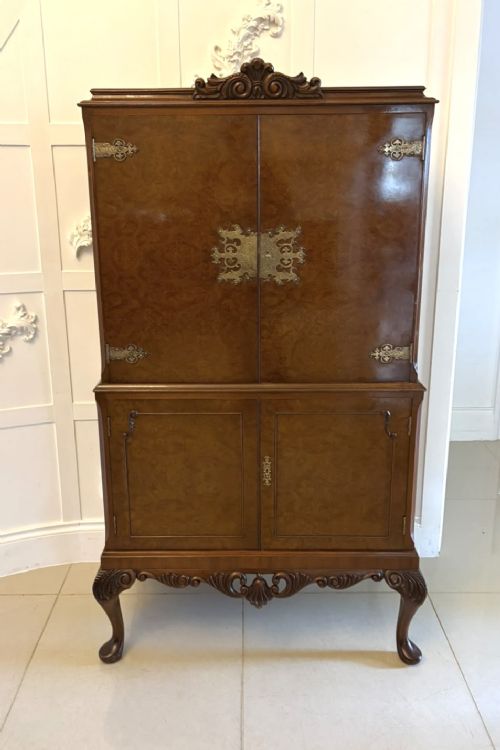
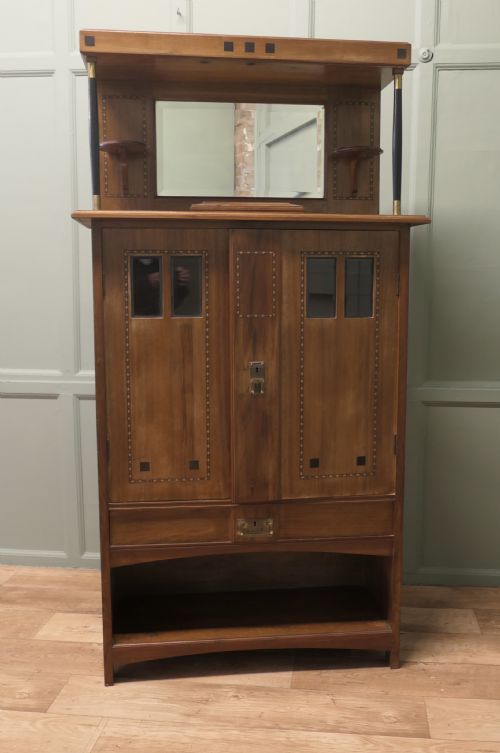
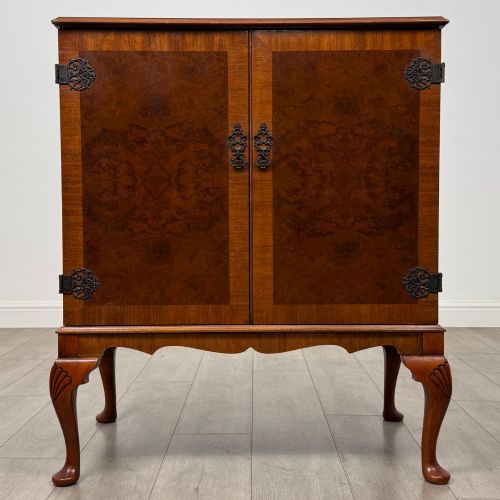
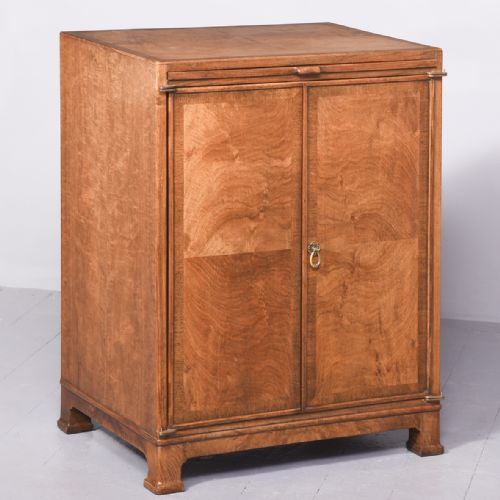
The most likely versions encountered here include burr walnut cocktail cabinets on stands, mahogany cupboards with crossbanding or inlay, and oak pieces by notable makers. Styles span from Queen Anne revival and Georgian revival to Secessionist and Chinoiserie designs.
Forms range from demi-lune drinks cabinets and serpentine cupboards to glazed display pieces and drop-sided tea trolleys. Each object serves the primary function of storing and serving beverages, utilising specialised interior fittings such as mirror glass.
Materials and construction
Cabinet makers utilised choice timbers including walnut, burr walnut, mahogany, oak, and yew wood. Surfaces frequently feature decorative techniques such as crossbanding, inlay, lacquer work, and hand sign-writing.
Internal and structural detailing relies on brass mounts, brass binding, and mirrored glass panels. These materials support both the functional storage requirements and the decorative presentation of the exterior and interior compartments.
20th Century Drinks Cabinet Retail Price Guide 2026
Typical asking prices for 20th century drinks cabinet among the pieces listed under this phrase on Sellingantiques today, from the lower quarter to the upper quarter. They describe what is for sale here now, not the wider market.
Listings span the Edwardian period, 1900, 1910, 1920, and 1930, utilising materials such as brass, mahogany, walnut, oak, glass, and mirror glass.
Assessing quality and execution
Quality rests upon the selection of timber veneers, such as figured burr walnut or rich mahogany, and the precision of cabinet joinery. Pieces featuring distinctive revival styles or documented workshop origins demonstrate higher design ambition.
The sophistication of interior fittings, including specialised glass, brass hardware, and fitted compartments, separates standard utility cupboards from distinguished cocktail cabinets and serving furniture.
Whytock & Reid of Edinburgh·Waring & Gillows
The 20th Century Drinks Cabinet Glossary
- Crossbanding
- A border of veneer laid perpendicular to the main grain of the furniture. This technique frames the top or door panels with contrasting wood grain.
- Burr walnut
- Timber taken from a growth on a walnut tree, yielding a swirling, highly figured grain pattern. It is prized for decorative veneering on prominent surfaces.
- Serpentine
- A furniture front or edge shaped with a concave centre flanked by convex curves. The profile adds fluid movement to cabinets and cupboards.
- Demi-lune
- A half-moon shape used for table and cabinet tops. This profile allows pieces to sit flush against a wall while offering a curved front.
- Secessionist
- An early 20th-century design style rejecting traditional historicism in favour of geometric forms and simplified lines. It appears in progressive decorative arts of the period.
20th Century Drinks Cabinet: Frequently Asked Questions
What is a cocktail cabinet?
A cocktail cabinet is a specialised piece of furniture designed specifically for the mixing and serving of drinks during the interwar period.
These units typically feature drop-down serving surfaces, specialised glass holders, and mirrored interiors tailored for home entertaining.
How were wine coolers used?
Wine coolers and cellarettes served to chill and store bottles close to the dining table during formal meals.
They often incorporate lead-lined interiors or compartmentalised storage suited to keeping bottles secure and cool.
How do I identify an Edwardian piece?
Edwardian cabinets generally display lighter timbers, delicate mahogany veneers, and restrained inlay work compared to heavy Victorian furniture.
They often draw on Georgian or Sheraton revival motifs while maintaining a lighter overall scale suitable for Edwardian drawing rooms.
Where should I place a drinks cabinet?
These cabinets suit dining rooms, living spaces, or reception rooms where entertaining takes place. Their finished backs and compact footprints allow them to stand freely against walls or within alcoves.
Direct sunlight should be avoided to protect sensitive wood veneers and antique mirrors.