


20th Century Bedside Chest
A 20th century bedside chest provides compact storage by the bed, drawing on diverse stylistic revivals from Edwardian simplicity to French commodes.
20th Century Bedside Chest
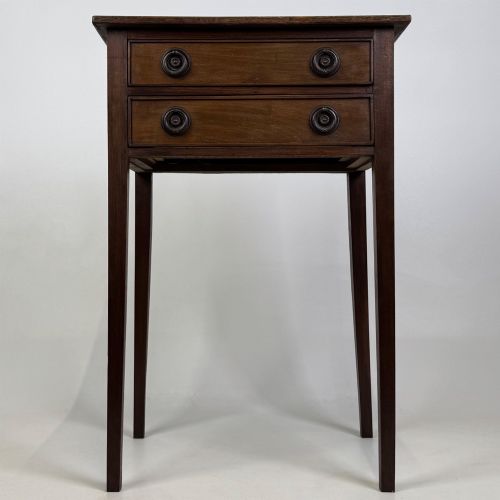
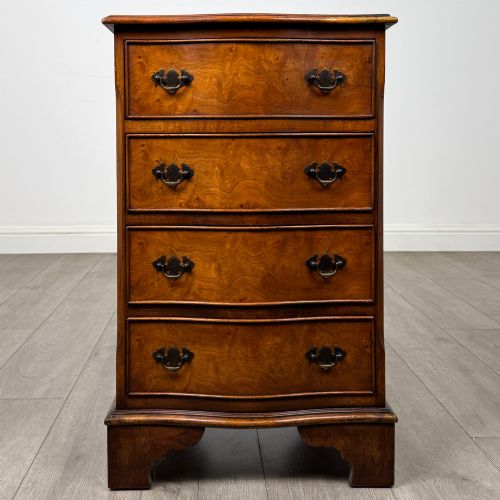
A 20th century bedside chest encompasses small bedside cabinets, commodes, chests of drawers, and side tables designed for domestic sleeping quarters. These pieces appear frequently in Edwardian formats alongside items from the 1900s, 1910s, 1920s, and 1930s.
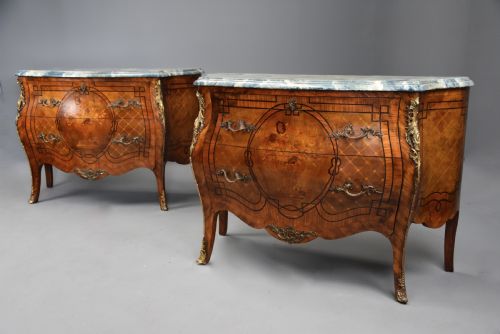
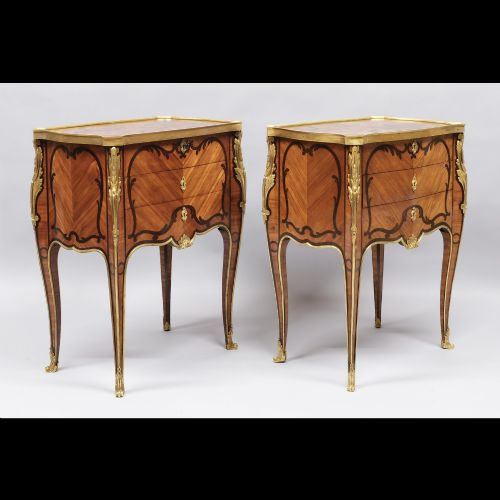
The forms range from diminutive drawer chests in mahogany, oak, or walnut to French-influenced commodes and bedside tables with parquetry or marquetry. Cabinets and bedside chests frequently emerge as pairs rather than single items, particularly within continental European variations.
Makers and workshops of this era adopted historical motifs, producing items styled after Louis XV Revival, French Rococo Revival, Queen Anne, and campaign furniture. Compact proportions remain consistent across these diverse stylistic interpretations.
How they were made
Carpenters utilised primary hardwoods such as mahogany, walnut, burr walnut, kingwood, birch, and oak for the structural carcase and drawer frames. Decorative surfaces often relied on complex parquetry or marquetry patterns set into the timber.
Many items incorporate contrasting elements like marble tops, brass mounts, and ormolu details to enhance the visual weight of the timber. Paint and gilding also appear on select continental cabinets from the period.
The listings show pieces spanning the Edwardian era through the nineteen-thirties, utilising mahogany, burr walnut, kingwood, marble, and brass.
What varies in quality
The refinement of timber selection and veneer matching defines the upper tier of these pieces, particularly where burr walnut, flame mahogany, or intricate kingwood parquetry are employed. Finer examples display continuous grain patterns across drawer fronts and coordinated surface inlays.
Quality reveals itself in the integration of secondary materials, such as heavy marble slab tops and finely cast brass or ormolu mounts rather than stamped substitutes. The execution of stylistic revivals, from Louis XV contours to campaign brass corners, dictates the overall distinction of the work.
The 20th Century Bedside Chest Glossary
- Parquetry
- Geometric wood mosaic work formed by small veneer pieces fitted together to make patterns on furniture surfaces. This technique appears frequently on French tables from the period.
- Marquetry
- The art of applying decorative veneer pieces to a structure to form pictorial or ornamental designs. Craftsmen utilised diverse coloured woods to achieve floral or abstract motifs.
- Ormolu
- Gilt bronze mounts applied to furniture for decorative effect during the eighteenth century and later revivals. These cast metal ornaments accent corners, handles, and apron mounts.
- Serpentine
- A furniture front or top curving outward at the centre and inward at the sides. This contour requires precise carpentry to maintain structural alignment.
- Campaign style
- Portable military furniture designed for disassembly, typically fitted with recessed brass handles and corner brackets. Cabinets in this manner reflect utilitarian expeditionary roots adapted for domestic use.
20th Century Bedside Chest: Frequently Asked Questions
Are these chests always sold in pairs?
Many bedside chests and cabinets survive as matching pairs, particularly French commodes and marquetry tables intended to flank a bed symmetrically.
Single chests also appear frequently, reflecting different domestic arrangements where only one bedside surface was utilised.
What wood types are most common?
Mahogany, walnut, and oak form the bulk of domestic English pieces, while continental examples frequently utilise kingwood, birch, and burr walnut.
Decorative surfaces often incorporate exotic veneers and detailed parquetry work.
How do I distinguish Edwardian pieces?
Edwardian items dating from the early decades of the century often draw on Georgian or Sheraton revival designs in mahogany and walnut.
They emphasise clean proportions, lighter timber tones, and subtle inlay work rather than heavy Victorian ornamentation.
Do marble tops indicate French origin?
Fitted marble slabs appear regularly on continental bedside commodes and tables, particularly those influenced by French styles.
English variants more typically feature polished wood tops, though exceptions exist.