
2 Over 2 Drawers
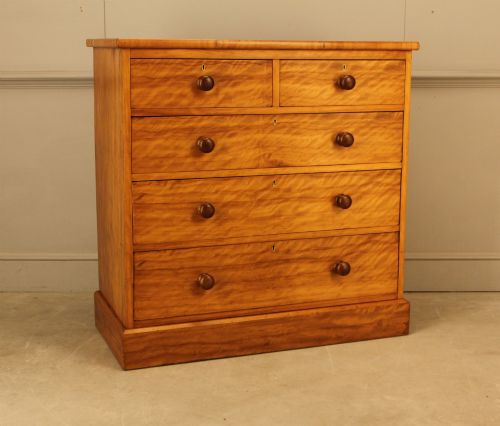
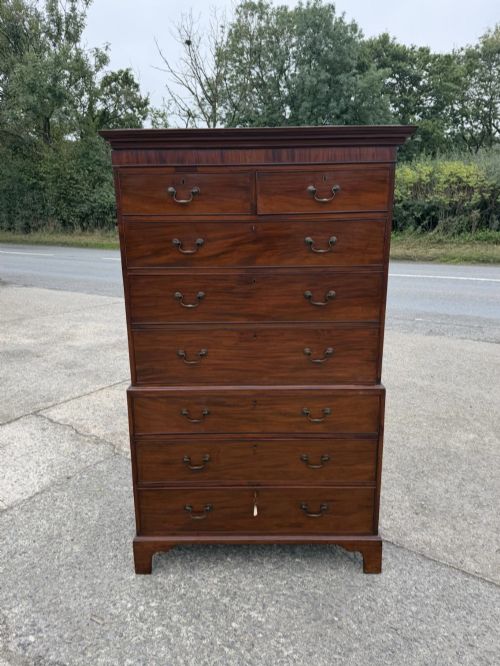
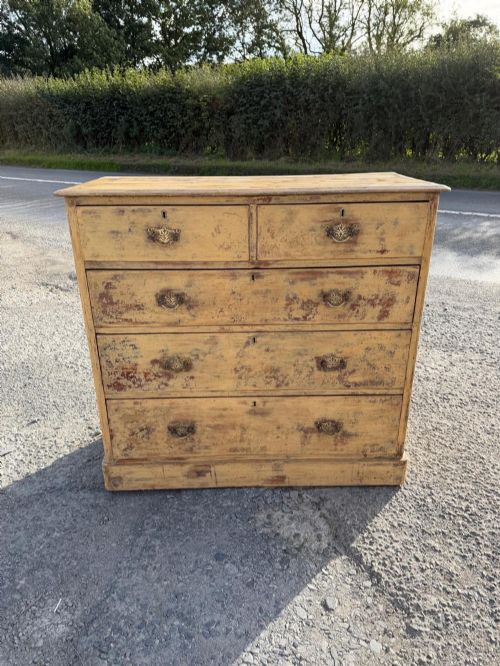
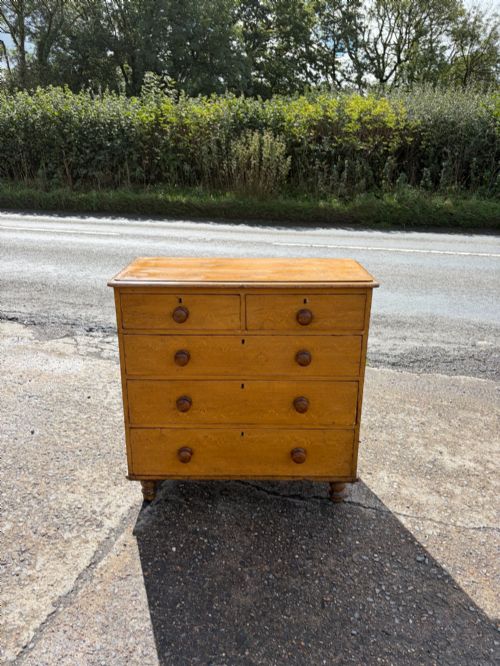
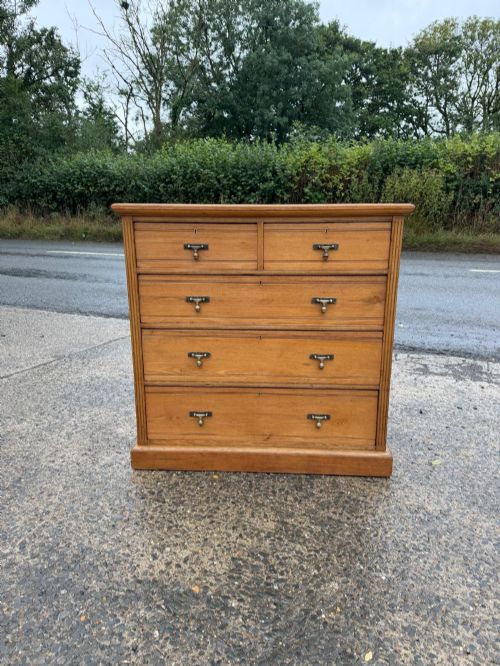
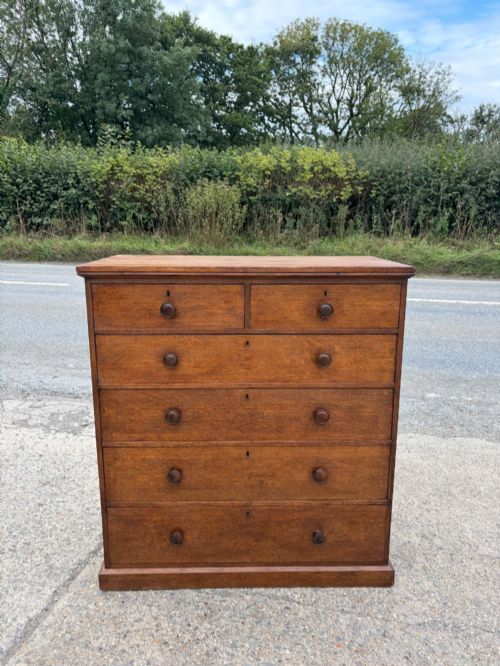
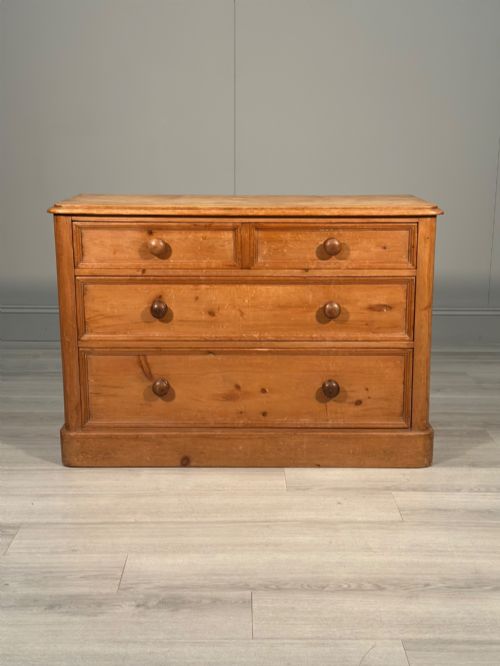
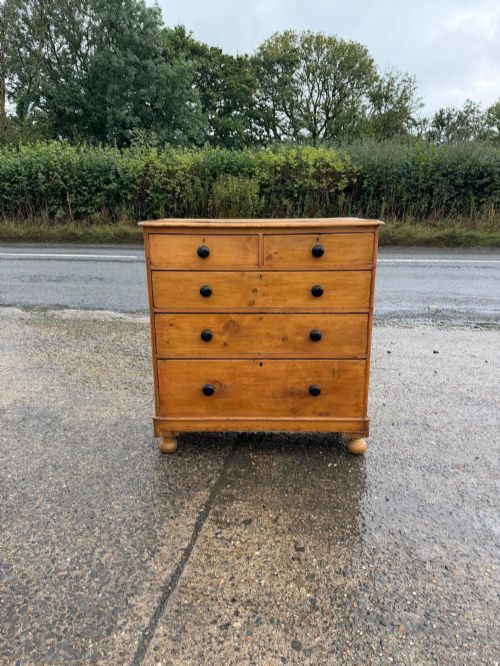
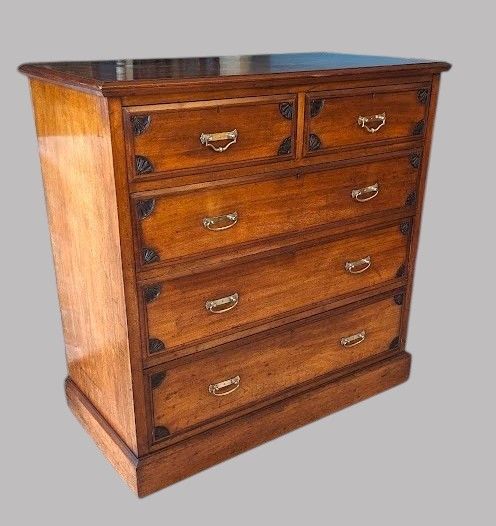
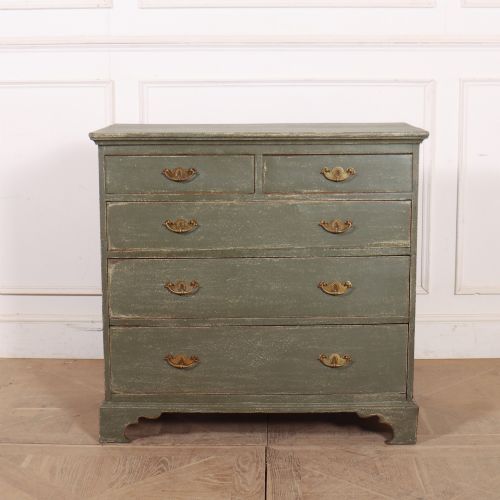
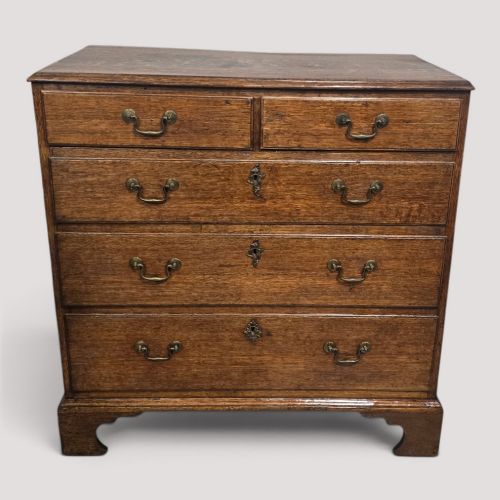
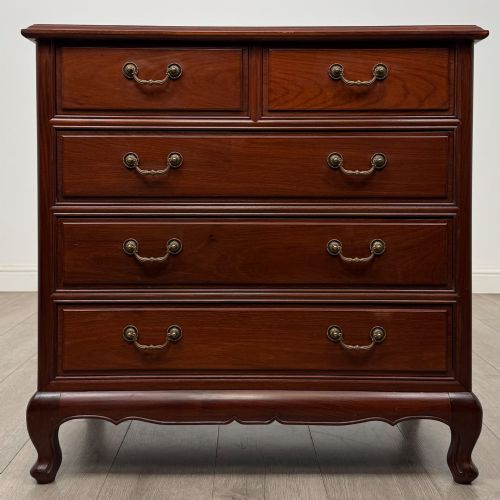
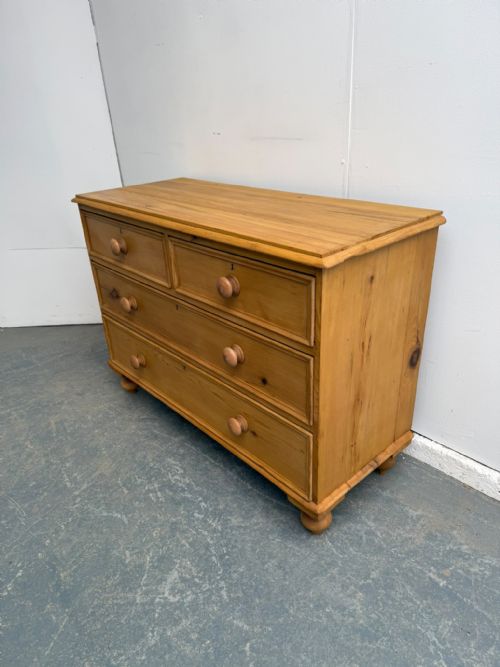
When you search for 2 over 2 drawers, you are looking for compact antique case furniture designed with two smaller upper drawers above two larger ones.
2 Over 2 Drawers
A 2 over 2 drawers configuration presents a balanced facade split between a pair of smaller top compartments and a pair of deep lower storage spaces. This specific proportion appears across multiple eras, offering a shorter elevation than typical five-drawer chests while maintaining substantial internal volume.
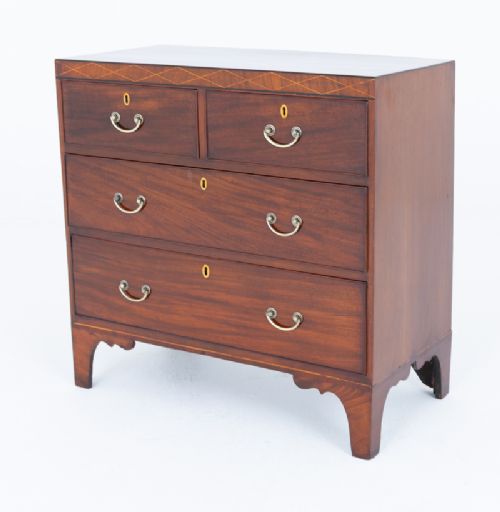
The format surfaces in various woods such as mahogany, walnut, and pine, often originating from the Georgian, Victorian, and Edwardian periods. Pieces range from formal mahogany bowfronts to scrubbed or painted pine examples intended for domestic utility.
Makers utilised this symmetrical layout to store smaller garments above bulky linens, a practical arrangement that suits contemporary bedroom layouts. Buyers encounter both plain country versions and polished pieces featuring crossbanding or bracket feet.
How they were made
Joiners constructed the main carcase using solid native timbers like oak and pine, frequently applying figured mahogany or walnut veneers to the visible exterior surfaces. Drawer linings commonly consist of secondary woods, joined with hand-cut dovetails that indicate the standard of workshop carpentry.
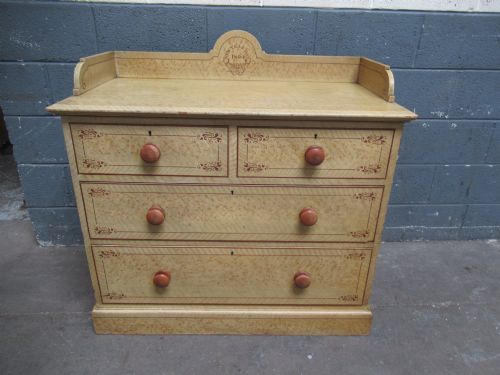
Hardware elements such as brass drop handles, ring pulls, or turned wooden knobs secure to the drawer fronts, often matching the specific period of manufacture. Surface treatments vary from clear wax polish and shellac to historic layers of paint or stencilling.
Some pine chests hide bright geometric paint beneath layers of old varnish, waiting for a careful eye to spot the pattern.
What varies in quality
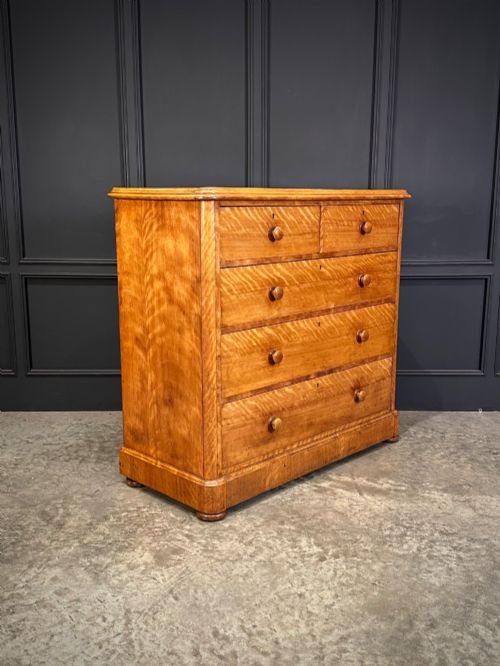
The selection of timber dictates much of the visual appeal, separating plain boards from highly figured flame mahogany veneer or rich walnut grain. Superior examples exhibit precise crossbanding, intact bracket feet, and original brass hardware without replacement patches.
Construction details reveal the standard of the maker, particularly the tightness of the dovetail joints and the smooth running of the drawer frames within the carcase. Pieces retaining their early finish command attention over later stripped surfaces.
J Moorcroft·Heal & Son·Johnstone & Jeanes
The 2 Over 2 Drawers Glossary
- Bowfront
- A convex curved cabinet front that projects outward in the centre. This curved profile requires skilled carpentry to shape the drawers and carcase to a precise arc.
- Crossbanding
- A decorative border of veneer laid around the perimeter of a drawer front so the grain runs perpendicular to the central panel. This technique frames the primary wood with a contrasting stripe.
- Dovetail
- An interlocking joint formed by wedge-shaped pins and tails, securing the corners of drawer boxes. Hand-cut dovetails serve as an indicator of traditional cabinet making.
- Bracket foot
- A foot attached to the lower corners of a case piece, shaped like a small architectural bracket. These feet often rest on a moulded plinth or stand independently.
- Flame mahogany
- A veneer cut from the fork of a mahogany tree where the branches join the trunk, producing a rippling, flame-like pattern. Furniture makers used this figured wood on primary display surfaces.
2 Over 2 Drawers: Frequently Asked Questions
What fits inside these drawers?
The upper pair suits folded accessories, undergarments, or documents, while the deeper lower pair accommodates bulky clothing, sweaters, or bed linens.
This arrangement keeps daily necessities accessible at the top while storing heavier items below without straining the internal runners.
How do I date a piece?
Examine the construction methods of the drawer linings, the style of the handles, and the choice of primary timber such as walnut or mahogany.
Georgian examples often feature hand-cut dovetails and bracket feet, whereas Victorian pieces frequently display turned wooden knobs or stencilled pine surfaces.
Where should I place one?
Their modest height allows them to function effectively as bedroom storage, a hallway surface, or a low sideboard in a living space.
The balanced proportions ensure the top surface remains useful for display lamps, mirrors, or decorative objects without overwhelming the room.
Are painted finishes original?
Some country pine pieces received decorative paint schemes during the Victorian or Edwardian eras, while other examples were painted much later.
Inspect the surface under natural light to identify whether the pigment shows age-appropriate wear or sits over stripped timber.