
19th Century Wingback Armchair
A 19th century wingback armchair brings deep comfort and formal presence to a room, offering the shelter of high sides and the character of period timber.
19th Century Wingback Armchair
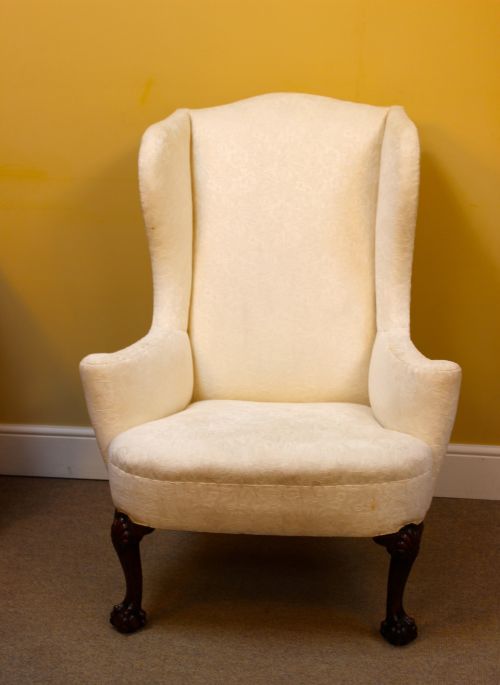
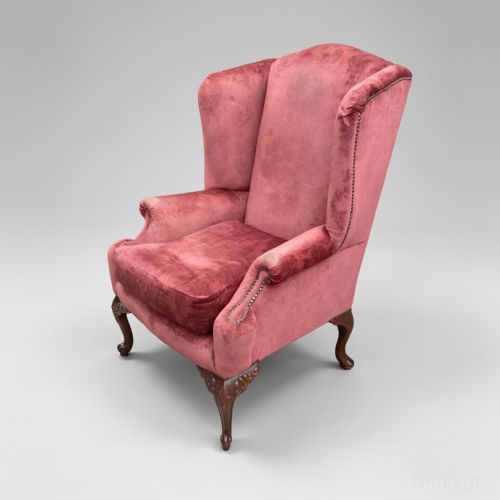
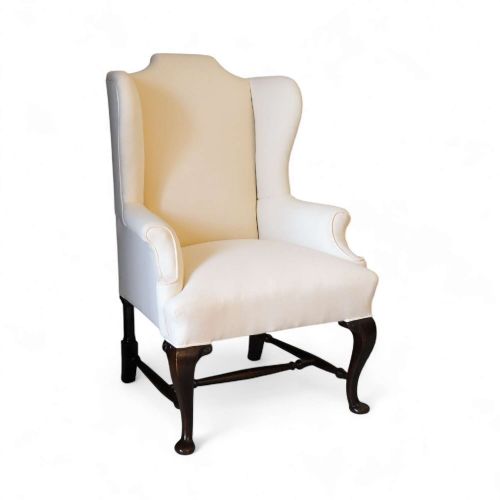
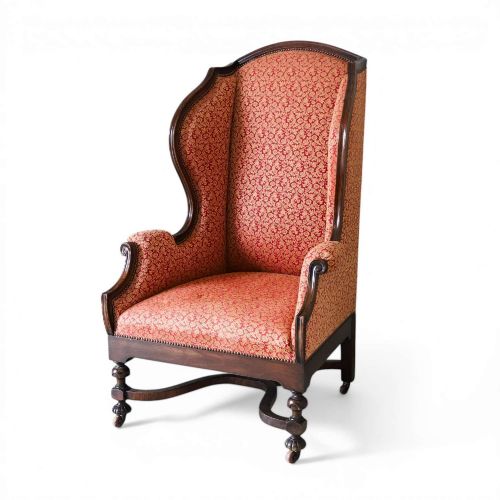
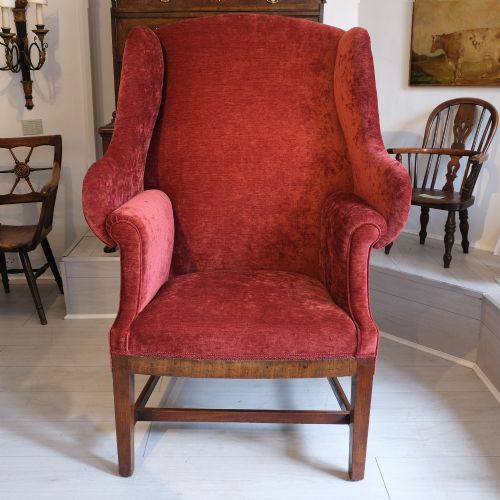
A 19th century wingback armchair is a substantial seat designed to protect the sitter from drafts, featuring characteristic upholstered wings attached to the arms. The pieces found here span the Victorian, Regency, and William IV periods, alongside revivals looking back to earlier Georgian and Carolean styles.
Makers often adopted historical vocabularies, producing pieces in the Queen Anne, Chippendale, or George II manner. These range from country house seating to leather-upholstered library chairs.
How they were made
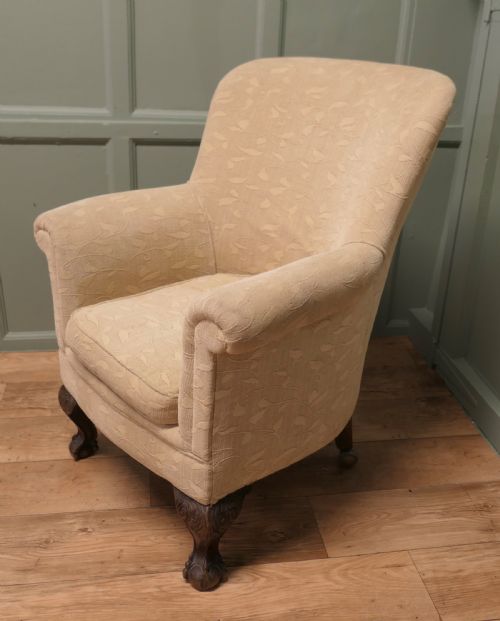
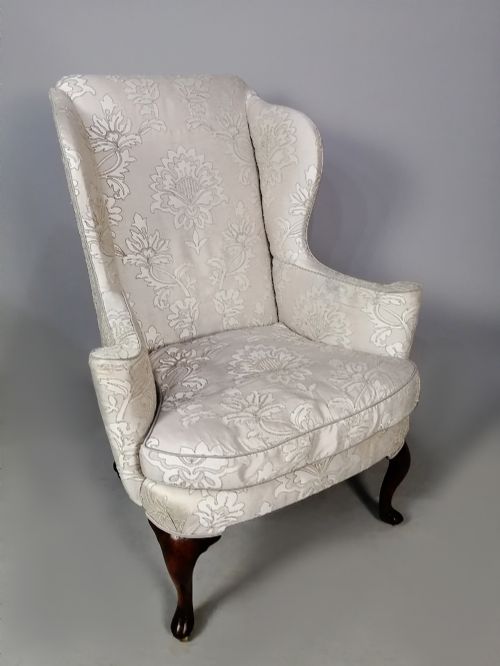
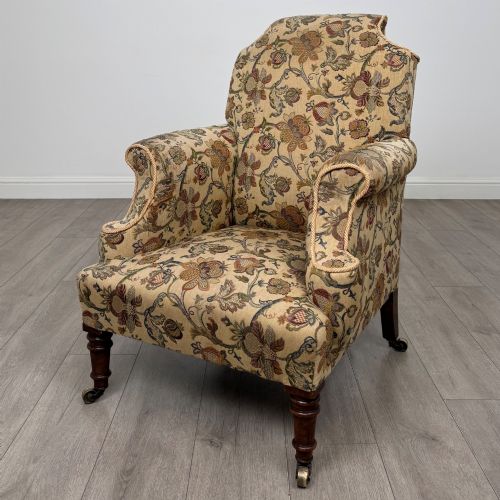
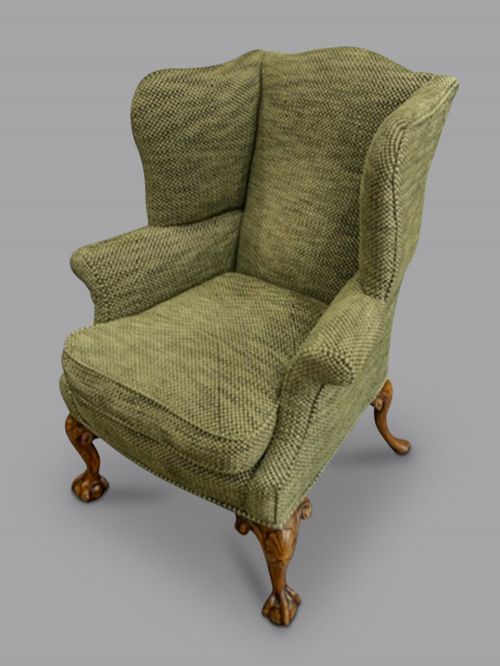
Frames rely on solid timbers such as mahogany and walnut, frequently shaped into cabriole legs or supported by brass castors. Joinery is concealed beneath complex stuffing and upholstery layers.
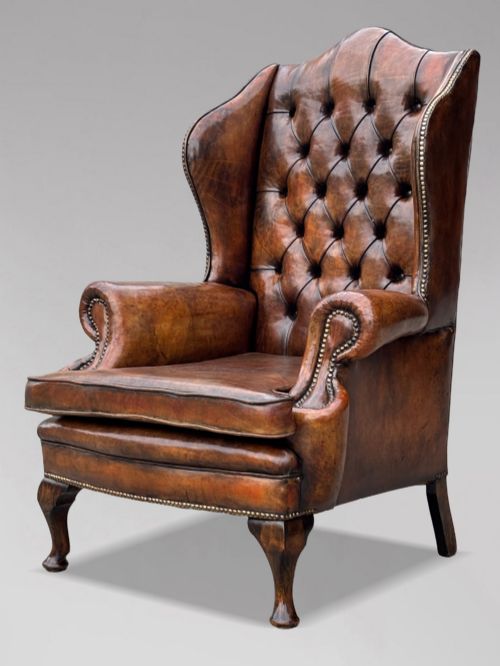
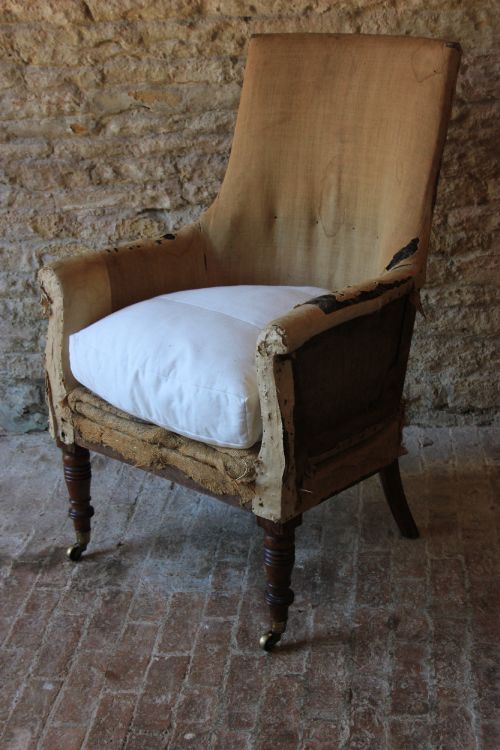
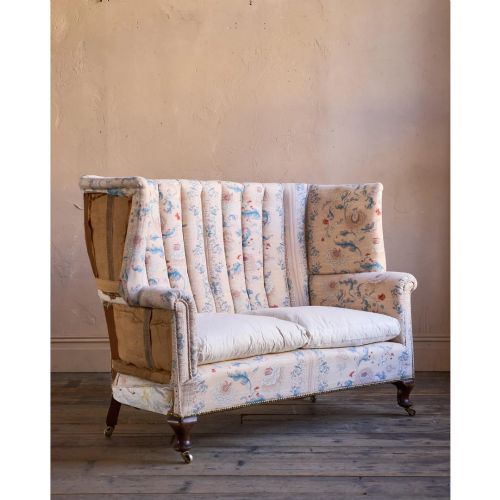
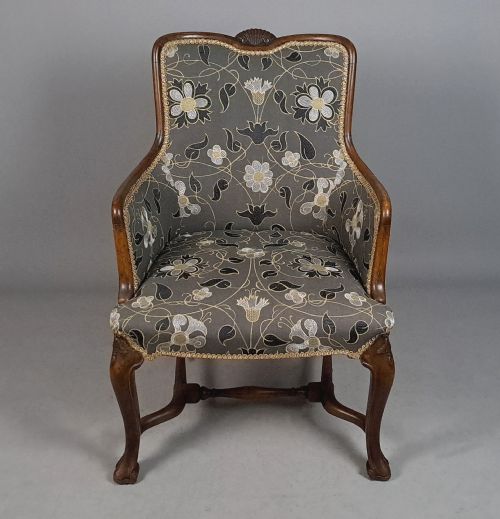
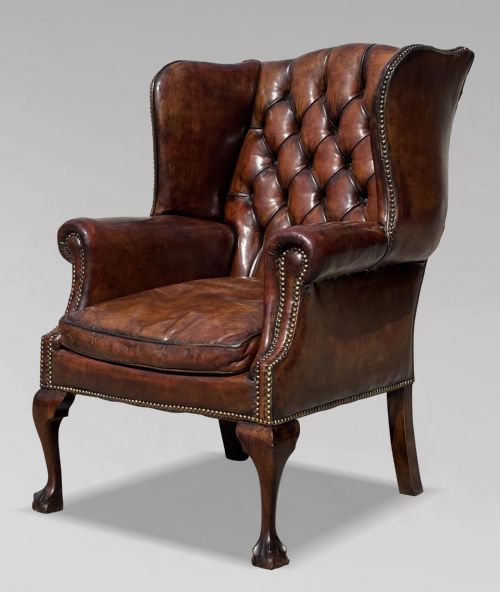
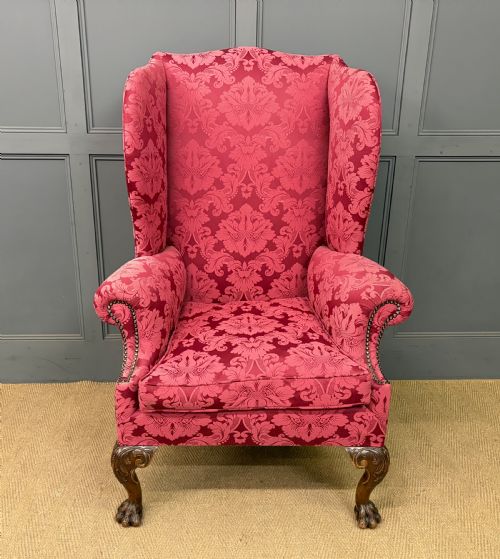
Upholstery materials recorded include leather, linen, damask fabric, and chenille twill, sometimes finished with buttoning or supplied in a calico stage ready for final covering.
Listings feature walnut, mahogany, and oak timber frames paired with leather, damask, and linen upholstery.
What varies in quality
The distinction between ordinary and exceptional seating lies in the confidence of the timber carving and the architectural balance of the wings and arms. Generous proportions and crisp detailing on walnut or mahogany legs elevate certain examples above standard workshop production.
Upholstery choice and the integrity of the underlying stuffing dictate the visual weight of the piece, with hand-coloured leather or damask fabric contributing to distinct decorative outcomes.
Howard and Sons
The 19th Century Wingback Armchair Glossary
- Cabriole leg
- A furniture leg that curves out in a convex arc and tapers inward to a foot, typical of walnut and mahogany seating from the 18th century onward.
- Wingback
- An armchair style featuring protective side panels attached to the armrests, designed originally to shield the occupant from fireplace drafts.
- Calico stage
- An intermediate state of upholstery where the piece is covered in plain cotton calico before the final decorative fabric is applied.
- Buttoning
- A method of securing upholstery stuffing by pulling buttons deep into the fabric to create a padded, diamond-patterned surface.
19th Century Wingback Armchair: Frequently Asked Questions
How do I identify a 19th century wingback armchair?
Look to the timber species used in the legs and frame, such as mahogany or walnut, alongside construction methods hidden beneath the upholstery. Stylistic revivals of Georgian or Queen Anne manners frequently guide the overall silhouette.
Examination of the woodwork and upholstery stuffing helps distinguish genuine 19th century production from later interpretations.
What materials were used for upholstery?
Original and replacement coverings include brown leather, linen, damask fabric, and chenille twill. Some pieces survive in a calico stage.
Buttoning and brass details frequently accompany leather-upholstered library variants.
How were these armchairs used historically?
The high wings were originally designed to trap heat from a fireplace and block cold drafts in large rooms. They served as comfortable seats in libraries, drawing rooms, and country houses.
Generous proportions allowed sitters to recline or read in protected comfort.
Are these chairs suitable for daily use?
Many examples are structurally robust, relying on solid timber frames that withstand regular sitting. Upholstered surfaces may require maintenance or reupholstering depending on their condition.
Selecting a piece with sound internal webbing ensures longevity in a modern domestic setting.