
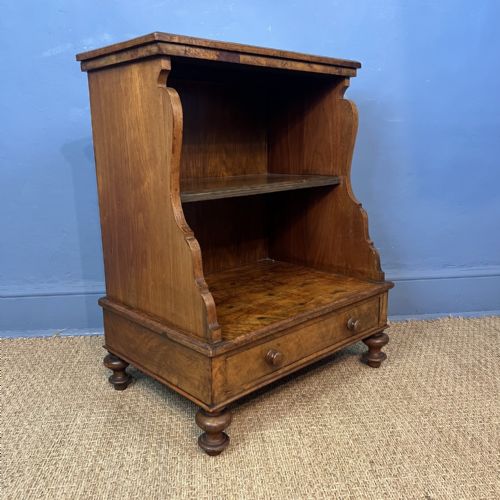
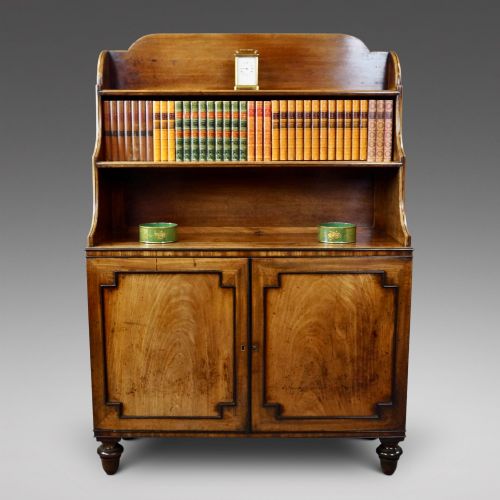


19th Century Waterfall Shelf
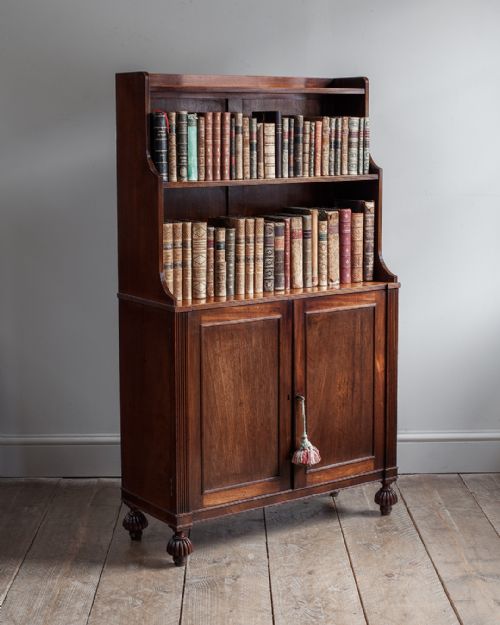
These 19th century waterfall shelf pieces offer stepped tiers of graduated open shelving that bring elegance and practical display space to any room.
19th Century Waterfall Shelf
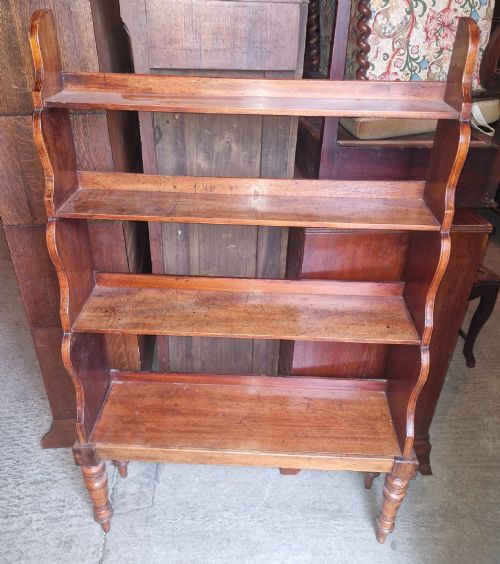
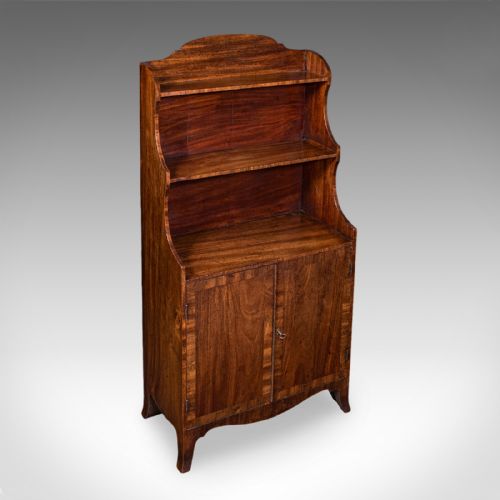
A 19th century waterfall shelf combines graduated open tiers that step back progressively from bottom to top, creating a distinctive cascading silhouette designed for displaying books and decorative objects. Most examples found here take the form of open bookcases, dwarf cabinets, or wall-mounted shelving units originating from the Georgian, Regency, and Victorian periods.
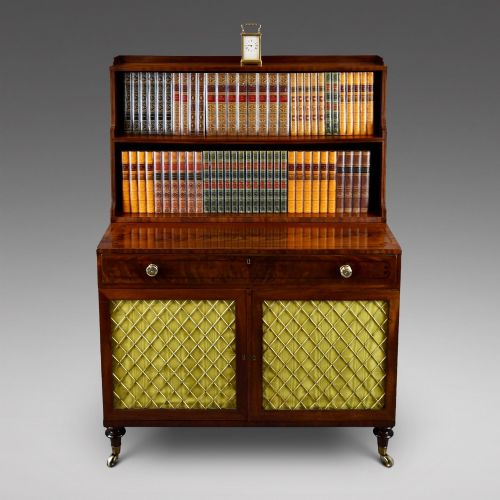
Makers of the era utilised various configurations, ranging from compact freestanding pieces featuring lower cupboards and canterbury sections to mirrored wall shelves and multi-tiered open bookcases. These items served primarily in parlours and libraries to hold treasured volumes while occupying minimal floor space.
The aesthetic prioritises lightness and vertical progression, departing from the heavy proportions of earlier furniture by stepping each shelf back noticeably. Buyers encounter timber constructions varying from humble painted finishes to highly figured exotic veneers.
What Varies in Quality
The distinction between standard examples and the finest pieces rests upon the selection of timber figures, such as flame mahogany or burr walnut, and the sophistication of decorative embellishments like brass inlay or fine stringing. Superior items often display integrated lower cupboards, canterbury compartments, or mirrored backs that demand greater joinery skill.
Proportional harmony and the crispness of the graduated tier steps separate exceptional furniture from simpler utility pieces. Original surface finishes and untouched patination carry considerable weight in defining the standing of an individual bookcase.
Listings feature mahogany, rosewood, burr walnut, and yew wood across Georgian, Regency, and Victorian periods.
The 19th Century Waterfall Shelf Glossary
- Waterfall bookcase
- A set of open shelves stepped back progressively from bottom to top, creating a cascading profile. This form gained popularity during the Regency period for displaying books and decorative items.
- Cross-banding
- A decorative border of veneer laid with the grain running perpendicular to the main surface. It frames panels and tabletops on finer 19th-century furniture.
- Stringing
- Inlay of a contrasting, narrow strip of wood used to outline geometric shapes or panels. Boxwood stringing frequently highlights darker mahogany surfaces.
- Canterbury
- A low stand or compartment fitted beneath furniture, originally designed to hold sheet music or folios. Some waterfall bookcases incorporate this feature into their lower sections.
- Grained finish
- Paint applied and manipulated to imitate the natural grain patterns of expensive exotic woods. This technique was common on regional or simulated furniture pieces.
19th Century Waterfall Shelf: Frequently Asked Questions
Where should I place a waterfall shelf?
These pieces suit living rooms, studies, or hallways where their shallow footprint allows them to fit against walls without blocking walkways.
Freestanding dwarf versions work well beside seating, while wall-hung variants make efficient use of vertical wall space.
Can these shelves hold heavy books?
The graduated tiers narrow as they rise, meaning the top shelves support lighter volumes while lower, deeper tiers accommodate heavier books.
Solid timber construction provides sturdy support, though consideration of shelf depth prevents overloading.
How do I distinguish Regency from Victorian examples?
Regency pieces often feature cleaner architectural lines, rosewood or flame mahogany veneers, and brass inlay details.
Victorian variations tend towards heavier proportions, darker walnut timbers, and more ornate carved galleries or mouldings.
Are these pieces suitable for modern homes?
Their compact proportions make them adaptable for displaying modern collections alongside antique objects in contemporary interiors.
The stepped design draws the eye upward, adding architectural interest to plain walls.