

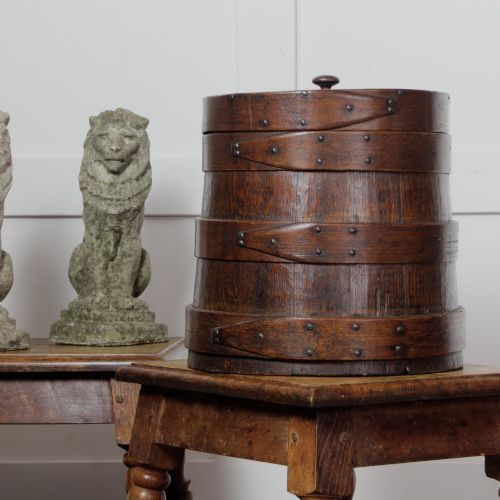


19th Century Storage Bin
These 19th century storage bin pieces bring utilitarian purpose and tactile warmth to a room, offering robust function through honest historic design.
19th Century Storage Bin
A 19th century storage bin covers a diverse range of historic containers utilised for holding fuel, flour, grain, and household goods. These items bridge the gap between domestic utility and decorative antiquity.
The selections on this page span from rustic pine dough bins to polished brass coal scuttles and metal water barrels. Buyers frequently encounter pine, copper, and iron forms originating from Georgian and Victorian periods.
Forms extend beyond conventional boxes to include toleware canisters, woven baskets, and apothecary chests. Each piece reflects the functional demands of domestic life during the nineteenth century.
Materials and construction
Construction relies heavily on durable timbers such as pine, oak, elm, and walnut, often joined with sturdy iron banding. Carpenters built these vessels to withstand daily domestic labour.
Metal vessels utilise hand-beaten copper and brass, alongside painted toleware featuring gilt decoration. Ironwork provides structural reinforcement and decorative handles across log bins and fire accessories.
19th Century Storage Bin Retail Price Guide 2026
Typical asking prices for 19th century storage bin among the pieces listed under this phrase on Sellingantiques today, from the lower quarter to the upper quarter. They describe what is for sale here now, not the wider market.
Listings span pine, copper, brass, walnut, and toleware, reflecting both Scandinavian country workshops and English country houses.
Assessing quality and character
Quality rests in the integrity of the original materials and the honesty of the surface patina. Pieces retaining their original paintwork, gilt decoration, or liners command greater attention.
Structural heft and careful proportion distinguish fine country house examples from simpler utilitarian vessels. The presence of hand-forged iron fittings and dovetailed joints signals superior craftsmanship.
The 19th Century Storage Bin Glossary
- Toleware
- Painted or lacquered metalware popular for decorative domestic vessels. It often displays gilt or folk art motifs.
- Dough bin
- A deep wooden trough utilised for kneading and rising bread dough. They typically feature fitted lids and sturdy legs.
- Canterbury
- A low wooden stand divided into partitions for holding sheet music or magazines. Originating in the Georgian period, it functions as a specialised storage receptacle.
- Apothecary box
- A small compartmentalised chest designed for storing medicines and vials. These items often include secure latches and specialised interior fittings.
19th Century Storage Bin: Frequently Asked Questions
What were 19th century storage bins used for?
These vessels served practical functions in domestic and country house environments, holding dry foodstuffs like flour or grain, as well as fuel such as coal and logs.
Water barrels and tole canisters also managed liquids and dry stores, reflecting the heavy reliance on durable containers before modern packaging.
How do I clean a copper storage bin?
Maintenance depends on whether you prefer an aged dark patina or a bright polished surface. Gentle dusting and occasional wiping with a soft cloth preserve the historic skin.
Avoid harsh chemical abrasives that strip away the authentic surface character accumulated over generations of use.
Are these bins suitable for holding firewood?
Copper, brass, and iron log bins function effectively as sturdy hearthside receptacles for wood and coal. Metal and iron-banded wooden vessels withstand the physical weight of logs.
Pine and walnut dough bins or baskets suit lighter storage duties or dry interior display.
How can I tell a Georgian bin from a Victorian one?
Georgian pieces often display restrained classical proportions and denser timbers like mahogany or early oak. Victorian examples frequently embrace bolder industrial techniques and varied mixed metals.
Stylistic markers like Arts and Crafts ironwork or specific painted tole decoration help anchor pieces within the nineteenth century timeline.