

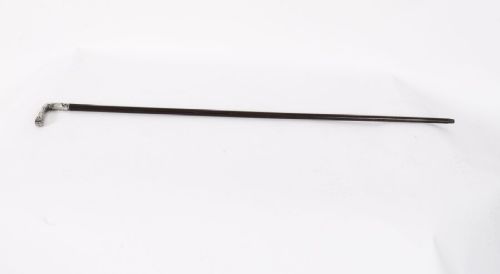
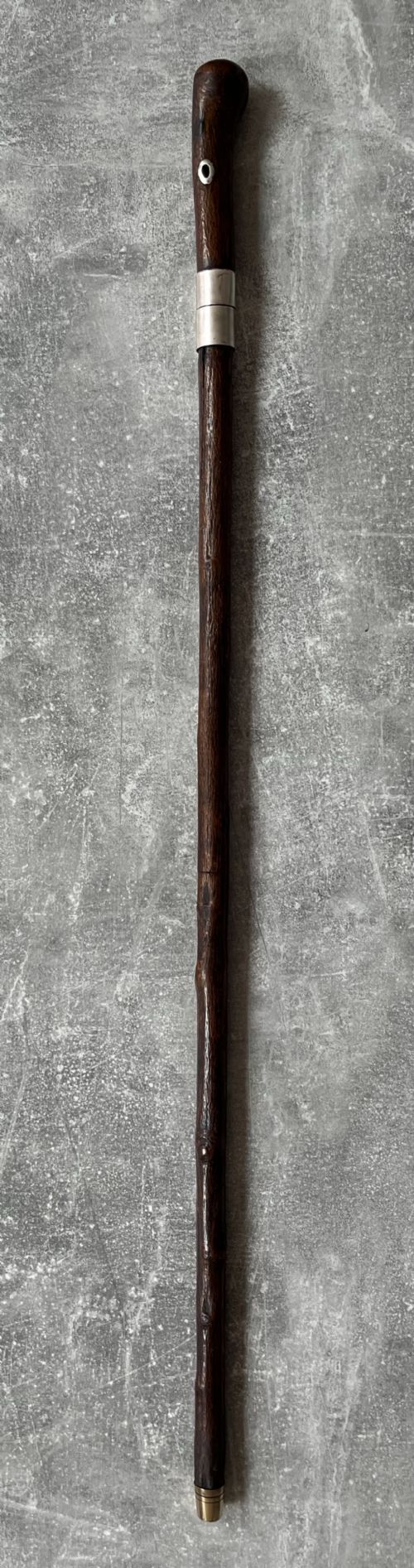
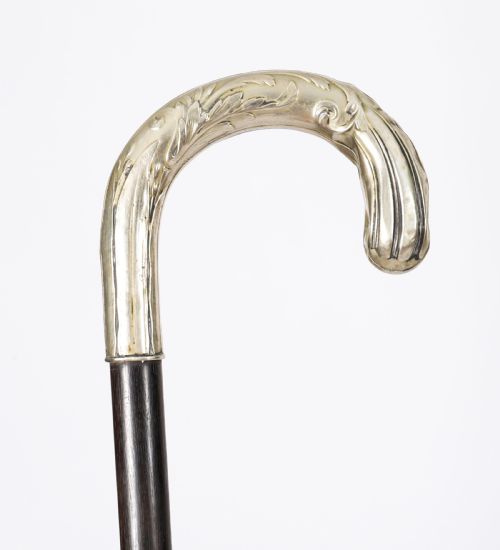


19th Century Silver Cane
A 19th century silver cane combines utility and display, offering collectors intricate handles paired with solid shafts.
19th Century Silver Cane
A 19th century silver cane comprises walking sticks and walking canes fashioned with metal handles and mounts. These objects served as accessories of status and fashion during the Victorian period and surrounding decades. Buyers encounter both plain shafts and complex gadget versions featuring hidden mechanisms.
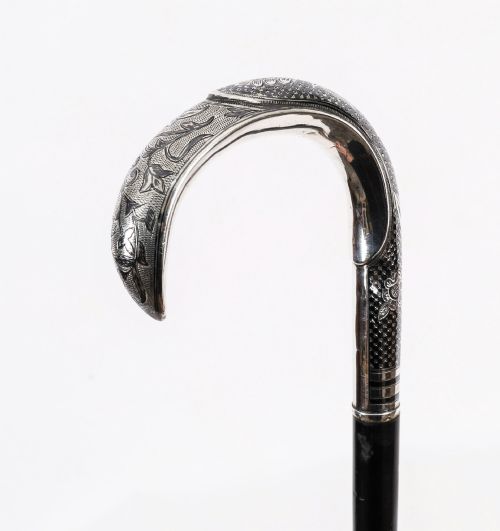
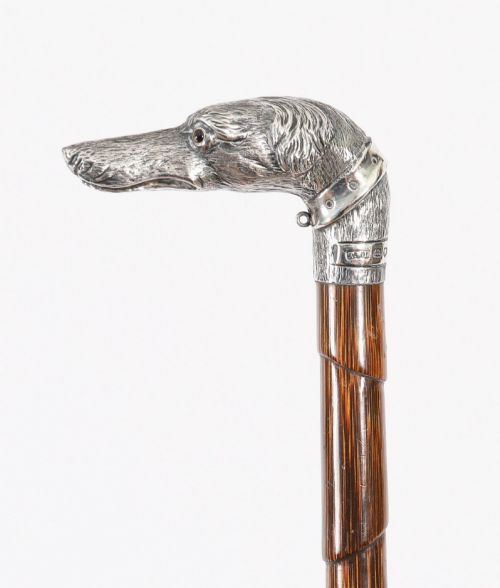
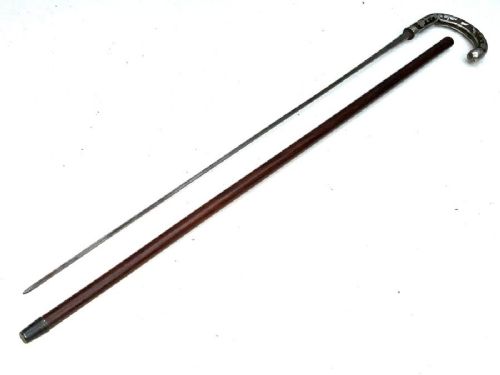
The physical forms span standard walking sticks alongside specialised gadget walking canes housing swords, daggers, watches, or snuff boxes. Animal head handles depicting greyhounds, horses, boars, pheasants, and dragons appear frequently alongside Continental and Chinese export designs. Most examples measure between eighty and one hundred centimetres in length.
Origins stretch across Britain, France, China, Russia, and various continental European workshops. Makers utilised domestic woods like hazel alongside imported shafts like malacca cane and ebonized timber. These pieces reflect the varied tastes of nineteenth-century society, ranging from restrained silver collars to ornate figural handles.
Materials and construction methods
Craftsmen shaped handles from solid silver, silver plate, silver gilt, and bone, often incorporating jade, enamel, or turquoise details. These heads were securely fitted to wooden shafts using metal collars or pins. Woods such as ebonized hardwood, snakewood, bamboo, and malacca cane formed the main body of each stick.
19th Century Silver Cane Retail Price Guide 2026
Typical asking prices for 19th century silver cane among the pieces listed under this phrase on Sellingantiques today, from the lower quarter to the upper quarter. They describe what is for sale here now, not the wider market.
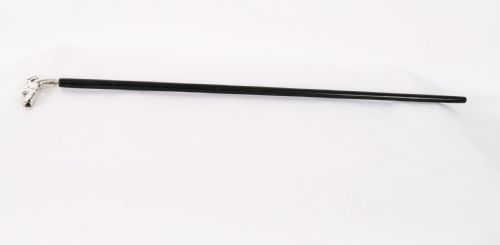
Some nineteenth-century gentlemen chose to lean on a boar's head or a rabbit.
Distinguishing quality across examples
Quality rests upon the sculptural detail of the silver handle and the integrity of any integrated mechanism. Superior specimens exhibit finely chased figural work, such as distinct animal expressions or intricate dragon scales, rather than simple cast forms. The integration of complex additions like functional timepieces, compasses, or concealed blades elevates an item.
Material selection for the shaft influences the overall caliber of the piece. Dense, well-finished malacca cane or properly ebonized wood paired with substantial silver mounts indicates higher workshop standards. Simpler silver-plated fittings on basic wood point to more utilitarian production.
Wang Hing and Company·Brigg
The 19th Century Silver Cane Glossary
- Gadget cane
- A walking stick that conceals a secondary tool or weapon, such as a sword, dagger, watch, corkscrew, or snuff box within the shaft or handle.
- Ebonized wood
- Timber treated with a dark stain or finish to imitate ebony wood. It provides a stark contrast against bright silver handles.
- Silver plate
- A thin layer of silver applied to a base metal core. This technique allowed makers to offer ornamental handles at a lower cost than solid silver.
- Knop
- A rounded knob or ornamental handle forming the top grip of a walking stick. It sits comfortably in the palm of the user's hand.
19th Century Silver Cane: Frequently Asked Questions
What is a gadget walking cane?
A gadget walking cane is a specialised piece designed to conceal an unexpected tool, weapon, or container within its structure. These hidden inclusions might consist of a sword blade, a timepiece, a corkscrew, or a compartment for snuff.
Craftsmen engineered these items to look like standard walking sticks from the exterior. Owners could access the concealed element through a threaded joint, release catch, or unscrewed handle.
How do I identify French pieces?
French examples from the nineteenth century often feature distinctive Art Nouveau styling or specific animal head motifs in silver. Makers in France frequently utilised ebonized wood alongside detailed cast silver handles depicting creatures like greyhounds or pheasants.
Examining the metal components for regional control marks helps confirm the geographic origin. The overall aesthetic leans toward sculptural elegance and flowing organic lines.
What woods were used for shafts?
Makers selected timbers based on flexibility, durability, and visual contrast with the silver handle. Common choices included malacca cane, ebonized wood, snakewood, hazel, and bamboo.
Imported malacca and sturdy hardwoods provided the necessary strength to support daily use. Ebonized treatments offered a uniform dark finish that highlighted bright silver collars and caps.