
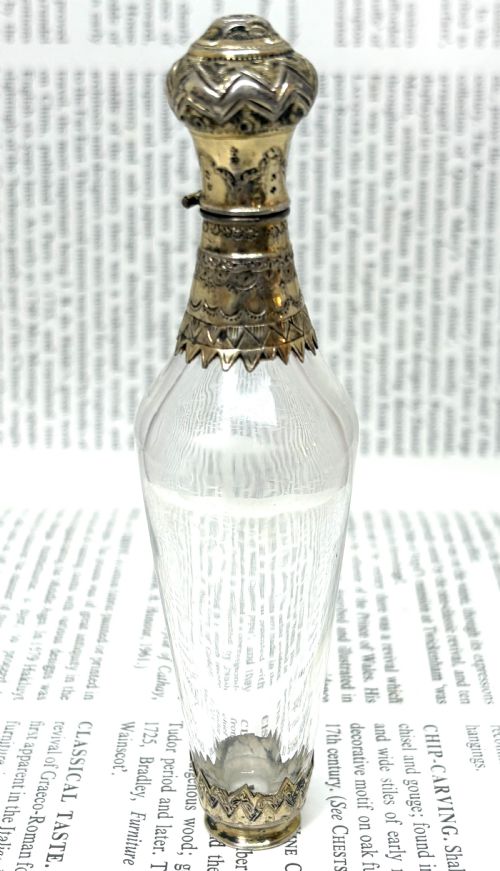


19th Century Scent Flask
When you search for a 19th century scent flask, you are looking at small personal containers fashioned for perfume, salts or spirits during the 19th Century and Victorian eras.
19th Century Scent Flask
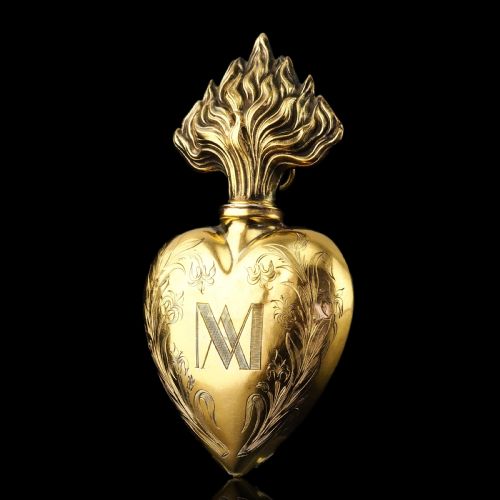
A 19th century scent flask encompasses diverse small vessels including scent bottles, perfume bottles, snuff bottles, and vinaigrettes designed for personal grooming. These objects emerge from various periods such as the Regency, Victorian era, and specific decades spanning from 1800 to 1890, reflecting shifting social habits of the time.
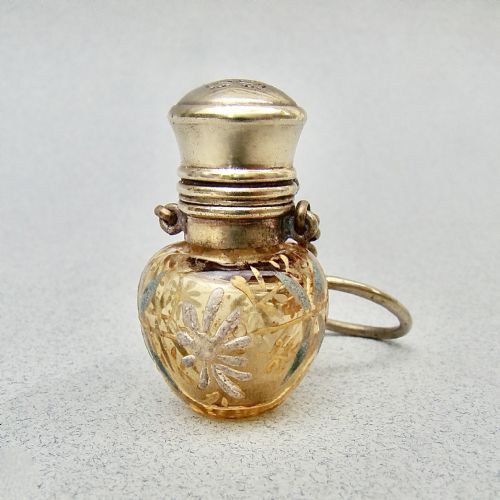
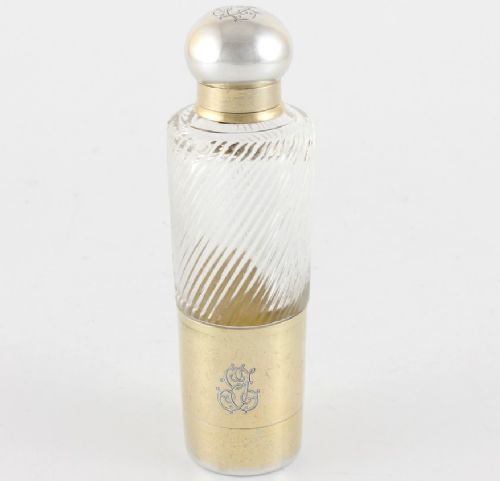
The regional origins on this page range widely from English and Dutch workshops to French makers operating during the Belle Epoque, Second Empire, and Restoration periods, alongside Chinese and Venetian houses. Common forms include chatelaine scent bottles meant to be suspended from a belt, double-ended glass vials, and novelty shapes like miniature violins or owls.
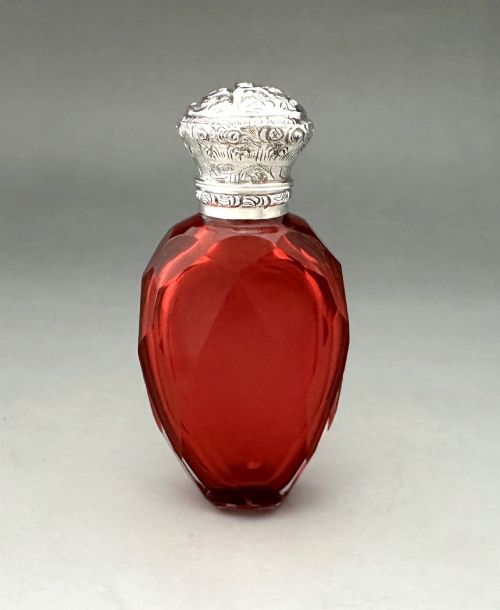
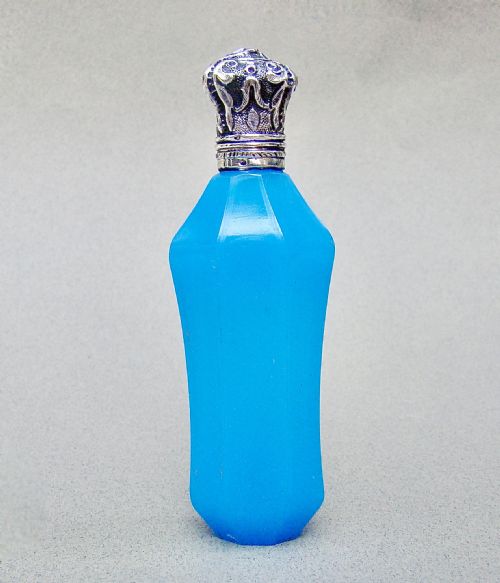
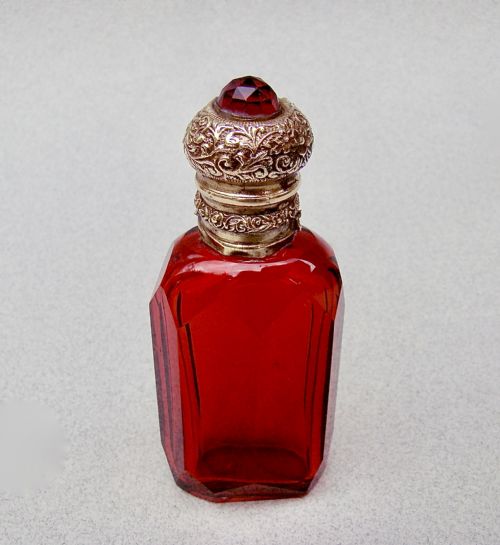
Materials span from simple clear glass to vibrant coloured opaline, ruby, teal, and cranberry glass, frequently paired with sterling silver, silver gilt, or ormolu mounts. Collectors also encounter hardstones, jade, porcelain, parian ware, and enamel, showing both utilitarian function and decorative ambition.
How they were made
Glassmakers utilised techniques such as slice-cutting, etching, and overlaying multiple glass layers to achieve rich visual depth and contrasting colours on the body of the flask. Makers also produced opaline and satin glass variants, sometimes incorporating murrine or aventurine inclusions within the matrix.
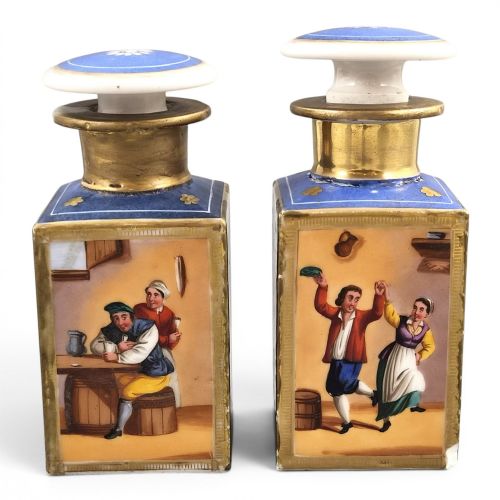
Metalworkers shaped mounts, caps, and chatelaine chains from sterling silver, silver gilt, and ormolu, applying hand-engraved detail or cast novelty forms like animal figures. Porcelain examples from factories such as Worcester involved painted decoration and gilding fired onto the ceramic body.
Listings feature items from the 19th Century, Victorian era, and Regency period, utilising silver, jade, porcelain, and various coloured glasses.
What varies in quality
Quality rests on the precision of the glass cutting and the clarity of the coloured glass layers, where crisp facets and complex triple overlays signal superior craftsmanship. The intricacy of metal mountings, such as finely chased silver-gilt work or detailed hinge mechanisms, further separates standard production from exceptional pieces.
Provenance and artistic collaboration also dictate standing, visible in master-carved Chinese rock crystal snuff bottles or documented works by known European glasshouses and silversmiths. The preservation of original mercury glass surfaces, enamel details, and matching stoppers elevates the overall integrity of the piece.
Tonnel Paris·Jacob Petit·Franchini & Bigaglia·Flight Barr & Barr·S. Morden & Co
The 19th Century Scent Flask Glossary
- Vinaigrette
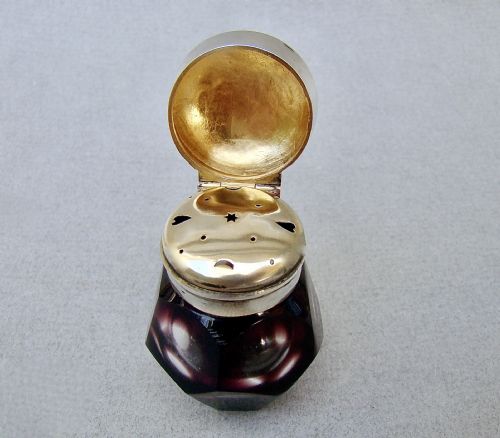
- A small ornamental box or bottle containing a sponge soaked in aromatic vinegar, used during the 19th century to relieve faintness. These containers typically feature an internal pierced silver grille.
- Chatelaine
- A decorative belt hook worn with a series of suspended chains carrying useful items like scent flasks, keys, and watches. They were popular accessories for Victorian women.
- Opaline glass
- An opaque or translucent glass produced in various pale or vibrant colours, often used for decorative nineteenth-century vanity items. It provides a smooth surface that mimics porcelain.
- Silver gilt
- Silver that has been coated with a thin layer of gold on its surface, combining the strength of silver with the rich appearance of solid gold.
- Ormolu
- Gilded bronze or brass furniture mounts and decorative fittings cast and chased in elaborate French styles. The technique involves applying a gold amalgam and heating the metal.
- Murrine
- Coloured glass cane heated and drawn out before being sliced across to reveal mosaic patterns within the glass body. This technique appears in nineteenth-century Venetian production.
19th Century Scent Flask: Frequently Asked Questions
How were scent bottles used?
People carried these bottles for personal fragrance and to combat unpleasant odours or faintness in crowded public spaces during the 1800s.
The inclusion of internal stoppers or sponge-fitted vinaigrette grilles prevented spills while allowing the user to release small amounts of scent as needed.
How do I date a scent bottle?
Dating relies on combining stylistic clues from the manufacturing technique, the colour of the glass, and any hallmarked silver mounts.
English silver hallmarks provide precise assay years, while French or Chinese pieces often depend on stylistic periods, maker signatures, and material types like overlay glass or jade.
What is the difference between a scent bottle and a snuff bottle?
Scent bottles generally contained liquid perfumes or volatile salts and required tight stoppers, often featuring double-ended designs or hinged silver caps.
Snuff bottles were made to hold powdered tobacco, originating largely from Chinese traditions where they featured specialised small spoons attached to the stopper for dispensing.