



19th Century Oak Childs Chair
A 19th century oak childs chair brings genuine domestic history into a room with solid timbers and small proportions.
19th Century Oak Childs Chair
When you search for a 19th century oak childs chair, you encounter sturdy seating scaled down for youngsters, produced across British and regional workshops during the 1800s and the Victorian era. These pieces survive in various vernacular guises, reflecting how families lived and worked generations ago.
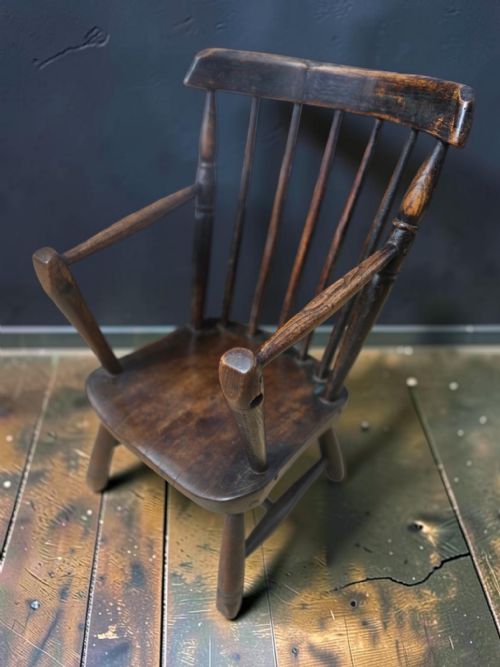
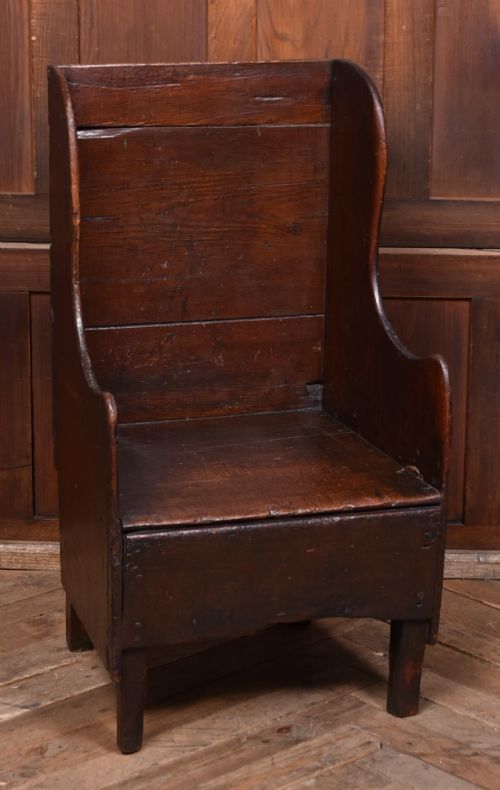
The versions most commonly met on this page include country Windsor armchairs, rush-seated side chairs, and occasional rocking forms constructed from native timbers. Makers of the period adapted adult seating styles directly for children, resulting in miniature armchairs and lambing chairs built to withstand daily domestic use.
Regional British styles dominate the selections, from Welsh primitive windsor-style chairs to West Country vernacular pieces. Alongside oak, makers utilised elm, ash, and hardwood to build these small seats, often incorporating rush or rattan cane for the seating surfaces.
Materials and construction methods
Makers built these chairs using solid native timbers, primarily oak combined with elm, ash, and other regional hardwoods for framing and spindles. Construction relied on traditional joinery methods suited to domestic workshops, including pegged mortise and tenon joints and turned components.
Seating areas frequently employed flexible natural materials woven directly into the wooden frames, utilising rush or rattan cane. Natural form branches and turned spindles appear across country vernacular designs, showing how local materials dictated the final form of each piece.
19th Century Oak Childs Chair Retail Price Guide 2026
Typical asking prices for 19th century oak childs chair among the pieces listed under this phrase on Sellingantiques today, from the lower quarter to the upper quarter. They describe what is for sale here now, not the wider market.
Styles span country vernacular, English regional vernacular, Georgian style, and French Louis XVI style across armchairs and rocking chairs.
Assessing quality and character
Quality in these small pieces rests on the integrity of the timber and the honesty of the construction, distinguishing robust country workshop pieces from later alterations. A well-made chair shows careful proportioning and harmonious integration of its materials, whether solid plank seats or woven rush.
The character of the surface timber separates a superior example from a plain one, with rich natural patination and genuine wear marking decades of use. Regional distinctiveness, such as a well-turned Windsor comb-back or the refined lines of a Georgian style frame, elevates the standing of an individual chair.
The 19th Century Oak Childs Chair Glossary
- Vernacular
- Everyday objects made by local craftsmen for regional use rather than high-style urban workshops. These pieces follow traditional local patterns.
- Windsor
- A chair built with a solid wooden seat into which the legs and back spindles are directly bored and wedged. This form offers robust construction.
- Bergere
- An upholstered or caned armchair with enclosed sides, adapted here in miniature proportions with cane seats and backs. The style adds lighter decorative detail.
- Rush
- Dried marsh grass twisted into cord and woven tightly to form traditional seat bases. It provides a resilient and comfortable surface.
- Patina
- The deep surface sheen and colour developed on wood through decades of handling, polishing, and light exposure. It marks genuine age.
- Lambing chair
- A hooded or high-backed chair traditionally designed to shield the sitter from draughts near a hearth. Small versions offer a cosy enclosed seat.
19th Century Oak Childs Chair: Frequently Asked Questions
How were childs chairs used historically?
These small seats served everyday domestic functions, allowing children to sit at table or near the hearth alongside adults. They were built sturdily to endure constant use in busy family homes.
Many styles replicated adult seating forms on a reduced scale, serving both practical seating needs and decorative roles within the household.
How do I identify a 19th century piece?
Look for construction indicators such as hand-turned spindles, pegged joints, and the natural tool marks left by country craftsmen. Native hardwoods and traditional weaving methods like rush also point towards the 1800s.
Timber patination and wear patterns across the seat and footrests provide further clues to genuine period age and continuous household use.
Are these chairs suitable for daily use?
Most of these pieces remain structurally sound, though their primary appeal today lies in their decorative presence and historical character. Their small scale suits display rather than heavy contemporary seating.
Placing them in a quiet corner or using them to hold small items preserves the historic timber and woven elements from undue strain.
What is the difference between country and stylistic pieces?
Country vernacular chairs were made by local craftsmen using available woods and regional designs, resulting in simpler, robust forms. Stylistic pieces incorporate formal design idioms like Georgian or French Louis XVI influences.
Regional vernacular pieces often display quirky local building traits, whereas stylistic versions mirror fashionable urban furniture trends of the period.