
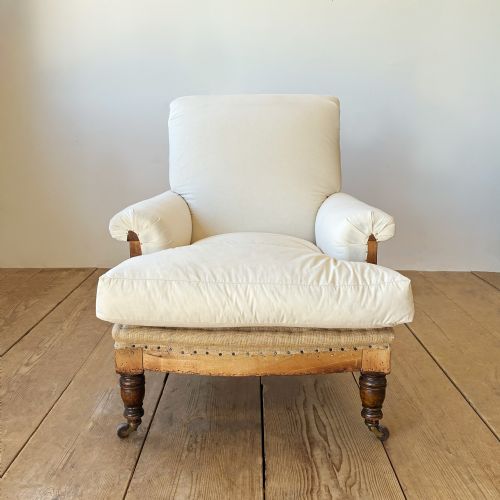

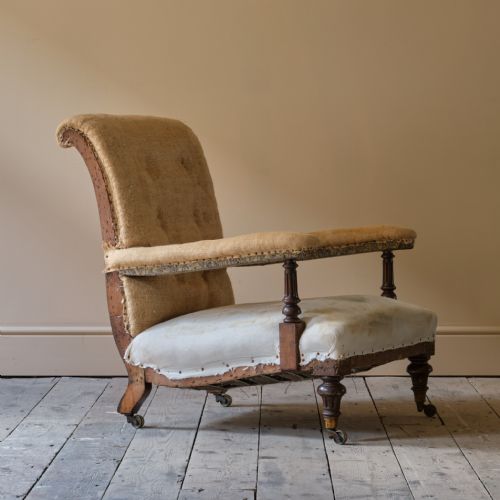

19th Century Howard Chair
A 19th century howard chair delivers deep seating comfort and understated English country house elegance.
19th Century Howard Chair
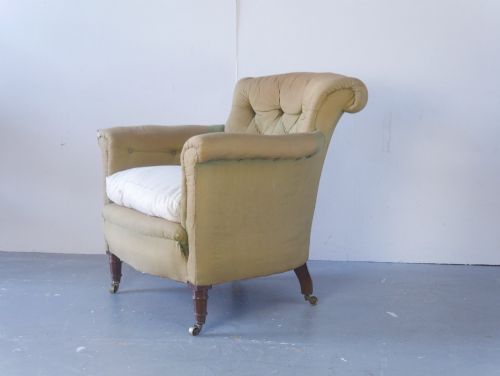
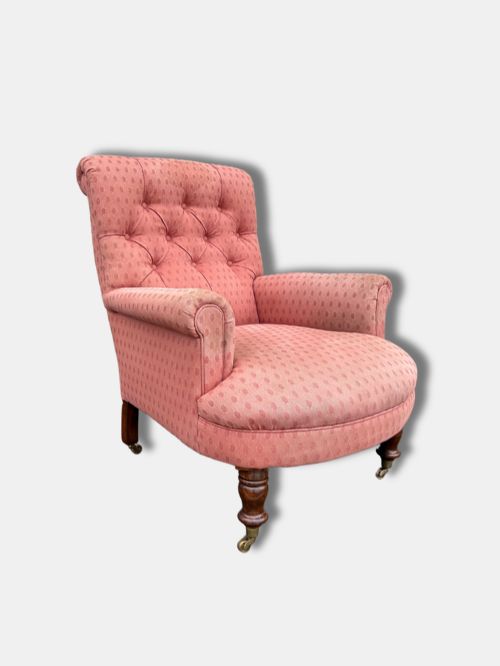
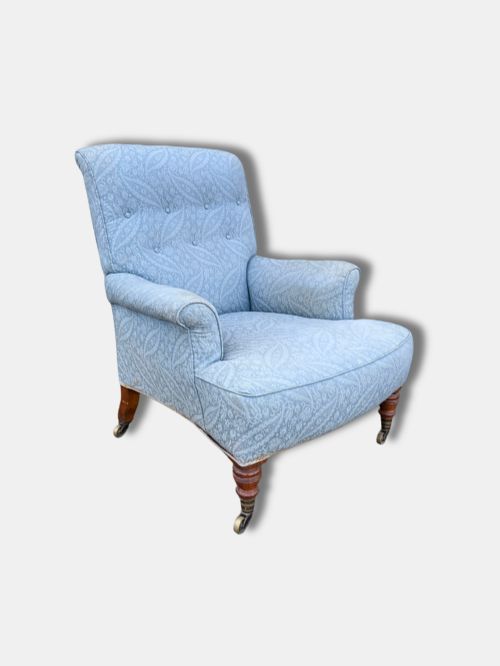
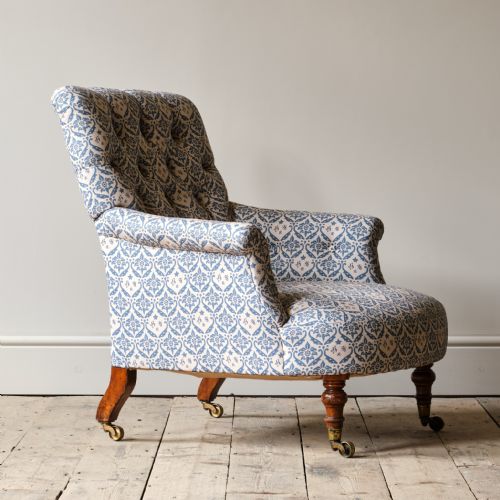
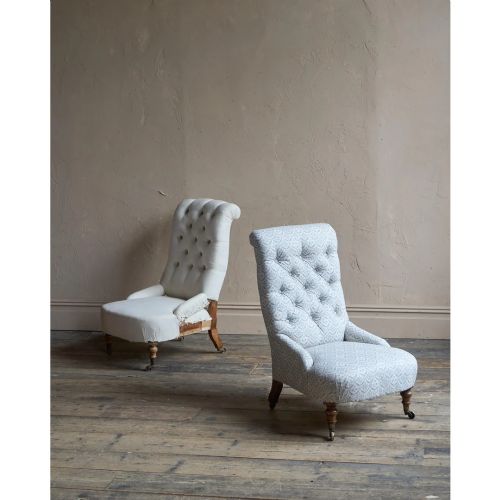
A 19th century howard chair represents a pinnacle of Victorian upholstery design, known for generous proportions and low-slung profiles built for relaxation. The selection encompasses fully marked pieces from the original firm alongside pieces produced in the distinctive Howard style by contemporary workshops.
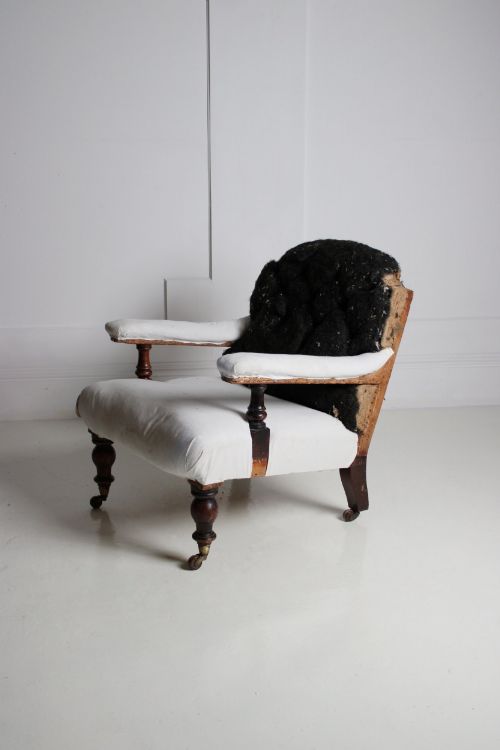
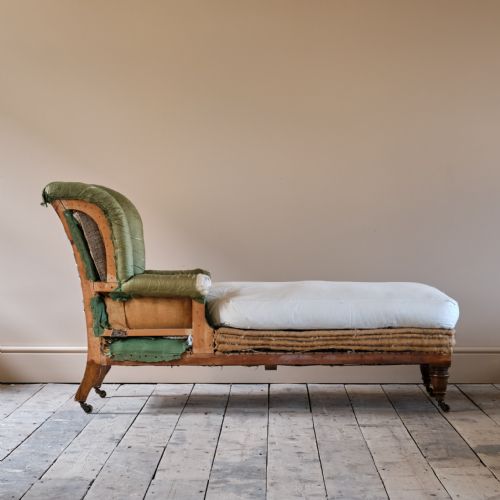
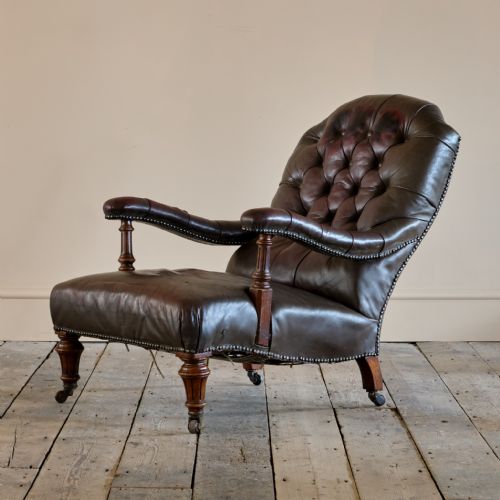
Forms extend beyond standard armchairs to include open armchairs, slipper chairs, club armchairs, and specific named models such as the Woodstock, Bridgewater, and Grafton. These seating options often appear alongside related library and drawing room furniture like chaise longues, daybeds, and bedroom chairs.
Originating predominantly from English workshops during the Victorian era, these pieces reflect the domestic comfort prioritized in country houses. Buyers encounter both walnut and mahogany frames beneath various textile coverings, spanning the decades from the 1850s through to the 1890s.
How they were made
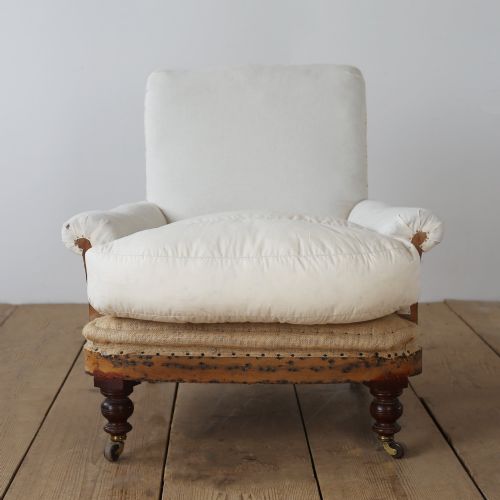
Makers constructed robust internal frames using hardwoods like walnut and mahogany, ensuring structural longevity beneath the padding. Exposed woodwork frequently appears on legs, which terminate in brass castors for mobility.
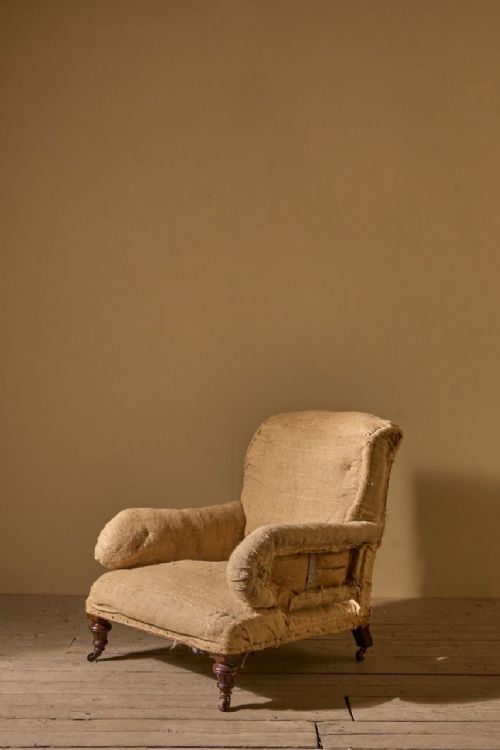
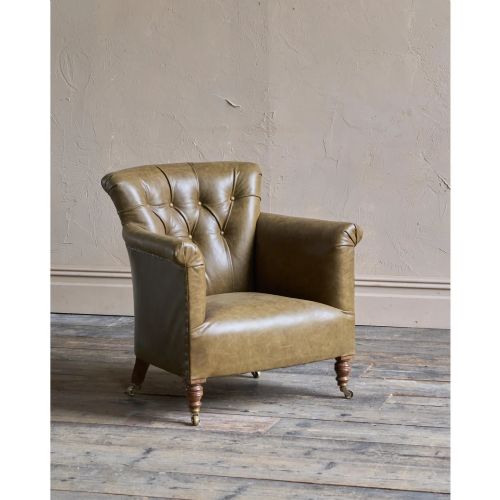
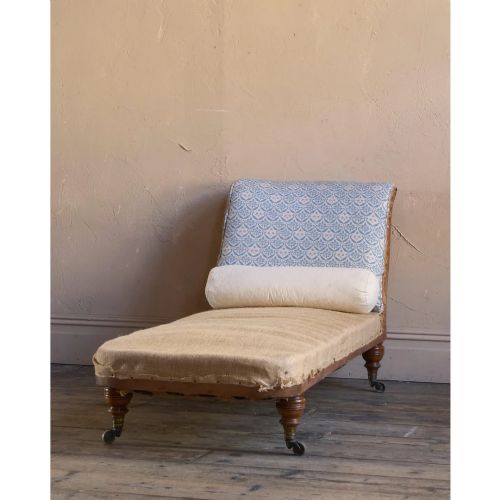
Traditional layering involved hessian and calico as foundation materials beneath outer textile layers of cotton, wool, fabric, or leather. Button back detailing and tight upholstery defined the tailored finish of the seating.
Listings feature walnut and mahogany frames upholstered in hessian, calico, cotton, and leather across the nineteenth century.
What varies in quality
The presence of maker documentation, such as stamped frame members or original brass castors, elevates a piece within the hierarchy of collectors. Fully stamped models by the original firm command stronger interest than unattributed pieces constructed in the same style.
The integrity of the original stuffing and frame construction dictates the comfort and posture of the seating. Pieces retaining their early hessian and calico foundations alongside well-preserved wood frames demonstrate superior survival.
Howard and Sons·Robert Strahan Dublin
The 19th Century Howard Chair Glossary
- Howard style
- A design descriptor denoting deep-seated Victorian upholstered armchairs with low arms and turned wooden legs on castors. Pieces bearing this label follow the aesthetic and structural proportions established by the London firm.
- Bridgewater armchair
- A specific model of upholstered chair featuring low, rolled arms and a deep seat. This form remains a staple of nineteenth-century English country house seating.
- Hessian
- A coarse woven fabric utilised as a foundational layer in traditional upholstery. It provides the strong base required to support internal stuffing before the final textile is applied.
- Calico
- A plain-woven cotton fabric used historically as an inner upholstery cover. It acts as the intermediate layer holding the stuffing in place beneath the decorative outer fabric.
- Castor
- A small wheel mounted on a swivel attached to the base of furniture legs. Brass versions on these chairs allowed heavy upholstered seating to move easily across carpets.
19th Century Howard Chair: Frequently Asked Questions
What defines a Howard chair?
A Howard chair is recognised by its generous proportions, deep seat, low arms, and turned wooden legs terminating in brass castors. These pieces were designed specifically for comfort in Victorian drawing rooms and country houses.
The original firm and contemporary makers produced variations including club chairs, open armchairs, and named models like the Bridgewater. Their enduring appeal lies in this combination of structural robustness and relaxed ergonomics.
How do I identify a stamped piece?
Maker attribution often relies on stamps found directly on the wooden frame members, particularly the rear legs or under-framing. These marks typically display the maker name alongside serial numbers.
In addition to timber stamps, original brass castors frequently carry the maker name stamped into the metal. Finding these markings confirms factory origin rather than general stylistic attribution.
What is the difference between Howard and Sons and Howard style?
Howard and Sons refers specifically to pieces manufactured by the actual London firm established in the nineteenth century. These are the items that often bear maker stamps and specific model names.
Howard style describes chairs made by other cabinet makers and workshops during the same period who copied the successful proportions and comfort of the original firm. Both categories share the characteristic low profile and deep upholstery.
How do I care for antique upholstery?
Living with these chairs involves gentle maintenance to preserve fragile nineteenth-century textiles and internal padding. Regular light vacuuming with a soft attachment prevents dust accumulation in the fabric weaves.
Avoiding direct sunlight protects cotton, wool, and leather surfaces from fading over time. Professional conservation is recommended for maintaining original foundation layers like hessian and calico.