



19th Century Butler Tray
A 19th century butler tray brings portable utility and rich timber tones into a modern interior.
19th Century Butler Tray
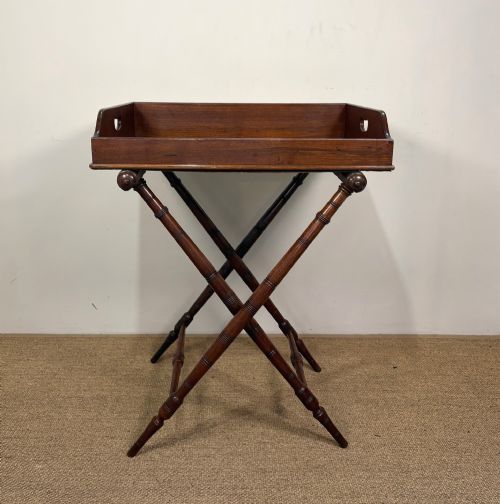
A 19th century butler tray is a portable serving surface designed to lift off its support for easy clearance after use. The pieces gathered here span the Regency, William IV, and Victorian eras, demonstrating how domestic service evolved during the period. Most examples are constructed as standalone platters or paired with dedicated folding stands.
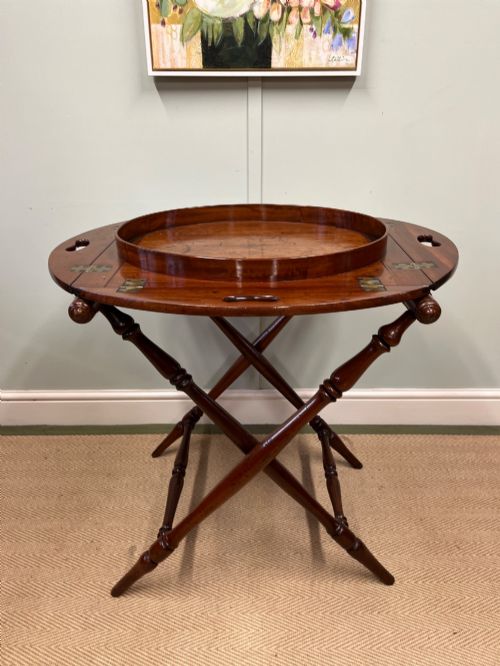
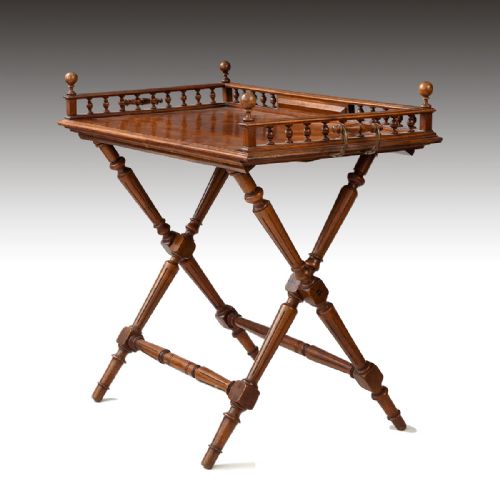
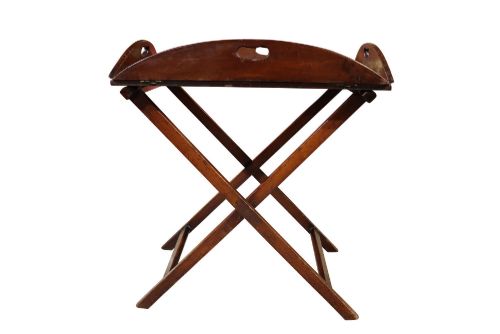
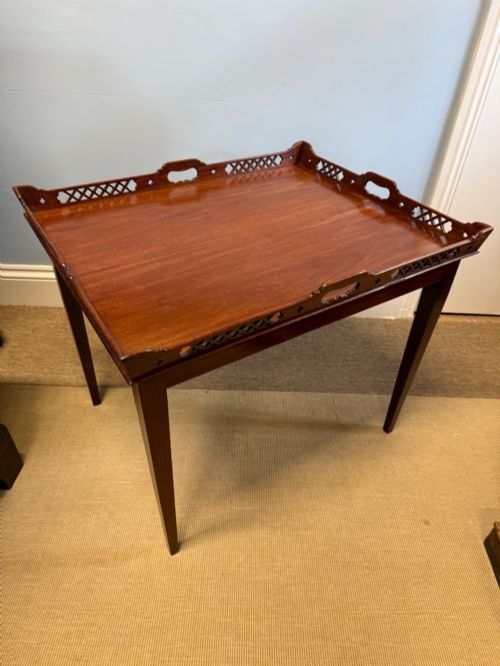
The version you will most frequently encounter on this page is the mahogany folding butler tray on a stand. These range from plain timber boards with cutout carrying handles to more decorative items featuring scalloped edging or low galleries. Walnut, oak, and papier-mâché examples also appear, often showing regional cabinet-making traditions or specific stylistic revivals.
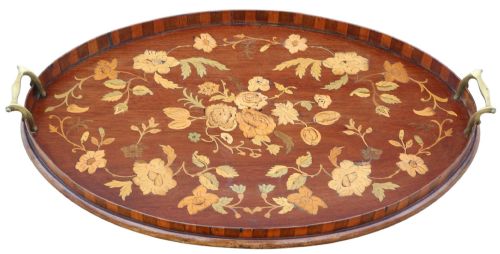
Some pieces incorporate intricate marquetry inlay, satinwood borders, or brass fittings to elevate their appearance for drawing-room use. Whether you select a simple oak board or an ebonised papier-mâché tray resting on an X-frame base, each item reflects the functional requirements of nineteenth-century households. The variety includes kidney-shaped servers, deep-sided platters, and occasional tray tables.
Materials and construction methods
Cabinet makers relied heavily on dense tropical hardwoods like Cuban mahogany for durability and fine grain definition. Trays often featured raised edges or galleried borders assembled with traditional joinery to withstand frequent lifting and movement. Walnut and oak appear alongside lighter satinwood, providing a contrasting palette of timber tones across different workshops.
Papier-mâché trays required a different technological approach, building up layers of paper pulp over a metal or wooden core before pressing and lacquering. These surfaces were frequently decorated with hand-painted motifs, Chinoiserie scenes, or mother-of-pearl inlay. Metal elements such as brass handles and silver plating added structural reinforcement and formal elegance.
Folding stands utilise hinged X-frame designs that collapse flat for compact storage when not in use. The junction between tray and stand relies on simple gravity slots or supporting ledges rather than complex mechanical locks. This straightforward mechanism allowed servants to dismantle the furniture quickly after a service concluded.
19th Century Butler Tray Retail Price Guide 2026
Typical asking prices for 19th century butler tray among the pieces listed under this phrase on Sellingantiques today, from the lower quarter to the upper quarter. They describe what is for sale here now, not the wider market.
The styles represented include Regency, Victorian, William IV, Edwardian, Gothic Revival, and Sheraton Revival designs.
Distinguishing quality in nineteenth-century serving trays
The degree of refinement in the timber selection and surface embellishment dictates the standing of a piece. Superior examples display carefully matched mahogany veneers, precise marquetry inlay, or crisply carved walnut edges rather than plain, utilitarian boards. The depth and clarity of hand-applied lacquer on papier-mâché items similarly separates standard production from exceptional work.
Structural integrity of the folding stand and the precise fit of the tray into its frame indicate workshop competence. Higher-grade items maintain tight joints in the X-frame base and feature substantial brass hardware that has aged evenly. Proportion and balance also play a part, where finer pieces present harmonious dimensions and elegant handle cutouts rather than heavy, clumsy outlines.
Clay
The 19th Century Butler Tray Glossary
- Butler tray
- A portable wooden serving tray, frequently fitted with hinged or cutout side handles, designed to sit upon a folding X-frame stand.
- Galleried tray
- A serving tray featuring a raised border or rim around its perimeter to prevent items from sliding off during transit.
- Papier-mâché
- A composite material made from paper pulp mixed with glue or resin, compressed and baked to form a sturdy, smooth base for lacquering.
- Marquetry inlay
- The art of applying pieces of veneer to a structural surface to form decorative patterns, pictorial scenes, or geometric designs.
- X-frame stand
- A folding support structure formed by two intersecting timber legs that cross in the middle like the letter X.
19th Century Butler Tray: Frequently Asked Questions
How were butler trays used?
These trays served primarily to transport food, drinks, or tea service from the kitchens to the main reception rooms. Servants placed the removable board onto a folding stand once they reached the dining or drawing room, creating an instant serving table.
After the meal concluded, the procedure reversed, allowing the household staff to clear the dishes efficiently and fold away the support frame.
Are butler trays sturdy enough for daily use?
Nineteenth-century trays were built from robust hardwoods like mahogany and oak, designed to bear the weight of heavy ceramics and silver plate. The folding stands provide a stable base when placed on even flooring, making them practical for holding drinks or books.
Care should be taken with delicate papier-mâché or inlaid satinwood versions, which benefit from gentle handling rather than heavy-duty modern service.
How do I distinguish Regency from Victorian trays?
Regency pieces often display cleaner classical lines, Cuban mahogany timbers, and restrained decoration influenced by the preceding Georgian era. They tend to emphasise fine wood grains and simple, elegant proportions.
Victorian examples frequently incorporate heavier carving, Gothic Revival elements, or elaborate surface treatments like japanning, mother-of-pearl, and transfer printing.
Can the tray be used without its stand?
The trays function independently as serving platters or decorative centerpieces on larger pieces of furniture. Many examples retain side handles specifically designed for carrying independently of any base.
Resting the board flat on a coffee table or sideboard transforms it into a display surface for books, lamps, or glassware.