



1950s Oil Painting Landscape
These 1950s oil painting landscape works capture mid-century scenery with rich pigments and distinct regional character.
1950s Oil Painting Landscape
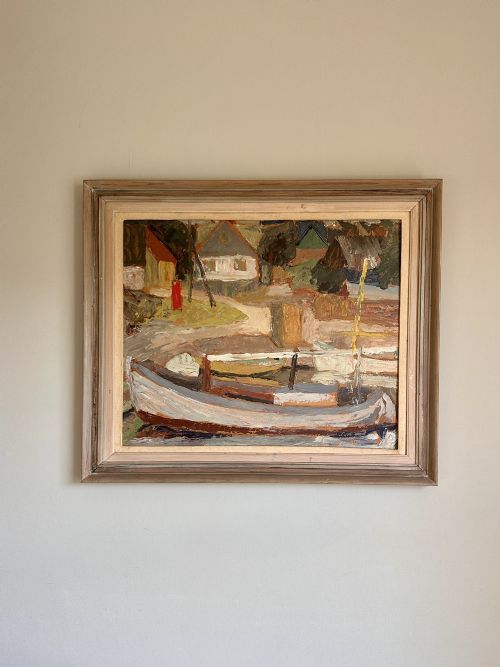
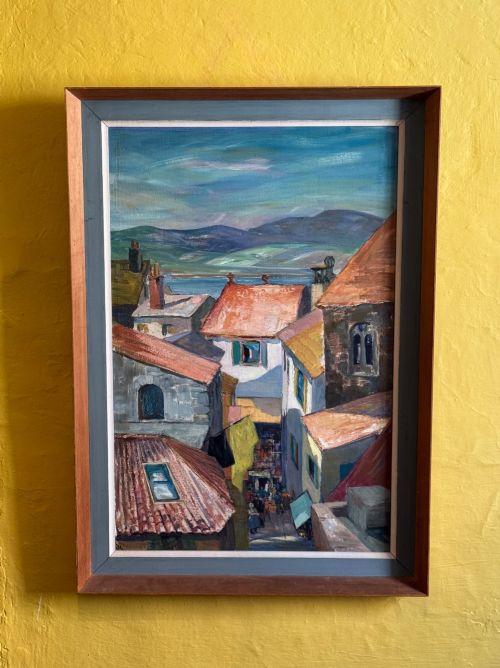
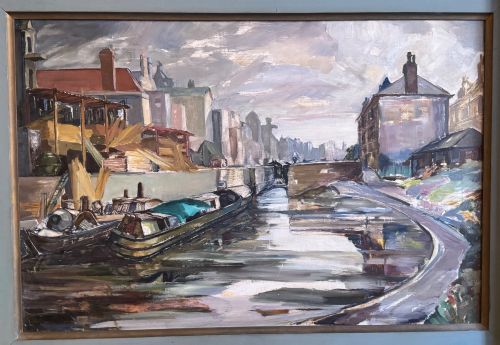
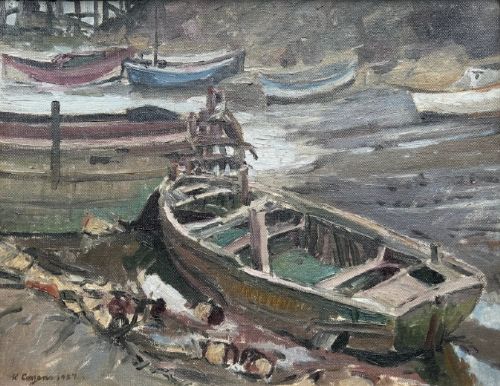
A 1950s oil painting landscape brings mid-century rural scenes, harbours, and industrial views directly onto canvas or board. Buyers seeking these works find diverse approaches ranging from traditional British regional views to French modernist and naive compositions.
The pieces on this page lean heavily into mid-century modernism, post-war British traditions, and French colourist styles. Expect to encounter board supports and canvas stretched over timber frames, often set within original wooden or ebonised frames.
Subjects stretch from Yorkshire dales and Dorset harbours to French ports and Corsican farmhouses. Regional diversity defines the selection, offering a window into European rural and industrial life during the middle decades of the twentieth century.
Materials and technique
Artists of this period laid oil paint onto rigid board or woven canvas using bristle brushes and palette knives. Impasto application appears frequently, building physical texture into skies, water, and foliage.
Wooden supports include timber panels and manufactured board, while canvas works rely on traditional stretcher frames. Frames are typically wood, sometimes finished with gilt or ebonised treatments that suit the period aesthetic.
1950s Oil Painting Landscape Retail Price Guide 2026
Typical asking prices for 1950s oil painting landscape among the pieces listed under this phrase on Sellingantiques today, from the lower quarter to the upper quarter. They describe what is for sale here now, not the wider market.
The selection spans works dated to the 1930s and the 1950s.
Assessing quality and execution
Quality rests in the confidence of the brushwork and the clarity of the composition, whether the style leans toward realism, constructivism, or abstraction. Stronger pieces display a deliberate handling of pigment and light that defines the chosen landscape.
The cohesion of the palette and the structural balance of the scene separate accomplished works from simpler student or amateur efforts. Signed canvases and boards with documented provenance or named artists generally command greater artistic interest.
Kenneth Cozens·James Fry·Fred Pailhes·John Frederic Greenwood·Job de Vogel·Lillian M. Harrison
The 1950s Oil Painting Landscape Glossary
- Impasto
- Paint applied thickly to a canvas or board, standing visibly above the surface. This technique creates physical texture and catches light on the painted surface.
- Constructivism
- An artistic approach originating in Russia that emphasises abstract geometric forms and industrial structures. Works in this style focus on lines, planes, and constructed space rather than traditional representation.
- Mid-Century Modern
- A style spanning roughly from the mid-1930s to the mid-1960s, characterised by clean lines and modernist simplification. In painting, it manifests through flattened perspectives and expressive colour choices.
- Naive School
- Art produced by self-taught painters working outside academic traditions. These pieces often feature simplified perspective, bright local colours, and direct narrative charm.
- Colourist
- An artist whose work prioritises expressive colour relationships over strict realism. French colourists of this period used vibrant hues to evoke the warmth and light of southern landscapes.
1950s Oil Painting Landscape: Frequently Asked Questions
What subjects appear in these landscapes?
The works depict a wide variety of rural, coastal, and industrial environments across Britain and Europe. Common motifs include harbours, farmhouses, rivers, valleys, and factories.
Artists recorded these scenes through diverse stylistic lenses, ranging from realistic depictions of Yorkshire dales to abstracted French compositions.
Are these paintings supplied with frames?
Many of the listed pieces come within their period frames, which are frequently constructed from wood or finished with ebonised or gilt details.
Framing styles reflect mid-century preferences, complementing the palette and scale of the canvas or board within.
How do I identify a mid-century painting?
Mid-century works are characterised by specific material indicators like board supports, stretcher frames, and mid-century modern or modernist stylistic approaches. Subject matter often includes post-war industrial scenes or simplified rural views.
Signatures, dates written on the reverse, and artist biographies help confirm the period of execution.
What is oil on board?
Oil on board refers to a painting executed directly onto a flat wooden panel or manufactured board rather than stretched fabric. Artists frequently utilised this support for smaller plein air studies and finished works during the mid-twentieth century.
Boards provide a rigid surface that requires priming before paint application to preserve the ground.
How should I care for a canvas painting?
Keep canvas and board paintings away from direct sunlight and fluctuating humidity levels to protect the oil paint and wooden supports. Dust the surface gently with a soft, dry cloth without applying pressure.
Avoid using liquid cleaners or abrasive materials on the painted surface or the frame.