

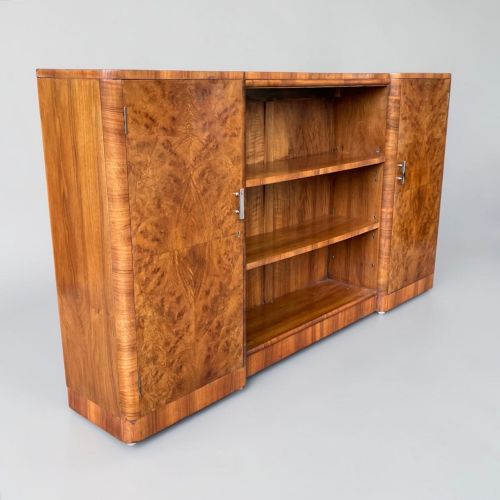
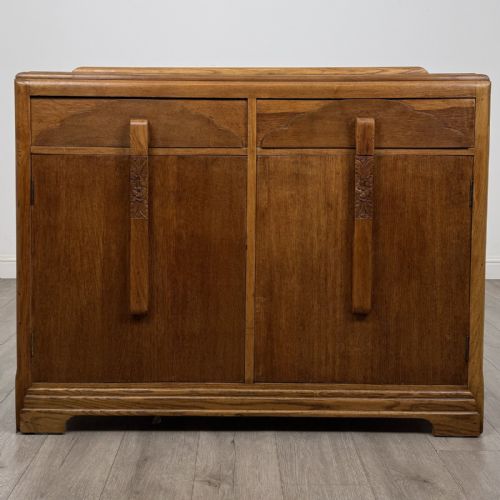
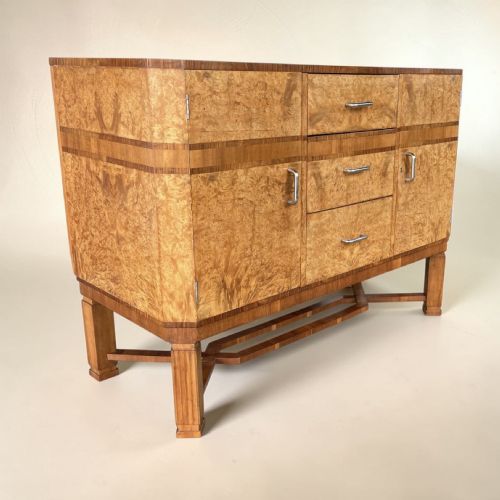
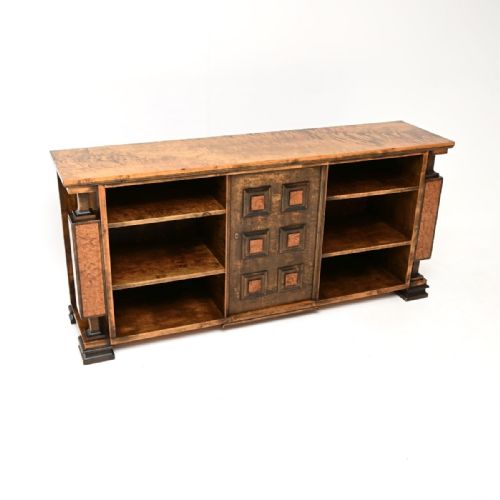



1930s Wooden Sideboard
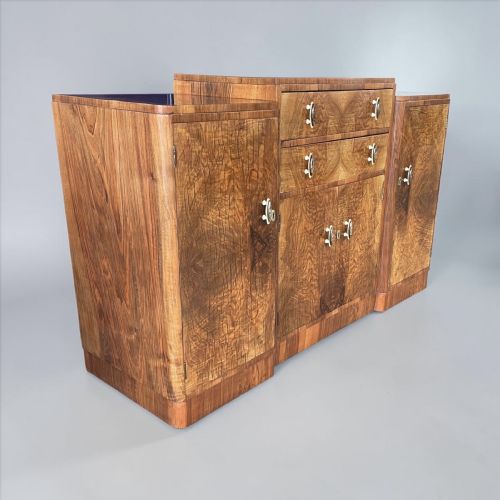
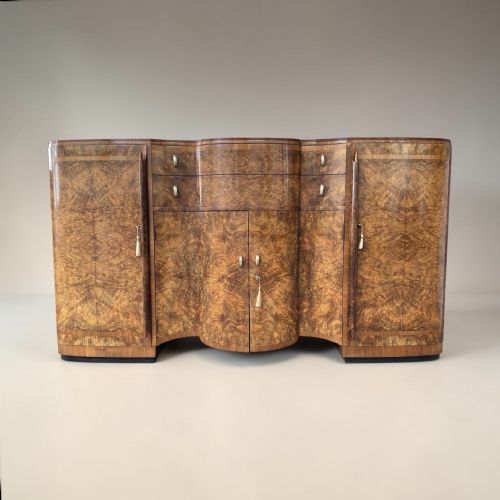
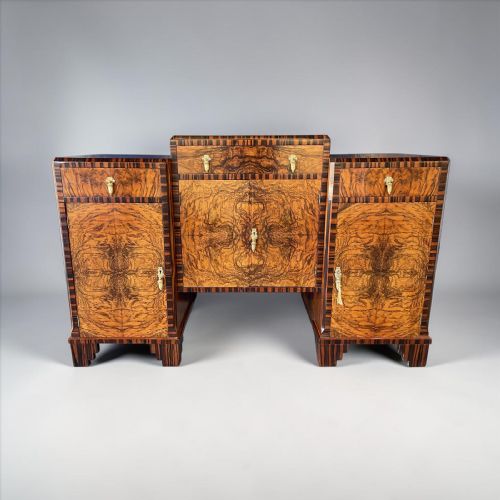
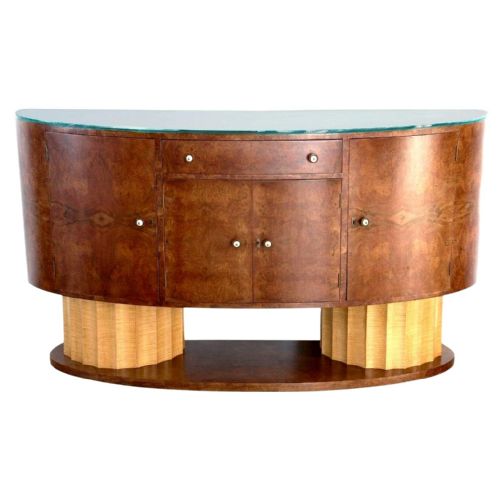
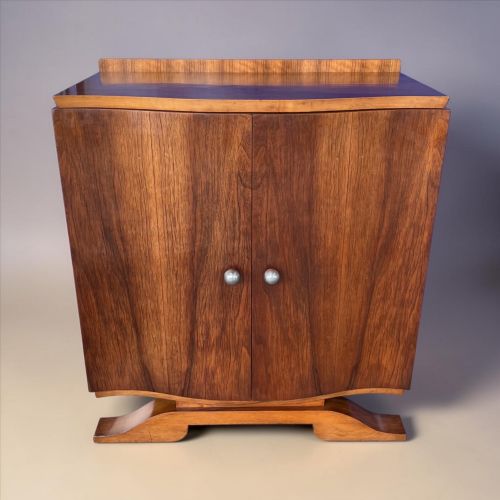
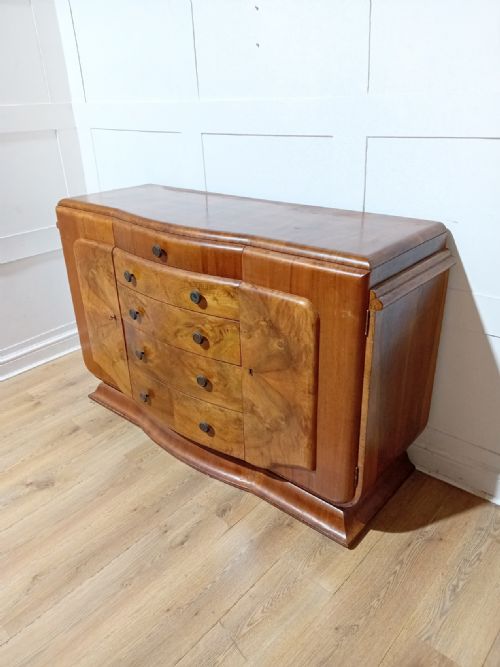
A 1930s wooden sideboard brings strong geometric lines and rich figuring to a dining room, offering serious storage with unmistakable period character.
1930s Wooden Sideboard
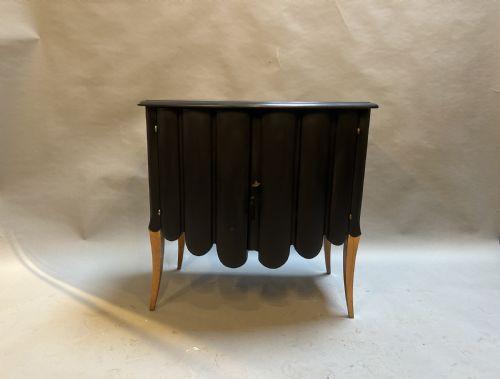
A 1930s wooden sideboard stands as a practical dining room storage piece defined primarily by Art Deco design alongside country and revival idioms. When exploring these listings, buyers encounter walnut, oak, and birch forms ranging from compact side cabinets to grand proportions.
The selection on this page centres heavily on Art Deco variations alongside examples by notable designers and makers of the era. Pieces typically feature cupboards and drawers arranged with geometric balance, reflecting the aesthetic priorities of the nineteen-thirties.
Materials and construction
Cabinet makers of the period utilised solid timbers alongside decorative wood veneers to achieve striking surface patterns. Walnut, burr walnut, oak, and birch feature prominently, often paired with contrasting stringing or sycamore details.
Metal hardware such as brass handles and pulls complete the construction, while glass elements appear on associated cabinets and bookcases. Joinery relies on traditional cabinet-making methods adapted to the clean, streamlined curves and rectilinear forms of the decade.
1930s Wooden Sideboard Retail Price Guide 2026
Typical asking prices for 1930s wooden sideboard among the pieces listed under this phrase on Sellingantiques today, from the lower quarter to the upper quarter. They describe what is for sale here now, not the wider market.
The furniture spans the nineteen-twenties and nineteen-thirties, encompassing both British workshops and continental French studios.
Assessing quality and craftsmanship
Quality in these pieces rests upon the selection of veneer timbers and the precision of the cabinet work. Finer examples display carefully matched grain patterns across drawer fronts and cabinet doors, creating symmetrical visual rhythms.
The reputation of the maker and the integrity of the original hardware further distinguish finer items from standard production. Substantial construction and thoughtful proportioning separate superior examples from more utilitarian storage pieces.
Maurice Adams·Gomme·Hille·Étienne Kohlmann·Bowman Brothers·Otto Schulz for Boet
The 1930s Wooden Sideboard Glossary
- Art Deco
- A design style characterised by sleek geometric shapes, streamlined forms, and stylised motifs that dominated the interwar period. It influences the majority of sideboards and cabinets from this decade.
- Burr walnut
- A highly figured wood grain obtained from walnut tree growths, prized for its swirling patterns. Makers used burr walnut veneers on prominent surfaces to create decorative impact.
- Veneer
- A thin layer of superior wood glued to a base timber foundation to provide an ornamental surface. This technique allowed makers to utilise dramatic grain patterns economically.
- Raised gallery
- An elevated decorative barrier along the back edge of a sideboard top. It prevents items from sliding off and adds a distinct vertical accent to the silhouette.
1930s Wooden Sideboard: Frequently Asked Questions
How do I clean a walnut sideboard?
Dust regularly with a soft, dry cloth to maintain the polished finish on walnut and veneer surfaces. Avoid harsh chemical cleaners that can damage the antique polish.
Apply a quality beeswax periodically to nourish the wood and preserve its natural sheen. Keep the sideboard away from direct sunlight and radiators to prevent the wood from drying out.
Are these sideboards suitable for modern dining rooms?
These cabinets offer generous internal storage for tableware, linens, and bottles while occupying a distinct architectural footprint. Their geometric fronts anchor a contemporary dining space with historical depth.
Consider the dimensions of your room carefully against the proportions of the cabinet. Many pieces function equally well in large hallways or living spaces as media consoles or storage units.
What is the difference between a sideboard and a commode?
A sideboard is traditionally longer and designed specifically for dining room service and storage, featuring cupboards and central drawers. A commode is typically a lower, chest-like cabinet with drawers.
French pieces from this era often use the term commode for decorative chests that serve similar storage functions in living areas or bedrooms.