
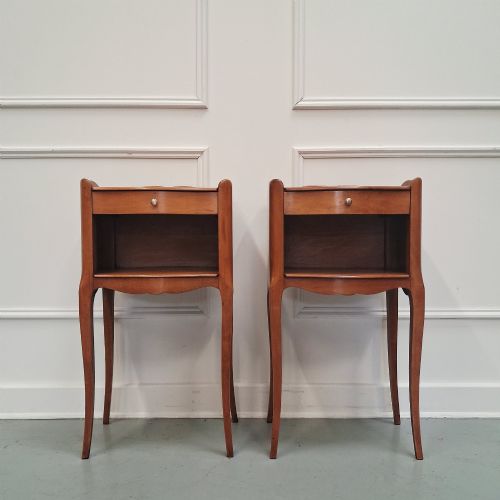
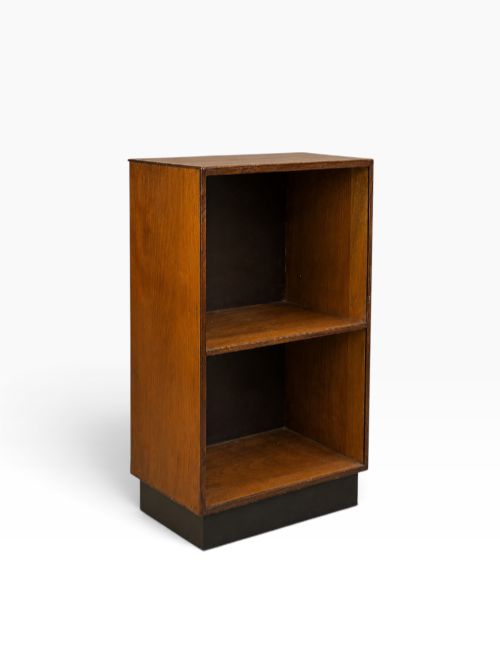
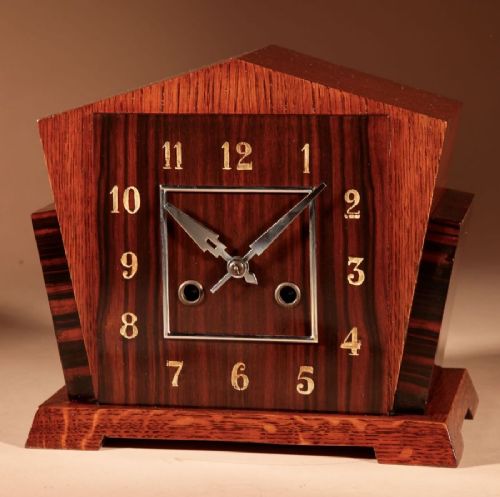
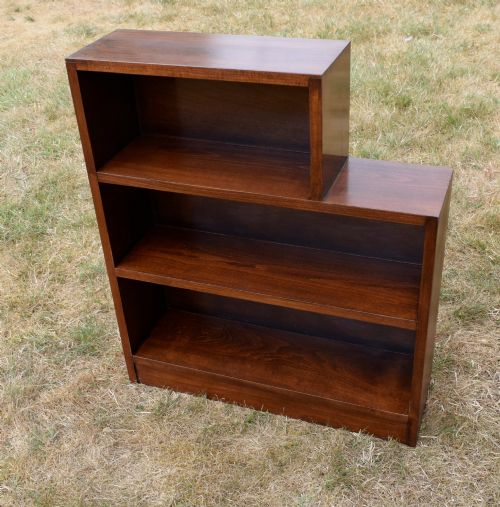
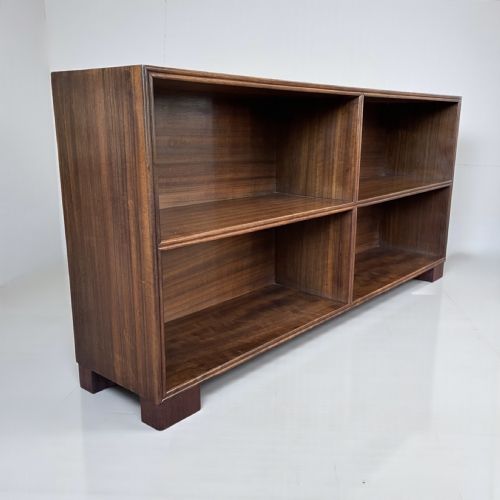


1930s Wooden Shelves
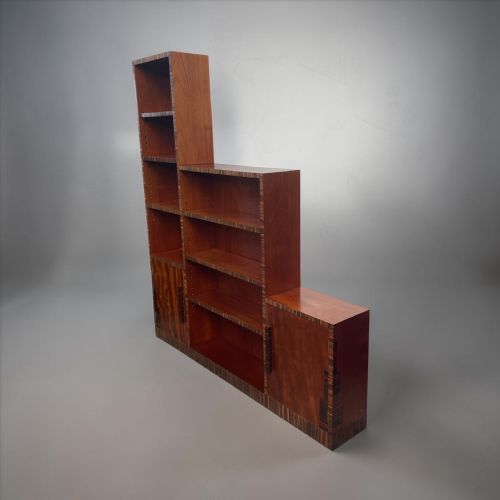
These 1930s wooden shelves bring functional period character to a room through geometric lines and rich grain patterns.
1930s Wooden Shelves
When searching for 1930s wooden shelves, buyers encounter practical storage furniture shaped by Art Deco design alongside industrial and revival influences. The selections span open bookcases and fitted compartments built from solid timbers and veneers.
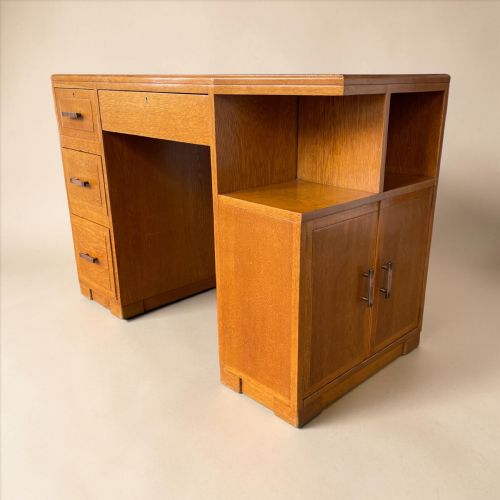
Most examples lean towards the Art Deco style, featuring stepped profiles, geometric mouldings, and clean architectural lines. Pieces often incorporate open shelving for books alongside enclosed sections, reflecting the domestic habits of the period.
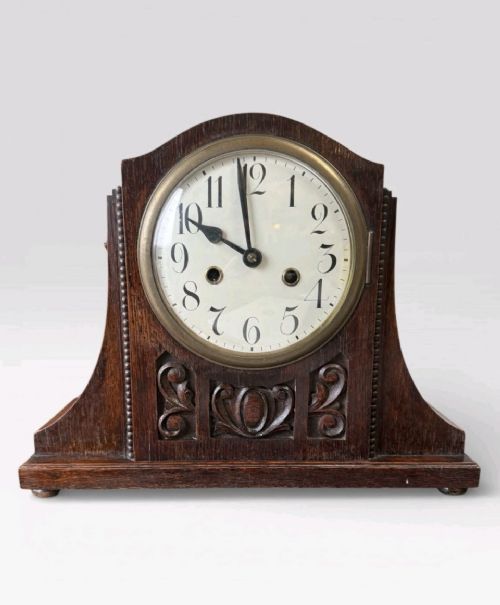
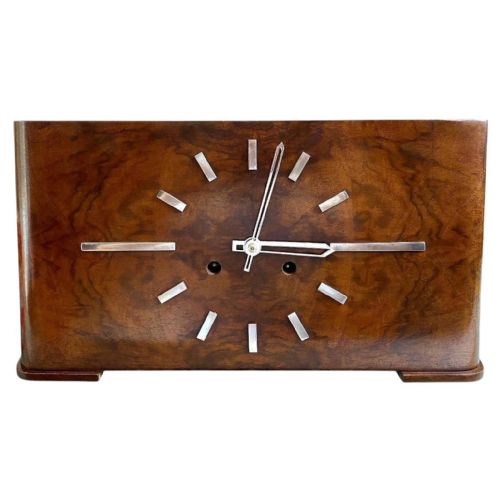
Origins vary between British workshops and continental makers, producing distinct regional interpretations of thirties design. Oak and walnut dominate the construction, providing durable frameworks that suit modern interiors just as well as period homes.
Materials and construction
Cabinet makers utilised a combination of solid woods like oak and walnut alongside decorative veneers including macassar ebony and coromandel to achieve striking visual contrasts. Timber panels were frequently arranged to highlight natural grain patterns across flat surfaces and stepped fronts.
Construction relied on traditional joinery techniques combined with the period's growing fondness for clean geometric forms and applied mouldings. Surfaces received polished or ebonised finishes that protected the wood while accentuating its inherent warmth and colour.
Materials recorded on this page span walnut, oak, brass, chrome, glass, and timber veneers.
Distinguishing quality in period storage
Quality rests upon the selection of timber veneers and the precision of the geometric mouldings applied to the frame. Superior items display careful matching of wood grains across doors and panels, demonstrating deliberate aesthetic planning by the maker.
The integrity of the construction and the crispness of carved or stepped details separate standard utilitarian pieces from exceptional examples of the period. Attention to interior fittings and the condition of the original finish further define the upper tier of the range.
Maurice Adams·Haller·Elliott·Bravingtons Ltd of London·Pfeilkreuz Junghans
The 1930s Wooden Shelves Glossary
- Art Deco
- A design style spanning the 1920s and 1930s characterised by geometric shapes, streamlined forms, and stylised motifs. It heavily influences the architecture and furniture of this era.
- Veneer
- A thin layer of superior wood adhered to a base timber surface to provide decorative grain patterns. Walnut and oak veneers are common on thirties cabinetry.
- Ebonised
- Wood treated with a dark finish to imitate ebony. This technique creates a dense black surface popular in modern and revival furniture.
- Moulding
- A strip of shaped or rounded wood applied to surface edges for decorative relief. Front mouldings define the stepped profiles of thirties shelving units.
1930s Wooden Shelves: Frequently Asked Questions
How do I identify a thirties bookcase?
Thirties bookcases typically feature stepped geometric profiles, distinct open shelving, and characteristic timbers such as oak or walnut veneer. Look for architectural mouldings and clean lines that separate them from earlier Victorian or Edwardian heavy designs.
Makers of the period often incorporated contrasting wood tones or ebonised details to enhance the visual structure of the piece without relying on excessive carving.
Are these shelves suitable for modern rooms?
The compact proportions and linear geometry of thirties shelving units make them adaptable for contemporary living spaces. Their straightforward timber construction blends easily with modern minimalist or mid-century interior schemes.
Open configurations provide practical display space for books and objects, combining period authenticity with everyday utility.
What woods were used in this era?
Makers of the decade relied heavily on oak and walnut for both solid frames and decorative surfaces. Exotic woods like macassar ebony and coromandel appeared as contrasting accents on finer items.
Mahogany and ash also featured in specific regional designs, offering varied grain patterns and tonal qualities across different cabinet types.
How should I care for wooden shelving?
Maintain the wood finish by dusting regularly with a soft, dry cloth and avoiding placement near direct heat sources or strong sunlight. Periodic application of appropriate wax polish helps preserve the moisture and lustre of vintage timber.
Treat veneer surfaces with extra care to prevent lifting along edges and keep moisture away from joints.