

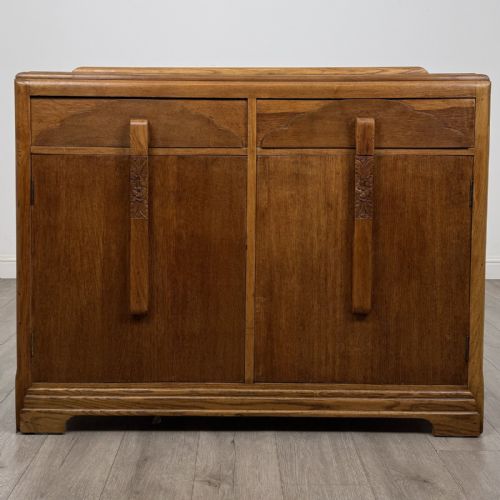
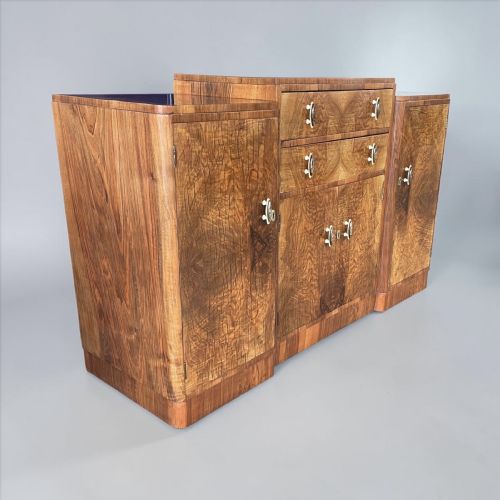
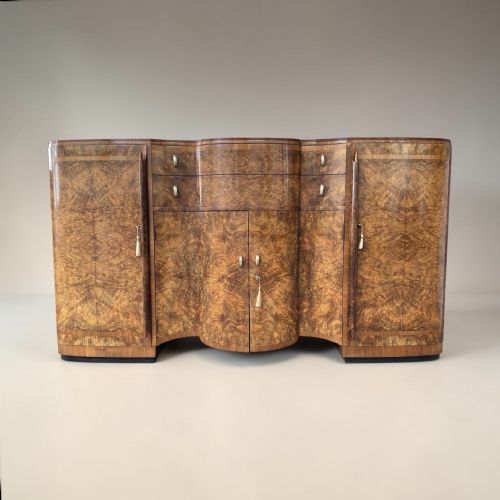
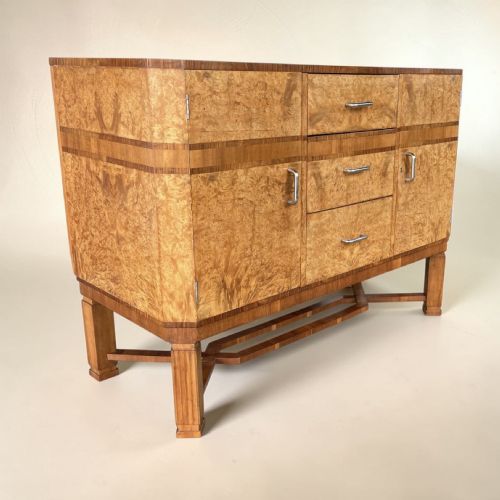
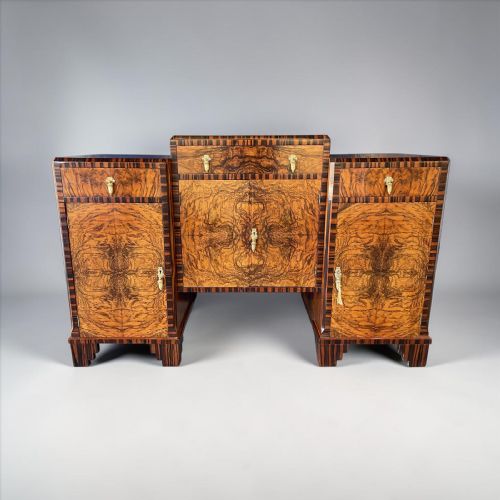
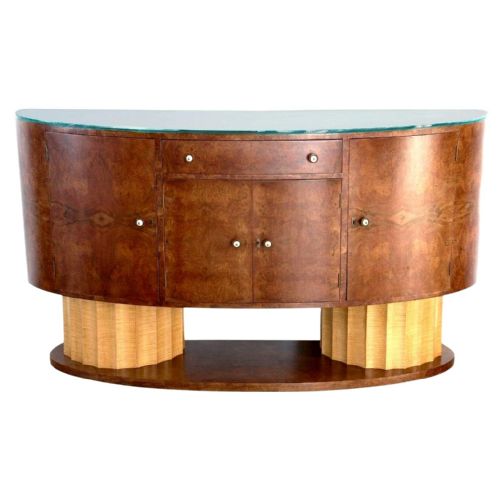


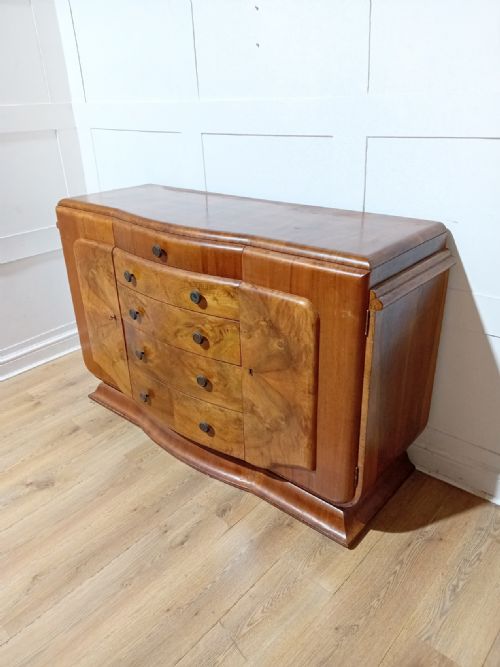
1930s Wooden Buffet
A 1930s wooden buffet brings striking geometry and rich grain to a dining room, offering practical storage with genuine period character.
1930s Wooden Buffet
A 1930s wooden buffet serves as a substantial dining room cabinet designed for storing tableware, cutlery, and linens. Buyers searching this phrase encounter sideboards, credenzas, and cabinets primarily styled in Art Deco designs.
The most common examples on this page date directly from the 1930 and 1920 periods, showing strong architectural forms. Pieces range from large statement sideboards to smaller walnut cabinets.
Makers and workshops of the era produced these items in various woods, often pairing substantial carcases with fitted internal drawers. Alongside sophisticated urban designs, simpler country variations appear in materials like oak and pine.
How they were made
Cabinet makers utilised choice hardwoods and decorative veneers such as burr walnut, walnut, and oak over sturdy carcases. Selected pieces incorporate contrasting woods like sycamore to highlight geometric door panels and drawer fronts.
Functional metal elements including brass and chrome appear as handles, hinges, and decorative mounts. Glass sections feature in specific cabinet doors, while fitted internal cutlery compartments utilise specialised woodworking techniques.
1930s Wooden Buffet Retail Price Guide 2026
Typical asking prices for 1930s wooden buffet among the pieces listed under this phrase on Sellingantiques today, from the lower quarter to the upper quarter. They describe what is for sale here now, not the wider market.
Materials across the inventory include burr walnut, metal, brass, glass, wood veneer, and chrome alongside traditional hardwoods.
What varies in quality
The distinction between standard production items and top-tier examples lies in the selection of wood veneers and the involvement of known makers. Pieces attributed to prominent workshops display superior grain matching and meticulous interior fittings.
Construction methods and overall proportions separate mass-produced items from bespoke artisan commissions. Cabinetwork with integrated galleries, clean veneering, and original hardware holds greater distinction than simpler utility alternatives.
Maurice Adams·Hille·Gomme·Bowman Brothers
The 1930s Wooden Buffet Glossary
- Art Deco
- A design style characterised by sleek geometric shapes, stylised motifs, and modern industrial influences. It dominated architecture and furniture design throughout the interwar period.
- Veneer
- A thin layer of figured wood applied over a stable secondary timber carcase. This technique allowed cabinet makers to display expensive grain patterns without constructing the entire piece from solid luxury wood.
- Sideboard
- A dining room storage furniture piece featuring cupboards and drawers for tableware and serving dishes. It often includes a raised gallery along the top rear edge.
- Credenza
- A sideboard or buffet cabinet traditionally lacking legs, sitting low to the floor with enclosed cupboards. Interwar versions frequently adopt curved silhouettes and polished veneer surfaces.
1930s Wooden Buffet: Frequently Asked Questions
How do I identify Art Deco style?
Art Deco furniture is recognised by its clean geometric lines, symmetrical patterns, and streamlined forms. Designers favoured polished burr walnut and oak surfaces accented with chrome or brass handles.
These pieces often feature curved carcases and contrasting wood veneers rather than traditional carved ornamentation.
Where were these cabinets used?
These sideboards and buffets were manufactured for domestic dining rooms to house porcelain, silverware, and table linens. Their top surfaces provided a convenient ledge for serving dishes during meals.
Today they function equally well in living areas and hallways as statement storage units.
How do I care for walnut veneer?
Walnut veneer requires protection from direct sunlight and excessive moisture to prevent fading and lifting. Regular dusting with a soft, dry cloth preserves the polished finish.
Applying occasional specialist wax maintains the natural lustre of the wood grain without building up heavy residues.