

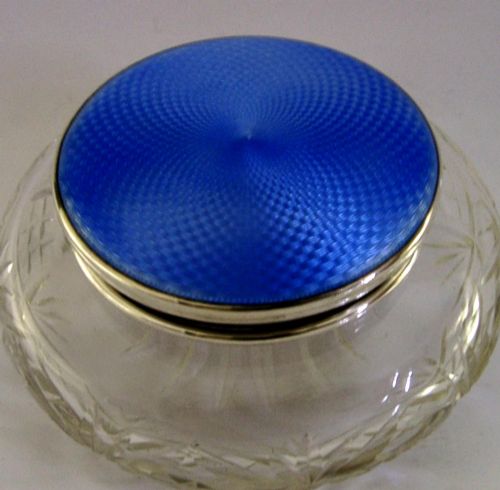


1930s Powder Bowl
A 1930s powder bowl brings dressing table elegance into a modern room, holding small treasures with distinctive period style.
1930s Powder Bowl
A 1930s powder bowl is a vanity accessory designed to hold loose cosmetic powder, often taking the form of a lidded ceramic or glass jar. These pieces sit alongside dressing table accessories such as trinket boxes and vanity sets, serving both a functional role and a decorative purpose in the bedroom.
The dominant style on this page is Art Deco, frequently expressed through figural lids featuring bathing belles, flapper girls, half dolls, and jesters. Originating from workshops in France, Germany, and Austria, these bowls capture the geometric lines and spirited character of the period.
Materials and construction
Ceramic, porcelain, and earthenware form the bodies of these vessels, shaped and fired to receive smooth glazes and hand-painted details. Many examples incorporate moulded glass, cut crystal, and blue or pink enamel applied to sterling silver mounts.
Figural lids often combine modelled ceramic figures with separate bowls, while silver-mounted pieces utilise hallmarked metalwork from assay offices such as Birmingham. Gilt accents and coloured enamels complete the surface decoration of the finer vanity jars.
1930s Powder Bowl Retail Price Guide 2026
Typical asking prices for 1930s powder bowl among the pieces listed under this phrase on Sellingantiques today, from the lower quarter to the upper quarter. They describe what is for sale here now, not the wider market.
Listings feature ceramics, porcelain, glass, and sterling silver from 1930, originating across France, Germany, Austria, and Britain.
Judging quality and execution
The distinction between standard production and finer work rests upon the detail in the modelling and painting of figural lids. Sculpted figures of flapper girls, bathing belles, and pierrots show greater care in hand-painted facial expressions and delicate glazing.
Material selection also defines the tier of a piece, separating simple earthenware bodies from high-grade porcelain, cut crystal, and sterling silver mounted with guilloché enamel. The precision of the fit between lid and bowl indicates the standard of original manufacture.
Limoges
The 1930s Powder Bowl Glossary
- Art Deco
- A design style spanning the 1920s and 1930s characterised by stylised geometric forms, streamlined shapes, and modern motifs. It influences the sculptural lids and clean lines of these vanity items.
- Half doll
- A ceramic torso without legs, commonly used as a decorative lid on powder jars and tea cosies during the early twentieth century. These figures often depict fashionable women of the era.
- Bathing belle
- A ceramic figure modelled in swimwear, popular on novelty powder boxes and trinket dishes from the interwar period. They capture the leisure culture of the 1930s.
- Guilloché enamel
- A decorative technique where a precise geometric pattern is engraved into metal beneath a translucent layer of enamel. This finish frequently appears on silver-mounted dressing table accessories.
- Trinket box
- A small lidded container used for storing jewellery, pins, or small keepsakes on a dressing table. These items share materials and decorative treatments with powder bowls.
1930s Powder Bowl: Frequently Asked Questions
What is a 1930s powder bowl used for?
These vessels were originally designed to hold loose face powder on a dressing table, accompanied by a fluffy puff for application. Women used them as part of their daily cosmetic routine.
Today, they serve equally well for storing small items like jewellery, hairpins, or trinkets while adding period character to a modern interior.
How do I identify Art Deco style?
Art Deco pieces from this decade feature clean geometric lines, stylised figural sculpture, and symmetrical patterns. You will see this in the moulded shapes of the bowls and the distinct appearance of the figures on the lids.
The aesthetic breaks away from Victorian ornamentation in favour of a sleek, modern look that reflects the design trends of the 1930s.
Where were these powder bowls made?
Manufacturing centres for these vanity items included France, Germany, and Austria, alongside silversmiths operating in British cities like Birmingham. Each region brought distinct ceramic traditions and metalworking skills to the pieces.
European porcelain factories produced the figural and novelty jars, while British workshops mounted glass bodies in sterling silver with enamel.
How should I display a powder bowl?
These bowls look best placed on a dressing table, vanity, or open shelf where the figural lid can be appreciated from all angles. Pairing them with complementary items like perfume bottles creates an authentic period arrangement.
Keep them out of direct sunlight if they feature delicate enamel work, and handle the lids carefully as the ceramic figures are often hollow or joined to the base.