


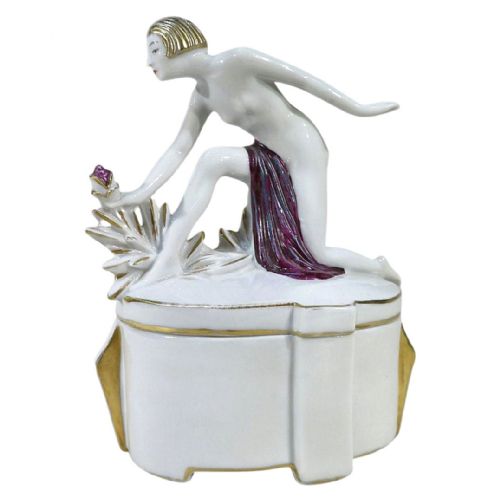


1930s Porcelain Box
A 1930s porcelain box brings the playful glamour of the Jazz Age to a dressing table.
1930s Porcelain Box
A 1930s porcelain box primarily takes the form of a powder jar, trinket box, or vanity bowl designed for the dressing table. These pieces frequently showcase Art Deco styling, often depicting half-doll flapper girls, bathing belles, and novelty figures.
Originating largely from France, Germany, and Austria, these ceramic containers combine a porcelain base with a figural lid. They served both practical storage purposes and decorative roles in daily vanity routines.
The assortment on this page leans heavily towards figural ceramics, capturing the distinct aesthetic of the 1930 era through stylised female figures, pierrots, and jesters.
Materials and construction
Makers utilised porcelain and ceramic as the primary bodies for these vanity accessories, shaping them through moulding and casting techniques. Glaze provides the smooth outer finish, while enamel and gold leaf add colour and surface detail.
Some examples incorporate fabric elements alongside the ceramic structure, particularly in powder puff stands and functional dressing table sets. The lids frequently integrate moulded half-dolls or figural groups that lift away to reveal the storage bowl beneath.
1930s Porcelain Box Retail Price Guide 2026
Typical asking prices for 1930s porcelain box among the pieces listed under this phrase on Sellingantiques today, from the lower quarter to the upper quarter. They describe what is for sale here now, not the wider market.
The listings on this page span the 1930 period, featuring porcelain, earthenware, and enamel materials shaped into various vanity forms.
Assessing quality
The artistry of the figural lid dictates the distinction between standard production pieces and superior examples. Limoges and other continental workshops demonstrate particular finesse in their ceramic modelling and decorative execution.
Limoges
The 1930s Porcelain Box Glossary
- Half doll
- A ceramic upper torso of a figure, commonly a flapper or lady, made without legs to attach to the top of a powder box or brush handle. This form dominated vanity accessories of the period.
- Powder bowl
- A wide ceramic container designed to hold loose cosmetic powder on a dressing table. These often feature a removable lid topped with a decorative figural grouping.
- Bonbonniere
- A small decorative box traditionally used for holding sweets or confections. In the context of these listings, it describes fine porcelain containers from French makers.
1930s Porcelain Box: Frequently Asked Questions
What were 1930s porcelain boxes used for?
These containers primarily held face powder, cosmetics, and small trinkets on dressing tables.
They functioned as both practical storage and decorative display items for daily vanity use.
How do I identify a 1930s piece?
Look for characteristic Art Deco styling, moulded half-doll figures, and typical ceramic bodies from this era.
Continental marks, particularly from French and German potteries, help confirm the period of manufacture.
Where were these powder boxes made?
The primary production centres recorded in the listings are France, Germany, and Austria.
Renowned porcelain houses and regional potteries created these figural vanity items for the European and export markets.
How should I display them at home?
These decorative boxes suit placement on dressing tables, mantlepieces, or glass display cabinets.
Their detailed figural lids make them effective focal points when grouped with other vanity accessories.