


1930s Oak Shelving
These pieces of 1930s oak shelving bring practical storage and distinct period character to any room through solid construction and clean lines.
1930s Oak Shelving
When you search for 1930s oak shelving, you are looking at sturdy bookcases and side tables from the 1930 period that utilise oak timber for domestic and institutional storage.
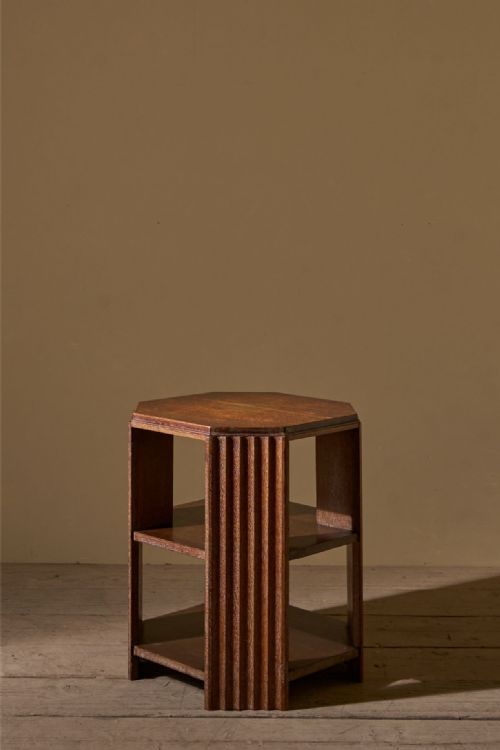
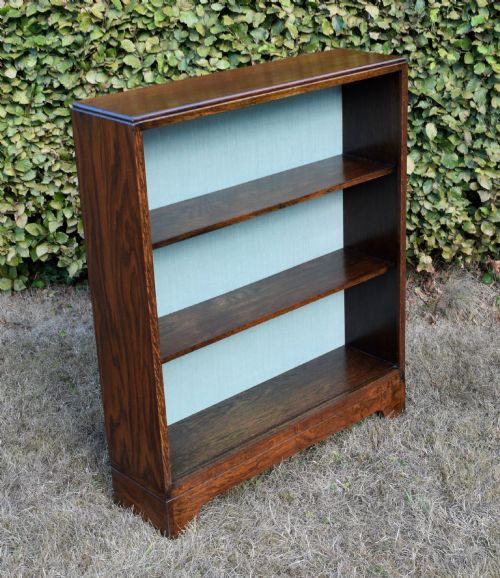
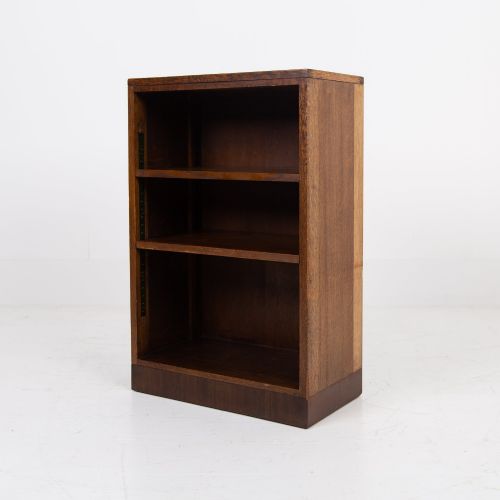
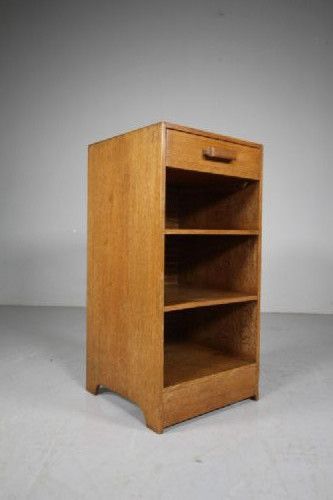
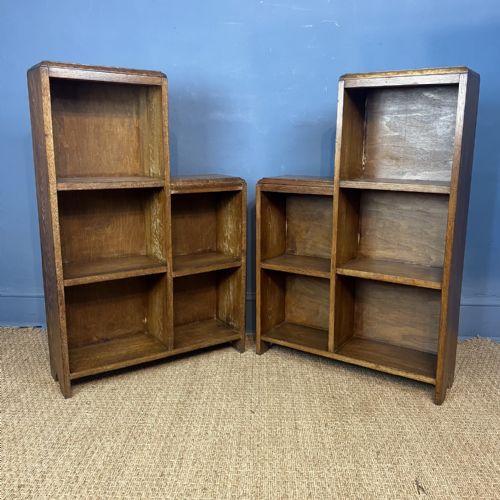
The most common form you will meet on this page is the open bookcase, often rendered in an Art Deco style with clean structural lines and occasional moulded details.
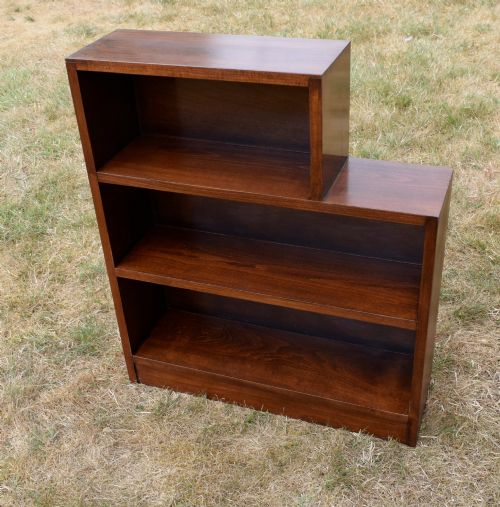
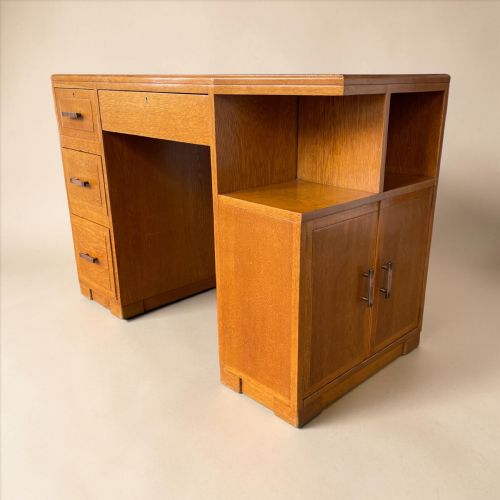
Pieces range from simple bedside cabinets and desks to stepped bookcases and school cabinets, reflecting both modern design and Tudor Revival influences.
How these pieces were constructed
Makers utilised solid oak timber as the primary material, frequently complemented by glass, walnut, sycamore, leather, fabric, and metal accents.
Construction techniques balanced functional utility with decorative surface treatments, including limed finishes and front mouldings.
Listings feature items from the 1930 period in Art Deco, 1930s Modern, Industrial, and Tudor Revival styles.
What separates the best pieces
Quality varies according to the design lineage and the refinement of the timber finishing, such as limed oak surfaces or distinct stepped forms.
Named makers like Betty Joel and firms such as Heal's distinguish certain pieces through superior proportion and craftsmanship compared to uncredited examples.
Heal s·Betty Joel
The 1930s Oak Shelving Glossary
- Art Deco
- A design style from the interwar period characterised by sleek geometric shapes and stylised motifs. It dominates the aesthetic of interwar furniture.
- Limed oak
- A wood finishing technique that leaves a pale, whitish pigment in the grain of the oak. This treatment creates a lighter appearance favoured in modern interwar interiors.
- Tudor Revival
- An architectural and decorative style that imitates sixteenth-century vernacular building traditions. Pieces in this style utilise heavy oak and traditional joinery.
- Stepped bookcase
- A shelving unit featuring receding tiers or levels that create a dynamic profile. This form is strongly associated with modern interwar design.
1930s Oak Shelving: Frequently Asked Questions
What defines 1930s oak shelving?
These pieces are defined by their interwar origins, solid oak construction, and forms that range from simple open bookcases to stepped Art Deco designs.
They combine practical book storage with the distinct stylistic preferences of the nineteen-thirties, including limed finishes and institutional utility.
How were these bookcases used?
They were primarily utilised in homes and schools for holding books, papers, and display items.
Open configurations allowed for easy access to volumes in studies, libraries, and living rooms.
How do I live with these pieces?
Living with these shelves involves placing them in rooms where their wood tones and geometric lines complement your interior.
Their sturdy oak build makes them suitable for daily book storage and display.
How do I tell styles apart?
Styles are distinguished by their decorative details and overall silhouette, separating modern Art Deco stepped forms from heavy Tudor Revival pieces.
Examining the mouldings, finishes like limed oak, and structural lines reveals the specific design influence of the item.